OCT
24
0

How to plan pre-winter roof moss treatment in Walmley

j5
Pre-winter roof moss treatment Walmley


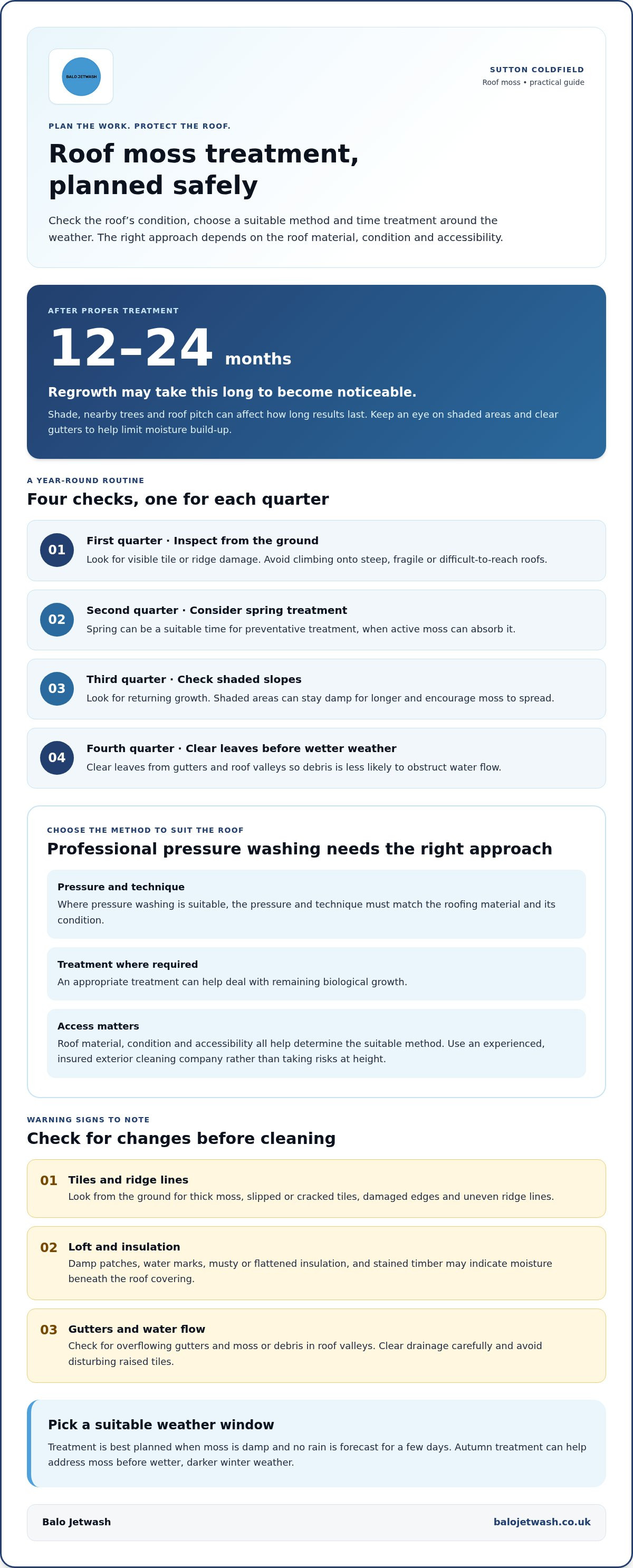
DIY roof moss removal can make matters worse: working at height is risky, and unsuitable tools or pressure may damage tiles. Start by checking the roof’s condition and choosing a suitable method before work begins.

Planning roof moss treatment in Sutton Coldfield means weighing DIY risks, looking for possible damage and choosing suitable timing. This guide covers signs to watch for around tiles and loft spaces, how seasonal conditions affect the work and its cost, and what can influence how long treatment lasts. You’ll also learn when professional pressure washing may suit a roof, and why the method depends on its material, condition and accessibility.


Key Takeaways

Assess roof access and condition before considering DIY moss removal; working at height or using unsuitable methods can create safety risks and damage. Look for thick moss, raised or cracked tiles, and signs of damp in the loft to spot problems that may need attention. Plan treatment around suitable weather and the roof’s material, pitch and condition, as these affect the approach and seasonal costs. Regrowth may take 12 to 24 months to become noticeable after proper treatment, but shade, nearby trees and roof pitch influence how long results last. Keep gutters clear and monitor shaded roof areas to help limit moisture build-up and catch returning growth early.

Can DIY roof moss removal make things worse?

Yes. Roof moss removal can cause more problems if access, tools or treatments are unsuitable. A wet roof is slippery, and disturbing moss beside loose tiles can worsen existing damage. Check for warning signs and choose a method that suits the roof to reduce risk and limit regrowth.

Continue reading
0
  20 Hits
OCT
23
0

Biocide roof treatment in Boldmere and how it limits moss regrowth

t1
Biocide roof treatment to prevent moss growth Boldmere


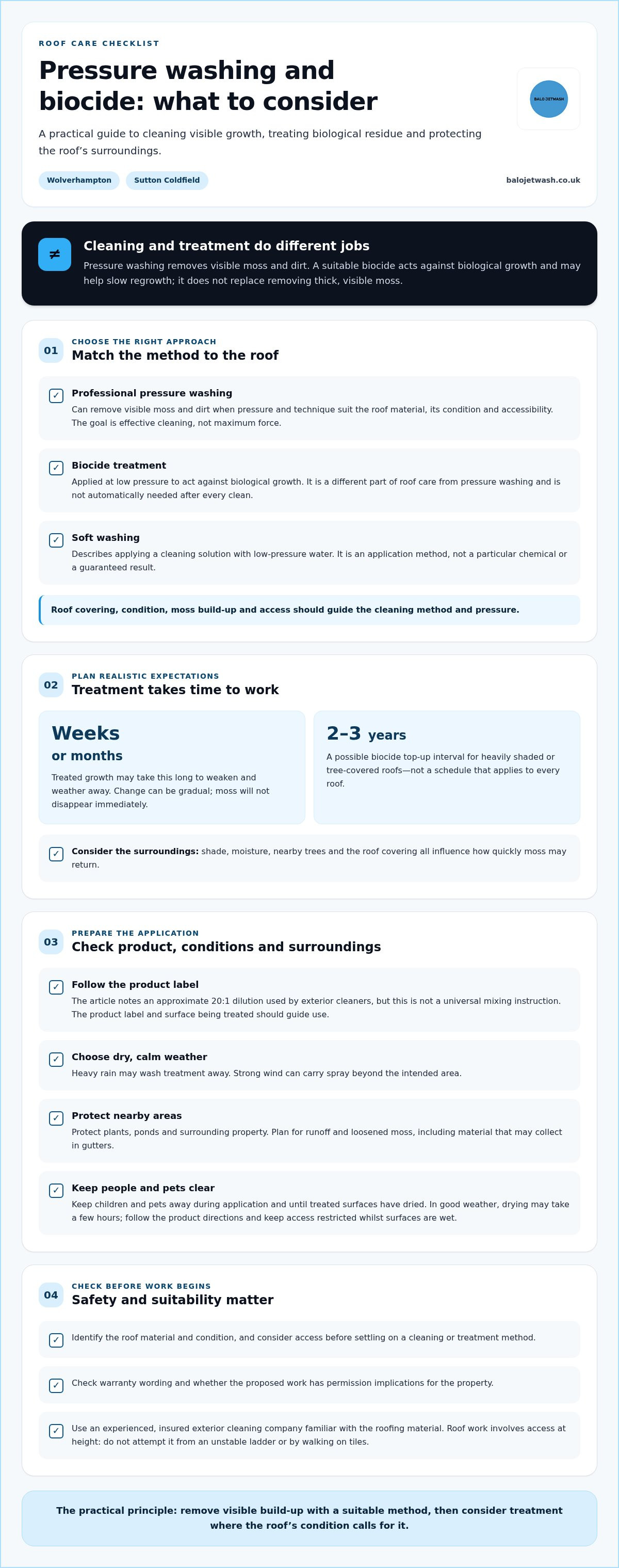
Biocide roof treatment to prevent moss growth in Boldmere can help slow regrowth after roof cleaning. How long the effect lasts depends on the roof’s exposure and its surroundings. For homeowners in Boldmere, Sutton Coldfield and Wolverhampton, understanding the difference between cleaning and treatment helps set realistic expectations.

It’s frustrating to see moss return, especially on damp or shaded parts of a roof. Roofing material, nearby trees and moisture all affect how quickly growth can develop again.

This article explains how biocide treatment works, how it differs from pressure washing and what to consider when planning roof maintenance. You’ll learn what affects regrowth and how to approach roof care with confidence.

Key Takeaways

Roof cleaning removes visible moss and dirt, while treatment targets biological growth left behind; soft washing is a separate low-pressure approach. Pressure washing can clean effectively when the pressure and technique suit the roof material, condition and accessibility. Biocide can slow moss returning, but shade, dampness, nearby trees and roof covering all influence regrowth. Protect plants, ponds and nearby property during treatment, and keep children and pets away until the treated area has dried. Regular roof maintenance, including reducing overhanging shade, can help limit the conditions that encourage moss.

What Is The Difference Between Roof Cleaning And Roof Treatment?

Roof cleaning removes visible moss, dirt and algae. Treatment targets biological growth that may remain afterwards. Knowing the difference helps you choose an approach suited to the roof covering and the amount of growth.

Continue reading
0
  25 Hits
OCT
22
0

Will Pressure Washing Damage Roof Tiles or Cause Leaks?

t1
Will pressure washing damage my roof tiles Four Oaks


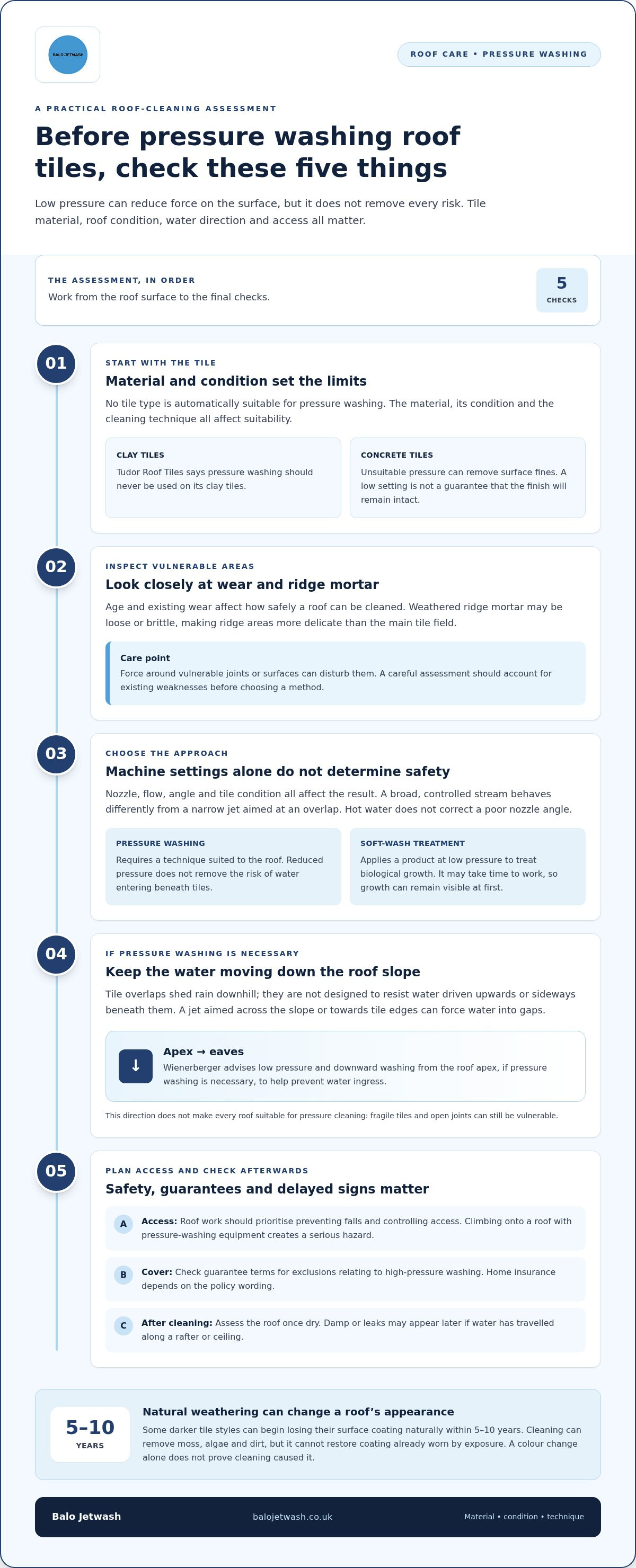
Low pressure does not guarantee that roof tiles will stay undamaged. If you’re asking, “Will pressure washing damage my roof tiles in Four Oaks?”, the answer is yes: it can erode tile surfaces, disturb ridge mortar or force water beneath tile overlaps. Wienerberger advises that, if pressure washing is necessary, it should be done at low pressure, with water directed downwards from the roof apex to help prevent water ingress.

It’s understandable to want a quick way to clear moss and algae, especially when a roof looks tired. But whether pressure washing damages roof tiles depends on their material and condition, as well as the cleaning technique. Even careful cleaning can expose existing weaknesses.

This guide explains how pressure affects roof tiles, why even low-pressure cleaning can carry risks, and what to look for in weathered tiles or loose ridge mortar. It also covers how damage can lead to leaks that appear after cleaning, helping you make a more informed decision about your roof in Four Oaks.

Key Takeaways

Low pressure can still drive water beneath tile overlaps if the nozzle angle or direction is unsuitable. Tile material, age and existing wear all affect how safely a roof can be cleaned. Weathered ridge mortar may be vulnerable to water pressure, increasing the chance of water entering the roof space. Damage to tiles or mortar can lead to leaks that appear after cleaning, so signs of damp may need attention. Professional roof pressure washing should be adapted to the roof’s condition, using suitable pressure and technique.

Does low pressure roof cleaning change this conversation?

Low pressure reduces the force hitting the tiles, but does not remove the risk of water entering beneath them. Nozzle direction, tile condition and the roof’s overlapping design all matter during cleaning.

Continue reading
0
  23 Hits
OCT
20
0

Removing Rust Stains from Patio Slabs: A Practical Sutton Coldfield Guide

2024-10-10
Removing rust stains from patio slabs Walmley


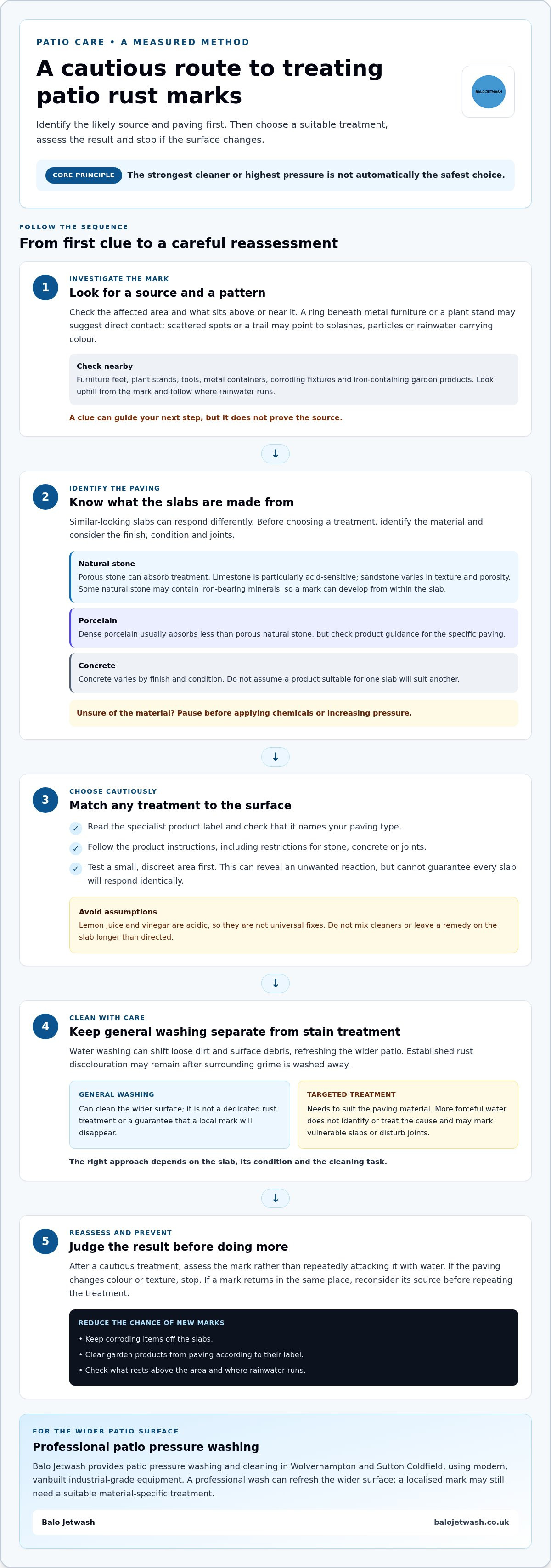
Removing rust stains from patio slabs takes more than choosing the strongest cleaner or highest pressure setting. If a rust-coloured mark is spoiling your patio, first identify the paving and look for a possible source. Metal furniture, planters, corroded fixtures or iron-containing garden products could all leave discolouration.

It’s understandable to want a conspicuous stain gone quickly, especially if you’re unsure whether your slabs are natural stone, porcelain or concrete. The wrong treatment can discolour or damage the surface, and pressure washing alone may not lift a mark that has settled into porous stone.

This guide explains how to investigate the stain, choose a cautious treatment for your paving and know when to stop DIY attempts. You’ll also find practical ways to reduce the chance of new marks and learn when professional patio cleaning may help. For patio cleaning in Sutton Coldfield and Wolverhampton, Balo Jetwash uses modern, vanbuilt industrial-grade equipment. Free re-sanding with Klin dried sand and specialised cleaning detergent are included. A careful plan can improve your patio’s appearance without risking unnecessary damage.

Key Takeaways

Orange-brown marks can come from metal items, garden products or iron within the paving, so colour alone won’t reveal the source. Identify whether your slabs are natural stone, limestone, sandstone, porcelain or concrete before choosing a treatment. Move furniture and clear loose debris carefully, then treat the mark cautiously and assess the result before doing more. Reduce the risk of new marks by keeping corroding items off the slabs and clearing garden products according to their label. Balo Jetwash provides Patio Pressure Washing & Cleaning in Sutton Coldfield and Wolverhampton. General washing can refresh the wider surface, but it can’t guarantee complete removal of a localised mark.

Why Do Rust Stains Appear on Patio Slabs?

An orange-brown mark can stand out sharply against pale paving, but its appearance doesn’t tell the whole story. A rust stain is discolouration associated with iron compounds on or within a slab. Rust forms as iron reacts with oxygen and moisture; Understanding Rust: The Chemical Process offers a useful overview. On a patio, the iron may come from an item resting on the surface or be present within the paving itself.

Continue reading
0
  56 Hits
OCT
19
0

Can You Pressure Wash Old Patio Slabs? A Safe-Cleaning Guide

lll
Can you pressure wash old patio slabs Mere Green


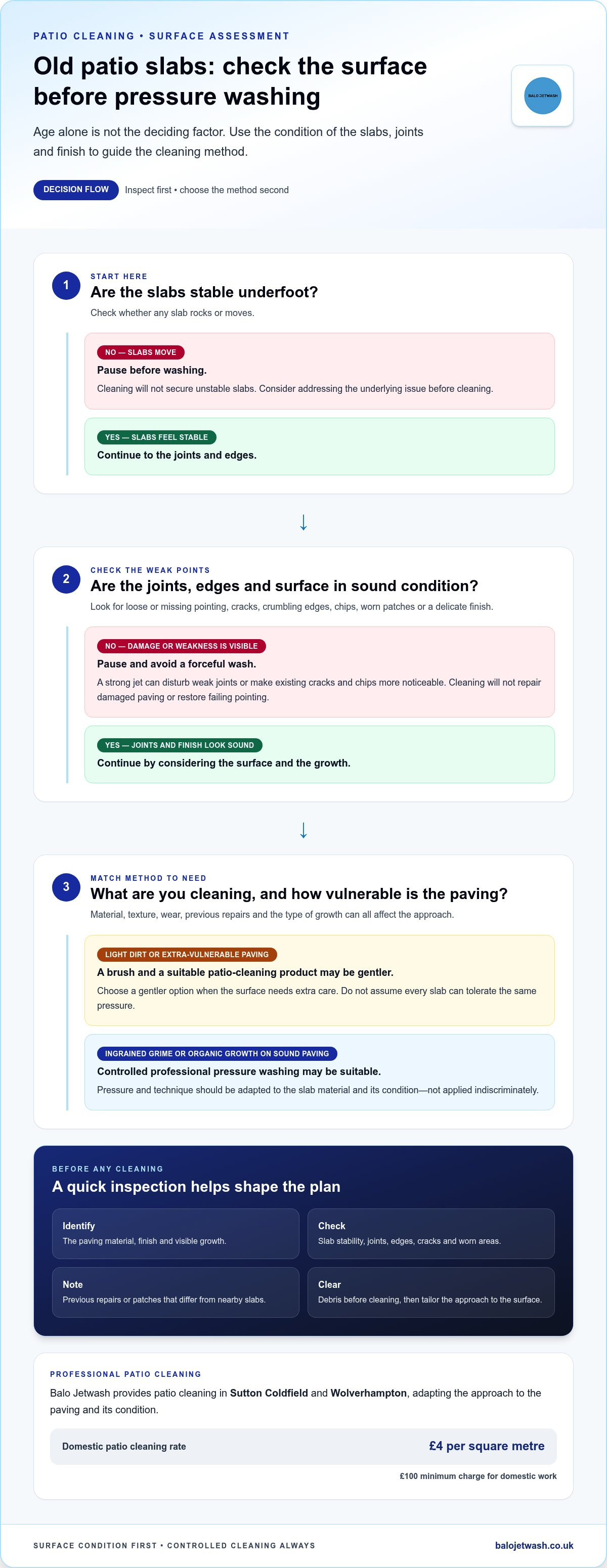
If you’re searching “can you pressure wash old patio slabs Mere Green”, the answer depends on the slabs’ condition, not simply their age. Check the surface and joints before choosing a cleaning method. Balo Jetwash provides professional patio cleaning in Sutton Coldfield and Wolverhampton, with the approach tailored to the paving.

It’s understandable to be cautious. Older slabs may already have cracks, worn surfaces or loose pointing, and forceful washing can make these problems worse. At the same time, moss and algae can leave a patio looking tired. This guide explains how to assess the paving and decide whether pressure washing is suitable.

You’ll learn which warning signs call for extra care, how pressure and technique affect older surfaces, and when gentler cleaning may be more appropriate. Every patio is different, so start with the condition of the slabs rather than assuming one method will suit the whole surface.

Key Takeaways

Age alone doesn’t rule out pressure washing. Check that the slabs, joints and edges are stable before choosing a method. Pressure and technique should suit the paving and its condition. Forceful washing can worsen weak pointing, cracks or fragile surfaces. Brushing and a suitable patio-cleaning product may be gentler options for loose, cracked or particularly vulnerable slabs. Before cleaning, inspect the surface, identify the paving and growth, clear debris, and note damage or previous repairs. Balo Jetwash provides professional patio cleaning in Sutton Coldfield and Wolverhampton. The rate is £4 per square metre, with a £100 minimum charge for domestic work.

Can you pressure wash old patio slabs without damaging them?

Yes, sometimes. A patio’s age alone doesn’t decide whether pressure washing is suitable. The important questions are whether the slabs and joints are stable, and how well the surface can withstand cleaning. Firmly bedded paving with sound joints may respond well to a controlled wash. Loose slabs, failing pointing or a delicate, worn finish need more care.

Continue reading
0
  28 Hits

Information

Water available? - You don't need to be present for us to carry out the service.  If required, we can supply water ourselves.

Insurance

Balo Jetwash is fully insured, We have £5,000,000 of public liability insurance. Balo Jetwash operatives are professional, reliable and endeavour to carry out the work to the highest standard with minimal fuss and upheaval.