
Can You Pressure Wash Old Patio Slabs? A Safe-Cleaning Guide

If you’re searching “can you pressure wash old patio slabs Mere Green”, the answer depends on the slabs’ condition, not simply their age. Check the surface and joints before choosing a cleaning method. Balo Jetwash provides professional patio cleaning in Sutton Coldfield and Wolverhampton, with the approach tailored to the paving.
It’s understandable to be cautious. Older slabs may already have cracks, worn surfaces or loose pointing, and forceful washing can make these problems worse. At the same time, moss and algae can leave a patio looking tired. This guide explains how to assess the paving and decide whether pressure washing is suitable.
You’ll learn which warning signs call for extra care, how pressure and technique affect older surfaces, and when gentler cleaning may be more appropriate. Every patio is different, so start with the condition of the slabs rather than assuming one method will suit the whole surface.
Key Takeaways
Age alone doesn’t rule out pressure washing. Check that the slabs, joints and edges are stable before choosing a method. Pressure and technique should suit the paving and its condition. Forceful washing can worsen weak pointing, cracks or fragile surfaces. Brushing and a suitable patio-cleaning product may be gentler options for loose, cracked or particularly vulnerable slabs. Before cleaning, inspect the surface, identify the paving and growth, clear debris, and note damage or previous repairs. Balo Jetwash provides professional patio cleaning in Sutton Coldfield and Wolverhampton. The rate is £4 per square metre, with a £100 minimum charge for domestic work.Can you pressure wash old patio slabs without damaging them?
Yes, sometimes. A patio’s age alone doesn’t decide whether pressure washing is suitable. The important questions are whether the slabs and joints are stable, and how well the surface can withstand cleaning. Firmly bedded paving with sound joints may respond well to a controlled wash. Loose slabs, failing pointing or a delicate, worn finish need more care.
There’s a difference between matching pressure and technique to the paving and directing a forceful jet indiscriminately at it. A carefully managed clean can lift surface grime and organic growth, but it won’t mend cracks or secure unstable slabs. For a general explanation of how pressure washing works and its possible risks, see this Pressure Washing Overview.
Let the condition of the slabs, not their age, guide the cleaning method. Before washing, check whether any slab rocks underfoot, whether the joints are breaking away, and whether there are visible cracks or chipped edges. This helps distinguish a dirty surface from paving that may need attention before cleaning.
When older patio slabs may be suitable for pressure washing
Older slabs may be suitable when they feel stable, their joints are intact and their finish isn’t fragile. Dirt, algae and moss on the surface are different from structural wear: cleaning may improve the appearance of growth, but it cannot repair damage beneath or around the paving. Material, finish and previous repairs all affect the right approach, so don’t assume every slab will respond in the same way.
Balo Jetwash adapts its patio pressure washing to the surface and its condition. Homeowners in Sutton Coldfield can explore the patio pressure washing service for older paving.
When to pause before washing ageing paving
Pause if slabs move, pointing is loose or missing, cracks are visible, edges are crumbling, or the surface finish looks delicate. These signs suggest the paving may already be vulnerable. A forceful jet could disturb weak joints or make existing chips and cracks more noticeable.
Don’t use a forceful wash to fix damaged paving. If you spot a problem, consider whether cleaning should wait until the underlying issue has been addressed. The aim is to refresh the patio without worsening existing weaknesses. Assess the surface before choosing how to clean it.
How pressure, slab material and pointing affect an old patio
Cleaning force acts on more than visible dirt. A jet can disturb weak joints, mark a worn finish or chip an already fragile edge. A good clean isn’t about using the strongest setting. The technique needs to suit the paving, its condition and how the slabs are bedded.
Careful cleaning depends on stable slabs, sound pointing and a technique suited to the surface. Firm slabs with intact joints present a different challenge from paving that rocks underfoot or has gaps between joints. Even on one patio, a repaired patch or exposed edge may need more care than the surrounding area.
What pressure washing can do to worn pointing
Pointing fills the joints between slabs. Firm, intact joints need a different approach from joints that are already cracked, missing or crumbling. A forceful jet may loosen deteriorated material further, leaving wider gaps or exposing the edges of adjacent slabs. Check the joints before cleaning, especially where water or growth has collected.
Re-sanding may form part of some patio-cleaning work, but it isn’t a repair for every type of pointing or a solution for badly weakened joints. If the existing material is failing, cleaning alone won’t restore its strength. The condition of the joints should shape the plan.
Why the slab surface changes the cleaning approach
Concrete and natural stone are useful examples, but the material name alone can’t tell you how a particular slab will respond. Texture, finish, wear and earlier repairs all matter. A smooth, intact surface may need a different approach from a rough, weathered slab with chipped corners or a finish that appears to be flaking.
Look for changes in colour or texture, worn patches and exposed edges. These can help identify areas that need a gentler technique. Don’t assume all concrete slabs, or all natural stone, can tolerate the same pressure. Age and previous work can also affect how uniform the surface is.
Uncontrolled pressure can leave visible marks or worsen weak areas. A considered approach aims to remove surface growth without treating every part of the patio identically. Balo Jetwash tailors its patio pressure washing to the paving and its condition. For more detail, visit the patio pressure washing service.
Before cleaning, note loose joints, chipped edges or repairs that differ from the surrounding slabs. These details help separate ordinary surface build-up from vulnerabilities that call for extra care. If the paving’s stability or finish gives you pause, don’t try to compensate by turning up the pressure. Choose a method that reflects what the patio can withstand.
Pressure washing or gentler cleaning: which approach suits old slabs?
There’s no single cleaning method for every older patio. A brush and a suitable patio cleaner can be a sensible choice for light surface dirt or paving that needs extra care. Controlled professional pressure washing may be more effective for ingrained grime or organic growth on a sound, stable surface. The right choice depends on the slab material, its condition and what’s on it.
Use this comparison as a starting point, then inspect the paving. If different areas are in different condition, the safest approach may vary across the patio.
| Patio condition | Suitable approach | Key caution |
|---|---|---|
| Light dirt on stable slabs | Brush and suitable patio cleaner | Follow product instructions and test a discreet patch. |
| Ingrained grime or growth on sound paving | Carefully managed professional pressure washing | Technique must suit the surface and its condition. |
| Loose, cracked or fragile paving | Pause and assess; use a gentler approach if appropriate | Cleaning may worsen existing weakness. |
When a brush-and-cleaner approach may be more appropriate
For a small area of light dirt, brushing with water and a patio cleaner made for the surface offers more control than using a washer. It may also be a better starting point if the slabs look fragile or the joints need extra care. Choose a product suited to the paving, follow its instructions, and test it on a small, inconspicuous patch first.
Don’t assume a household mixture will work equally well on concrete, natural stone and every finish. A cleaner suited to one surface may not suit another, and excessive scrubbing can affect a worn finish. If the test patch changes the appearance, stop and reconsider the method.
When professional pressure washing can make sense
If grime or moss covers a sound patio, professional pressure washing can refresh the surface more thoroughly than brushing alone. The key is control: the operator adapts pressure and technique to the paving instead of applying force indiscriminately. A weathered natural-stone slab may call for a different approach from a sound concrete slab, but material alone doesn’t determine the answer.
Pressure washing isn’t right for every old patio. If slabs move, joints are failing or the finish seems especially vulnerable, pause and consider a gentler option. Cleaning won’t fix damaged paving. Balo Jetwash provides professional patio pressure washing, with the method guided by the surface and its condition. This offers a practical route to a cleaner patio without treating every slab as identical.
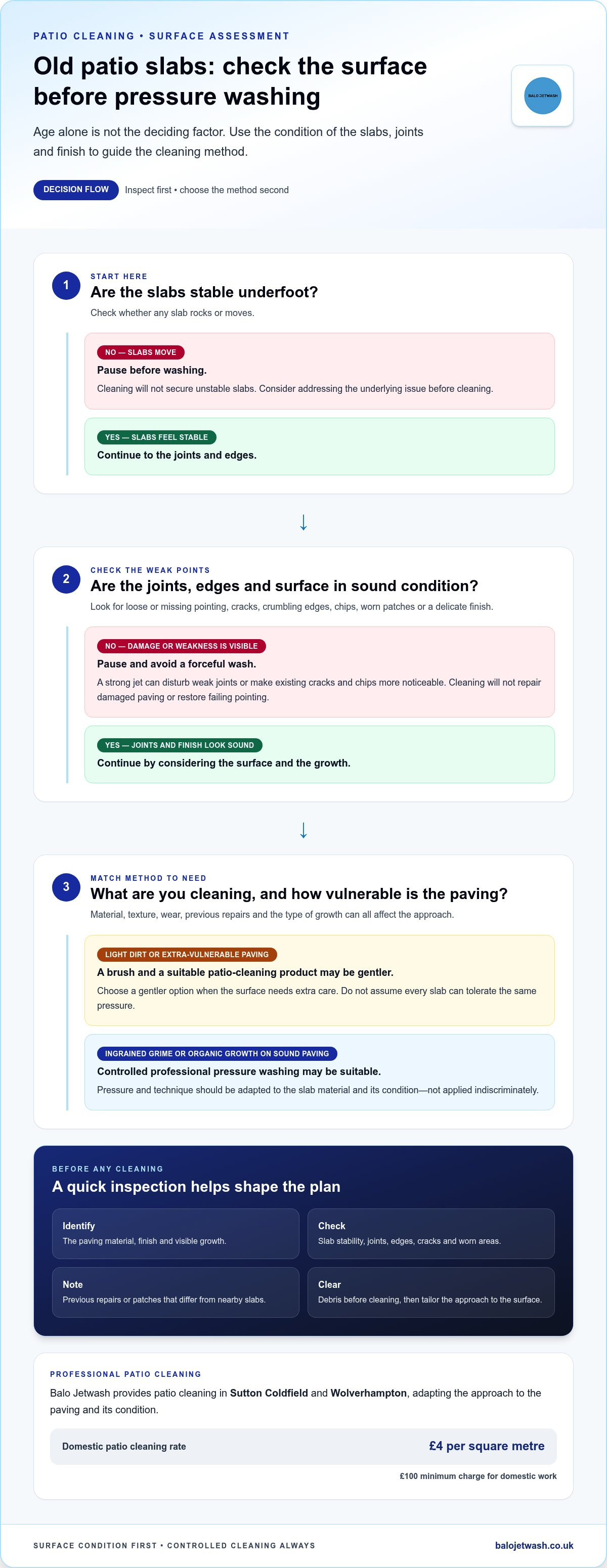
How to assess and prepare old patio slabs before cleaning
A short, methodical check can help you choose a cleaning approach with fewer surprises. Inspect the paving, identify the surface and type of growth, clear the area, then decide how to clean. This order matters: starting before you spot loose slabs or fragile joints could make existing problems worse.
Follow these steps before you begin:
Inspect the paving. Walk over the patio carefully and note any slabs that shift or rock. Check for gaps or crumbling in the pointing, cracks, flaking areas, chipped edges and patches that look different from previous repairs. Identify the surface and growth. Look at the slab material and finish, then distinguish loose debris and general dirt from algae or moss. A dusty surface may need a different treatment from one with established organic growth. Clear the area. Move furniture and planters out of the way, then sweep up leaves, grit and other loose debris. This makes the paving easier to inspect and keeps debris from getting in the way during cleaning. Choose and test an approach. Match the method to the slab’s condition and the type of growth. If using a patio cleaner or trying a method for the first time, test a small, inconspicuous area and let it dry before judging the result.
A simple condition check before cleaning
Pay particular attention to movement and joints. If a slab shifts underfoot or the pointing has visible gaps, don’t treat the patio as a straightforward cleaning job. Note cracks, uneven wear and repaired patches too. Surface dirt, algae and moss can look similar from a distance, but their coverage and persistence may call for different approaches.
Make a note of areas that concern you. This makes it easier to compare them after cleaning and explain the patio’s condition if you choose professional help. If you’re unsure about a fragile or previously repaired patch, don’t use it as a test area.
What to do after cleaning
Let the patio dry before assessing its appearance. Wet slabs can look darker, making it harder to tell whether discolouration remains or the surface simply hasn’t dried. Once dry, check for persistent marks, worn areas or damage that cleaning has made more visible. These may need separate assessment rather than another forceful wash.
For ongoing upkeep, sweep the patio regularly to remove loose leaves and grit before they build up. If an older surface needs a condition-led professional clean, explore Balo Jetwash’s patio pressure washing service.
Professional patio pressure washing in Sutton Coldfield: what to expect
Older paving can benefit from a professional clean when the method reflects its condition. Balo Jetwash assesses the patio surface and adapts the pressure and technique to suit it. On an older patio, one area may be sound while another has worn joints, previous repairs or a more delicate finish. The aim is to refresh suitable paving, not promise that every slab can be restored to a brand-new state.
The team uses modern, van-built industrial equipment to remove stubborn dirt, algae and moss. Free Klin dried re-sanding and specialised cleaning detergent are included where suitable. Re-sanding isn’t a repair for damaged pointing, and the right finishing approach depends on the surface and joint condition. Balo Jetwash can supply water if needed, so you don’t have to provide it.
The work is covered by £5,000,000 public-liability insurance. Every job receives a personalised quotation, with the proposal based on the patio and the work involved.
How a professional clean accounts for an older patio
Before choosing a method, consider what the paving is made from, how its surface has worn and whether the slabs and joints appear stable. Pressure and technique should respond to those details, rather than relying on one approach for every patio. If the paving is particularly fragile or visibly damaged, that condition should inform whether pressure washing is appropriate.
This considered approach helps distinguish ingrained grime or organic growth from wear that cleaning can’t fix. It also allows the work to be tailored to an older surface, instead of treating a forceful wash as a remedy for loose slabs or failing joints.
Getting a tailored patio-cleaning quotation
The listed patio-cleaning rate is £4 per square metre, with a £100 minimum charge for domestic work. The final price is confirmed in a personalised quotation based on the patio and cleaning required. For details of the work in Sutton Coldfield, explore the service page.
Roof cleaning has a separate £400 minimum charge.
If your older patio could use a careful refresh, request a free, no-obligation patio cleaning quote from Balo Jetwash.
Give your patio a considered fresh start
An older patio doesn’t need an all-or-nothing decision. Start by deciding what you want from the space, then choose a cleaning plan that respects the paving rather than chasing an unrealistic like-new finish. If you’re still asking, “can you pressure wash old patio slabs?”, remember that the answer depends on the patio in front of you, not a rule based on age alone.
With a clear plan, refreshing your outdoor space can feel more manageable. Balo Jetwash provides professional patio cleaning in Sutton Coldfield and Wolverhampton, with an approach tailored to the job. A careful assessment helps you choose a suitable clean for the surface.
Your slabs have their own history. Treat them with care, choose a suitable cleaning method, and you can look forward to enjoying a brighter patio again.
Frequently Asked Questions
Can you pressure wash patio slabs in winter?
Yes, but winter conditions can make cleaning less practical and increase slipping risks. Avoid washing when the surface is icy or likely to freeze, and take extra care around wet paving in cold weather. Check the forecast and choose a mild, dry period if possible. If the patio is shaded and stays damp, allow it to dry before walking across it or returning furniture.
Can pressure washing remove moss from between patio slabs?
Yes, it can dislodge moss from joints, but the result depends on how firmly the growth is established and the condition of the jointing. A strong jet may also remove joint material, particularly where it is already weak. Once moss is cleared, inspect the gaps rather than assuming they are sound. If jointing has been washed away, address that separately before using the patio as normal.
Will pressure washing make old patio slabs look new again?
Not always. Cleaning can brighten slabs by lifting dirt and organic growth, but it won’t reverse fading, worn texture, chips or permanent marks. An old slab may look cleaner yet still show colour differences from years of weathering or earlier repairs. Expect a fresher appearance, not a brand-new surface. The result depends on the paving’s history as well as the cleaning method.
How can you tell if patio slabs are loose?
Walk carefully over each slab and notice whether it rocks, shifts or moves compared with neighbouring paving. You may also spot a changing gap along its edge or jointing that has separated. Don’t deliberately jump on a slab to test it. Mark any suspect spots so they’re easy to find, and avoid washing them until the cause of movement has been assessed.
Do patio slabs need to be sealed after pressure washing?
No, sealing isn’t automatically necessary after cleaning. Whether it’s suitable depends on the slab material, its finish and the sealer chosen. An unsuitable product can change the appearance or leave an uneven finish, so follow the paving or product manufacturer’s guidance. If you’re considering sealing, wait until the surface is fully dry and test the product discreetly before treating the whole patio.
How long should patio slabs dry after pressure washing?
There’s no fixed drying time for every patio. Sun, shade, airflow, temperature, slab material and how much water remains in the joints all affect drying. Look for an even, dry appearance across the slabs and joints before judging the clean or putting furniture back. A shaded patio after damp weather may take longer than a sunlit, breezy area, so check the surface rather than relying on a set number of hours.
Can you pressure wash patio slabs with a small pressure washer?
Possibly, but the machine’s size alone doesn’t show whether it’s suitable for ageing paving. Control, the condition of the slabs and how the washer is used matter too. Read the equipment instructions, keep people clear of the spray and avoid directing the jet at fragile edges or joints. If the surface is delicate or you’re unsure how it will respond, choose a gentler cleaning method instead.
{"@context":"https://schema.org","@type":"FAQPage","mainEntity":[{"@type":"Question","name":"Can you pressure wash patio slabs in winter?","acceptedAnswer":{"@type":"Answer","text":"Yes, but winter conditions can make cleaning less practical and increase slipping risks. Avoid washing when the surface is icy or likely to freeze, and take extra care around wet paving in cold weather. Check the forecast and choose a mild, dry period if possible. If the patio is shaded and stays damp, allow it to dry before walking across it or returning furniture."}},{"@type":"Question","name":"Can pressure washing remove moss from between patio slabs?","acceptedAnswer":{"@type":"Answer","text":"Yes, it can dislodge moss from joints, but the result depends on how firmly the growth is established and the condition of the jointing. A strong jet may also remove joint material, particularly where it is already weak. Once moss is cleared, inspect the gaps rather than assuming they are sound. If jointing has been washed away, address that separately before using the patio as normal."}},{"@type":"Question","name":"Will pressure washing make old patio slabs look new again?","acceptedAnswer":{"@type":"Answer","text":"Not always. Cleaning can brighten slabs by lifting dirt and organic growth, but it won’t reverse fading, worn texture, chips or permanent marks. An old slab may look cleaner yet still show colour differences from years of weathering or earlier repairs. Expect a fresher appearance, not a brand-new surface. The result depends on the paving’s history as well as the cleaning method."}},{"@type":"Question","name":"How can you tell if patio slabs are loose?","acceptedAnswer":{"@type":"Answer","text":"Walk carefully over each slab and notice whether it rocks, shifts or moves compared with neighbouring paving. You may also spot a changing gap along its edge or jointing that has separated. Don’t deliberately jump on a slab to test it. Mark any suspect spots so they’re easy to find, and avoid washing them until the cause of movement has been assessed."}},{"@type":"Question","name":"Do patio slabs need to be sealed after pressure washing?","acceptedAnswer":{"@type":"Answer","text":"No, sealing isn’t automatically necessary after cleaning. Whether it’s suitable depends on the slab material, its finish and the sealer chosen. An unsuitable product can change the appearance or leave an uneven finish, so follow the paving or product manufacturer’s guidance. If you’re considering sealing, wait until the surface is fully dry and test the product discreetly before treating the whole patio."}},{"@type":"Question","name":"How long should patio slabs dry after pressure washing?","acceptedAnswer":{"@type":"Answer","text":"There’s no fixed drying time for every patio. Sun, shade, airflow, temperature, slab material and how much water remains in the joints all affect drying. Look for an even, dry appearance across the slabs and joints before judging the clean or putting furniture back. A shaded patio after damp weather may take longer than a sunlit, breezy area, so check the surface rather than relying on a set number of hours."}},{"@type":"Question","name":"Can you pressure wash patio slabs with a small pressure washer?","acceptedAnswer":{"@type":"Answer","text":"Possibly, but the machine’s size alone doesn’t show whether it’s suitable for ageing paving. Control, the condition of the slabs and how the washer is used matter too. Read the equipment instructions, keep people clear of the spray and avoid directing the jet at fragile edges or joints. If the surface is delicate or you’re unsure how it will respond, choose a gentler cleaning method instead."}}]}
Information
Water available? - You don't need to be present for us to carry out the service. If required, we can supply water ourselves.
Insurance
Balo Jetwash is fully insured, We have £5,000,000 of public liability insurance. Balo Jetwash operatives are professional, reliable and endeavour to carry out the work to the highest standard with minimal fuss and upheaval.