
How to plan pre-winter roof moss treatment in Walmley

DIY roof moss removal can make matters worse: working at height is risky, and unsuitable tools or pressure may damage tiles. Start by checking the roof’s condition and choosing a suitable method before work begins.
Planning roof moss treatment in Sutton Coldfield means weighing DIY risks, looking for possible damage and choosing suitable timing. This guide covers signs to watch for around tiles and loft spaces, how seasonal conditions affect the work and its cost, and what can influence how long treatment lasts. You’ll also learn when professional pressure washing may suit a roof, and why the method depends on its material, condition and accessibility.
Key Takeaways
Assess roof access and condition before considering DIY moss removal; working at height or using unsuitable methods can create safety risks and damage. Look for thick moss, raised or cracked tiles, and signs of damp in the loft to spot problems that may need attention. Plan treatment around suitable weather and the roof’s material, pitch and condition, as these affect the approach and seasonal costs. Regrowth may take 12 to 24 months to become noticeable after proper treatment, but shade, nearby trees and roof pitch influence how long results last. Keep gutters clear and monitor shaded roof areas to help limit moisture build-up and catch returning growth early.Can DIY roof moss removal make things worse?
Yes. Roof moss removal can cause more problems if access, tools or treatments are unsuitable. A wet roof is slippery, and disturbing moss beside loose tiles can worsen existing damage. Check for warning signs and choose a method that suits the roof to reduce risk and limit regrowth.
Assess the roof from the ground first. Check for thick green or yellow patches, slipped tiles, damaged ridge lines and overflowing gutters. A small patch is usually less concerning than growth covering large areas. North-facing slopes often stay damp longer, encouraging moss to spread. Don’t climb onto a steep, fragile or difficult-to-reach roof to inspect it; roof work at height can be dangerous. Don’t rely on a quick DIY treatment. Common weed killers and home remedies aren’t effective roof moss treatments and may harm roof materials. Lawn moss products containing iron can leave rust-like stains. Choose a treatment suited to the roof and gutter materials, then follow its label. Cover plants below the roofline and rinse them well if product drips onto them. Remove dead moss and clear drainage carefully. Dead moss left in valleys or gutters can obstruct water flow, so check these areas after treatment. Don’t pull at moss near raised tiles or use force that could disturb the roof surface. Where pressure washing is suitable, the pressure and technique must match the roofing material and condition. A treatment may help deal with remaining biological growth. Use a quarter-by-quarter prevention routine. In the first quarter, inspect from the ground for visible tile or ridge damage. In the second, consider preventative treatment in spring, when active moss can absorb treatment. In the third, check shaded slopes and look for returning growth. In the fourth, clear leaves from gutters and roof valleys before wetter weather. These checks help spot a problem before it spreads. Reduce conditions that encourage regrowth. Clear gutters regularly so water drains away rather than remaining against roof edges. Trim nearby branches where practical to improve sunlight and air circulation. Shaded roofs and slow-draining, low-pitch areas can stay damp for longer. Regular inspections can catch early algae growth before it becomes established moss or lichen. Plan treatment around weather and roof condition. Autumn treatment can help address moss before wetter, darker winter weather. Treatment works best when moss is damp and no rain is forecast for a few days. If growth returns along tile edges, gutters overflow repeatedly or lichen patches expand, arrange a professional roof assessment rather than taking risks on the roof yourself.
Possible damage to battens, membranes and loft insulation
Established moss can hold moisture against roofing materials and add weight when wet. Check for signs on the roof and in the loft before deciding what needs attention.
Assess damage from established moss
Check visible tiles from the ground, then look inside the loft for damp patches, water marks or musty insulation. Moss can retain moisture against tiles, contributing to cracks or splits. Water entering beneath raised tiles can reach battens and loft insulation. Look for damp staining on timber and compressed or wet insulation, but don’t disturb fragile roof materials during inspection.
A roof membrane sits beneath the tiles, so water passing the outer covering can reach underlying layers. Look for signs of moisture rather than assuming moss has damaged the membrane. If you find wet insulation or stained battens beneath a moss-covered slope, record the affected area and arrange an assessment before cleaning.
Consider freeze-thaw and lichen damage
Inspect tile edges and ridge lines for cracks, splits or movement before winter. Moss can keep tiles wet; freeze-thaw conditions during winter may then cause tiles to break. Lichen can grow alongside moss on most roof types, but its presence alone doesn’t prove structural damage. Focus on visible changes, such as broken tile edges or a ridge line that no longer looks even.
Don’t pull at lichen or moss attached to a damaged tile, as this can worsen an existing weakness. Note the location and extent from a safe viewing point, then factor the roof’s material and condition into any cleaning plan.
Check for weight and drainage effects. Wet moss adds weight and can place stress on the roof structure over time. From the ground, look for thick growth, especially where water gathers or drainage appears obstructed. In the loft, compare the area beneath that roof slope with adjoining spaces. A damp patch beneath a moss-heavy section may help pinpoint where water is entering. Separate roof symptoms from insulation problems. Water beneath raised tiles can leave loft insulation damp and reduce its performance. Check for wet or flattened patches, discolouration on nearby timber, and daylight visible through the roof covering. These signs need attention before cleaning: cleaning alone won’t repair a cracked tile or replace affected insulation. Choose cleaning around the roof’s condition. A sound roof and a fragile roof need different approaches. Summer inspections can help homeowners spot cracked tiles before winter weather, whilst a pre-winter assessment can identify loose ridge tiles or established lichen. Professional roof moss cleaning should use pressure and technique suited to the surface, with treatment where required. The roof material, condition and accessibility determine the appropriate method.
Seasonal difficulty and cost of moss removal
Choose the season, treatment and access plan together, since each affects roof work. In the UK, treatment is best planned when moss is damp and the forecast is dry for several days.
Choose a treatment for the roof. Suitable options depend on the roof and gutter materials, moss coverage and access. Use a product labelled for those materials, following its directions. Professional pressure washing can remove moss and built-up growth when the roof’s surface and condition suit that method. Pressure and technique matter: uncontrolled force can damage tiles or allow water beneath them. Match timing to the treatment. Spring can suit preventative treatment because active moss absorbs water and treatment. Summer is warmer and drier, which can make physical moss removal easier, although chemical sprays may be less effective when moss is dormant. In autumn, cooler temperatures can slow growth. Where possible, plan before peak autumn rain rather than leaving work until winter. Use the weather window, not a guessed temperature. Treatment works best when moss is damp and rain isn’t forecast for several days. There’s no single minimum temperature for every product, so follow the temperature guidance on its label. Winter work is more difficult because roofs can be wet and slippery, daylight is shorter, and freezing conditions are more likely. Arrange professional work around access and roof condition. Choose an experienced, insured exterior cleaning company that explains how its method suits your roof material, condition and accessibility. Ask for the proposed work and scope in writing, including how gutters and surrounding plants will be protected. Avoid forceful pressure that doesn’t take the roof surface into account. Plan the budget around the actual job. Price depends on roof size, pitch, access, moss coverage and the treatment or cleaning method. The price is given after a quote request, based on those factors. A heavily covered, difficult-to-access roof can require a different approach from a small, accessible area with light growth. Make gutters part of the seasonal plan. Clear leaves and debris from gutters and roof valleys during autumn, so drainage is not obstructed as rainfall increases. Check for overflow after heavy rain. If moss is returning along tile edges or gutters repeatedly overflow, arrange a roof assessment before winter conditions make access harder. 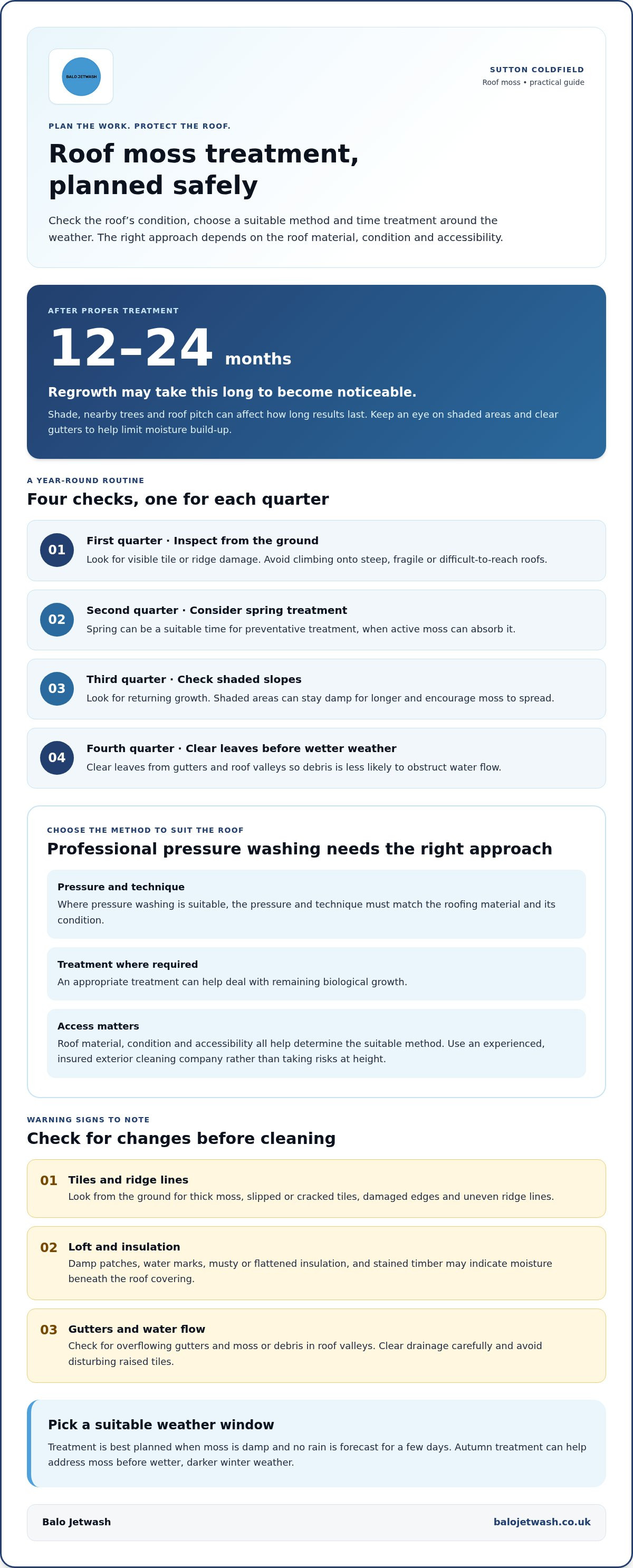
How long should a roof treatment last?
After proper biocide treatment, noticeable regrowth may take 12 to 24 months to begin. Longevity depends on shade, roof pitch, nearby trees and local conditions.
Check what the treatment is designed to do. Treatments aimed at killing spores typically last longer than surface-only approaches. Check what the product targets and how it suits the roof material. Treatment can help manage biological growth, but its performance still depends on the roof’s exposure and surrounding conditions. Match the cleaning method to the roof surface. Pressure washing can remove moss, dirt and algae, but excessive pressure may lift tiles or damage a roof. A professional method adjusts pressure and technique to the material, condition and accessibility. Where washing is unsuitable, an appropriate treatment can help address remaining active growth without forcing water beneath tiles. Avoid harsh chemicals and unsuitable products. Large quantities of bleach and other harsh chemicals can permanently damage shingles and increase leak risk. Common home remedies aren’t reliable substitutes. Choose a roof treatment compatible with tiles and gutters, and follow its product label. Some lawn moss products contain iron substances that can leave rust-like staining on roofs. Protect the surroundings before application. Cover plants below the roofline, then rinse them well if treatment drips onto foliage. Check that the product suits gutter materials, since runoff may contact them. Keep pets away from the work area during application and follow the label’s instructions before allowing them back. This helps avoid contact with wet product or runoff. Allow the product its stated contact time. Roof moss-killer products generally need to remain in place for 15 minutes to a couple of hours, depending on the product. Don’t shorten or extend that period by guesswork. Read the label before starting, and account for weather: treatment is most effective when moss is damp and no rain is forecast for a few days. Track the roof’s condition after treatment. Note where shade falls, whether nearby trees overhang, and which slopes drain slowly. These conditions influence moss regrowth, so compare the same areas during later inspections. Monitor a small patch, but treat expanding lichen or growth returning along tile edges as signs that the roof needs attention. Plan maintenance around visible changes. A general rule of thumb is to have a roof inspected and cleaned every few years. This doesn’t replace checking for changing conditions between visits. Watch for recurring moss, blocked gutters or damaged tiles: treatment controls growth but cannot repair a roofing defect.
Moss lifting tiles and allowing water ingress
Follow the route water could take, from roof tiles to gutters and the loft. Moss can hold moisture against tiles, while raised or damaged areas may let rain reach the layers beneath.
Inspect tile edges from the ground. Look for raised, cracked or split tiles, especially beneath thick moss. Moss holds moisture against the surface, which can contribute to tile damage over time. Don’t pull at growth beside a loose tile: disturbing it could worsen the opening and make it easier for wind-driven rain to get underneath. Check ridge lines and roof joins. Moss can contribute to loose ridge tiles over time, and damaged joints may let water enter. From a safe viewing point, look for an uneven ridge line or visible gaps. Note the location before arranging repairs, rather than climbing onto the roof to test whether a tile moves. Trace signs of moisture indoors. Water entering beneath raised tiles can leave damp patches in loft spaces and contribute to rotting roof battens. Check the ceiling and loft for fresh staining, damp timber or wet insulation beneath affected slopes. Wet insulation can perform less effectively, so treat these signs as more than a surface-cleaning issue. Watch how roof drainage behaves. Moss and other debris can obstruct gutters and roof valleys, slowing the flow of water away from the roof. Check for overflow after rain and water running down exterior walls. Blocked drainage can keep roof edges damp and encourage further moss growth, so clear leaves and debris from gutters regularly. Choose a removal method suited to the tiles. Dry brushing isn’t automatically safe: brittle, cracked or raised tiles can shift when disturbed. Pressure washing can remove moss, but the pressure and technique must suit the roof material and condition. Excessive pressure may lift tiles or drive water beneath them, so don’t treat every roof surface alike. Address visible damage before cleaning. If tiles look cracked, ridge lines appear loose, or the loft shows damp patches, deal with those warning signs first. Removing moss won’t repair a broken tile, rotting batten or damaged roof covering. Note which slope is affected, whether gutters overflow, and whether moisture appears indoors after rain. Monitor shaded areas and drainage after treatment. North-facing or tree-shaded slopes can remain damp for longer, while debris in valleys traps moisture. From the ground, compare these areas with sunnier slopes and look for growth returning around tile edges. Clear gutters and roof valleys as part of ongoing maintenance, then watch for new staining inside.
Balo Jetwash: driveway Cleaning
Balo Jetwash provides professional roof cleaning and moss removal for homes in Walmley, Sutton Coldfield and Wolverhampton. The team uses professional pressure-washing equipment, with pressure and technique suited to the roof’s material, condition and accessibility. Eco-friendly cleaning agents are used to help remove dirt and biological growth while protecting the property and environment.
Balo Jetwash also offers driveway and patio cleaning, helping refresh other exterior surfaces around your home.
Contact Balo Jetwash to discuss roof cleaning for your property.
Make your next roof-care step a considered one
Use your observations to decide what the roof needs next, rather than treating every patch of growth alike. If tiles appear damaged or water is entering the loft, address those signs before arranging cleaning. For a sound roof with moss build-up, choose a method suited to its material and condition, and plan the work around suitable weather. This practical approach helps you prepare your home for winter without taking unnecessary risks on the roof.
Balo Jetwash offers roof cleaning alongside driveway cleaning and patio cleaning, helping you care for more of your home’s exterior. If you’re ready to discuss a roof affected by moss, dirt or algae, contact Balo Jetwash about roof moss. A clear conversation about the roof’s condition is a useful first step towards planning the work.
Take action at a pace that suits the roof, and head into the colder season feeling prepared.
Frequently Asked Questions
Is It Time for a Professional Roof Clean?
Arrange a professional assessment if moss is spreading, tiles look raised or cracked, or damp marks appear indoors. Repeated gutter overflow or expanding lichen patches are also useful warning signs. A professional can assess roof condition and access before choosing a cleaning method. This is particularly helpful when the roof is steep, fragile or difficult to reach, since attempting the work yourself can put you at risk.
Can leaving moss over winter actually lead to leaks?
It can contribute to leaks, although moss alone doesn’t mean water is already entering. Moss holds moisture against tiles, and water may pass beneath a raised or cracked tile. Look for new ceiling marks after rain, damp timber in the loft, or wet insulation beneath the affected slope. These signs call for attention to the roof defect, not just cleaning, because removing moss cannot repair a damaged tile.
Does roof design affect how quickly moss builds up?
Yes. A north-facing slope can stay damp longer, while nearby trees or buildings may limit sunlight and airflow. A low-pitch roof also drains more slowly than a steep one, leaving surfaces wetter. Compare shaded sections with sunnier slopes, and note where growth appears first. Valleys, areas behind chimneys and places beneath overhanging branches can collect moisture or debris, creating conditions that favour moss.
Does roof moss affect gutters and drainage systems as well?
Yes. Moss and loose debris can move into roof valleys and gutters, restricting the route rainwater takes away from the property. Watch for overflowing gutters or water running down exterior walls during rainfall. Clear leaves and debris from gutters regularly, then check that water can drain freely. Persistent overflow can signal an obstruction or drainage issue that cleaning the roof surface alone won’t resolve.
How Can You Stop Moss From Regrowing On Your Roof?
Reduce the damp, shaded conditions moss favours: clear leaves from gutters and valleys, and trim nearby branches where practical to improve sunlight and airflow. Inspect shaded slopes periodically for returning growth, especially after wet weather. Roof treatments can help control moss, but their longevity depends on roof pitch, shade, nearby trees and local conditions. Keep a note of affected areas so changes are easier to spot.
How quickly should moss be dealt with once it’s noticed?
Respond promptly to thick or spreading growth, but don’t rush onto the roof. A small patch is usually not a problem; widespread green or yellow areas, recurring growth along tile edges, or signs of water entry need closer attention. Start by observing from the ground and checking for indoor damp marks. The roof’s condition, access and weather help determine a suitable time and cleaning approach.
Is it safe for gardens and pets?
Protect plants below the roofline before treatment, and rinse them well if product drips onto their leaves. Keep pets away from the work area during application and runoff, then follow the treatment label for any further precautions. Different products have different instructions, so don’t assume one treatment’s guidance applies to another. Covering garden plants and managing runoff helps reduce unwanted contact with treatment.
What Happens If You Leave Moss To Grow On Your Roof?
Established moss can retain moisture against tiles, add weight when wet and contribute to tile or ridge damage over time. If tiles lift, wind-driven rain may reach the layers underneath, affecting battens or loft insulation. Moss and debris can also obstruct drainage, allowing gutters to overflow. Regular ground-level checks help reveal changes, such as new tile damage, damp patches or persistent gutter problems.
{"@context":"https://schema.org","@type":"FAQPage","mainEntity":[{"@type":"Question","name":"Is It Time for a Professional Roof Clean?","acceptedAnswer":{"@type":"Answer","text":"Arrange a professional assessment if moss is spreading, tiles look raised or cracked, or damp marks appear indoors. Repeated gutter overflow or expanding lichen patches are also useful warning signs. A professional can assess roof condition and access before choosing a cleaning method. This is particularly helpful when the roof is steep, fragile or difficult to reach, since attempting the work yourself can put you at risk."}},{"@type":"Question","name":"Can leaving moss over winter actually lead to leaks?","acceptedAnswer":{"@type":"Answer","text":"It can contribute to leaks, although moss alone doesn’t mean water is already entering. Moss holds moisture against tiles, and water may pass beneath a raised or cracked tile. Look for new ceiling marks after rain, damp timber in the loft, or wet insulation beneath the affected slope. These signs call for attention to the roof defect, not just cleaning, because removing moss cannot repair a damaged tile."}},{"@type":"Question","name":"Does roof design affect how quickly moss builds up?","acceptedAnswer":{"@type":"Answer","text":"Yes. A north-facing slope can stay damp longer, while nearby trees or buildings may limit sunlight and airflow. A low-pitch roof also drains more slowly than a steep one, leaving surfaces wetter. Compare shaded sections with sunnier slopes, and note where growth appears first. Valleys, areas behind chimneys and places beneath overhanging branches can collect moisture or debris, creating conditions that favour moss."}},{"@type":"Question","name":"Does roof moss affect gutters and drainage systems as well?","acceptedAnswer":{"@type":"Answer","text":"Yes. Moss and loose debris can move into roof valleys and gutters, restricting the route rainwater takes away from the property. Watch for overflowing gutters or water running down exterior walls during rainfall. Clear leaves and debris from gutters regularly, then check that water can drain freely. Persistent overflow can signal an obstruction or drainage issue that cleaning the roof surface alone won’t resolve."}},{"@type":"Question","name":"How Can You Stop Moss From Regrowing On Your Roof?","acceptedAnswer":{"@type":"Answer","text":"Reduce the damp, shaded conditions moss favours: clear leaves from gutters and valleys, and trim nearby branches where practical to improve sunlight and airflow. Inspect shaded slopes periodically for returning growth, especially after wet weather. Roof treatments can help control moss, but their longevity depends on roof pitch, shade, nearby trees and local conditions. Keep a note of affected areas so changes are easier to spot."}},{"@type":"Question","name":"How quickly should moss be dealt with once it’s noticed?","acceptedAnswer":{"@type":"Answer","text":"Respond promptly to thick or spreading growth, but don’t rush onto the roof. A small patch is usually not a problem; widespread green or yellow areas, recurring growth along tile edges, or signs of water entry need closer attention. Start by observing from the ground and checking for indoor damp marks. The roof’s condition, access and weather help determine a suitable time and cleaning approach."}},{"@type":"Question","name":"Is it safe for gardens and pets?","acceptedAnswer":{"@type":"Answer","text":"Protect plants below the roofline before treatment, and rinse them well if product drips onto their leaves. Keep pets away from the work area during application and runoff, then follow the treatment label for any further precautions. Different products have different instructions, so don’t assume one treatment’s guidance applies to another. Covering garden plants and managing runoff helps reduce unwanted contact with treatment."}},{"@type":"Question","name":"What Happens If You Leave Moss To Grow On Your Roof?","acceptedAnswer":{"@type":"Answer","text":"Established moss can retain moisture against tiles, add weight when wet and contribute to tile or ridge damage over time. If tiles lift, wind-driven rain may reach the layers underneath, affecting battens or loft insulation. Moss and debris can also obstruct drainage, allowing gutters to overflow. Regular ground-level checks help reveal changes, such as new tile damage, damp patches or persistent gutter problems."}}]}
Information
Water available? - You don't need to be present for us to carry out the service. If required, we can supply water ourselves.
Insurance
Balo Jetwash is fully insured, We have £5,000,000 of public liability insurance. Balo Jetwash operatives are professional, reliable and endeavour to carry out the work to the highest standard with minimal fuss and upheaval.