What if that ugly, dark patch on your paving isn't actually the permanent scar you fear it is? You've likely stared at that stubborn leak every morning, wondering how to remove oil stains from driveway surfaces without causing even more damage. It's incredibly frustrating to invest in a beautiful home only to have a single car leak turn your entrance into a messy eyesore. You might even feel confused by the endless DIY hacks, fearing that the wrong chemical could ruin your expensive stone forever.
We completely understand that sense of frustration. The good news is that you don't have to live with a stained mess. This 2026 guide reveals the most effective UK methods to shift that deep-seated grease and restore your property to a pristine, like-new condition. We promise to give you the confidence to tackle the problem head-on and reclaim your home's kerb appeal. We will walk you through everything from simple household degreasers to the industrial-grade power needed for a total, professional-standard restoration.
Key Takeaways
Discover why oil bonds so stubbornly to porous paving and why acting fast is your absolute best defence against permanent damage.Master the "Golden Rule" of blotting to prevent deep-seated staining as you learn exactly how to remove oil stains from driveway surfaces.Uncover why common household soaps often fail on old engine oil and how to avoid the risk of accidentally discolouring your stone.See how industrial-grade tech and licensed detergents achieve a "like-new" finish that standard DIY pressure washers simply cannot touch!Pick up proactive tips for long-term maintenance, including the vital role of professional re-sanding to keep your entrance looking stunning.Why Oil Stains are a Nightmare for British Driveways
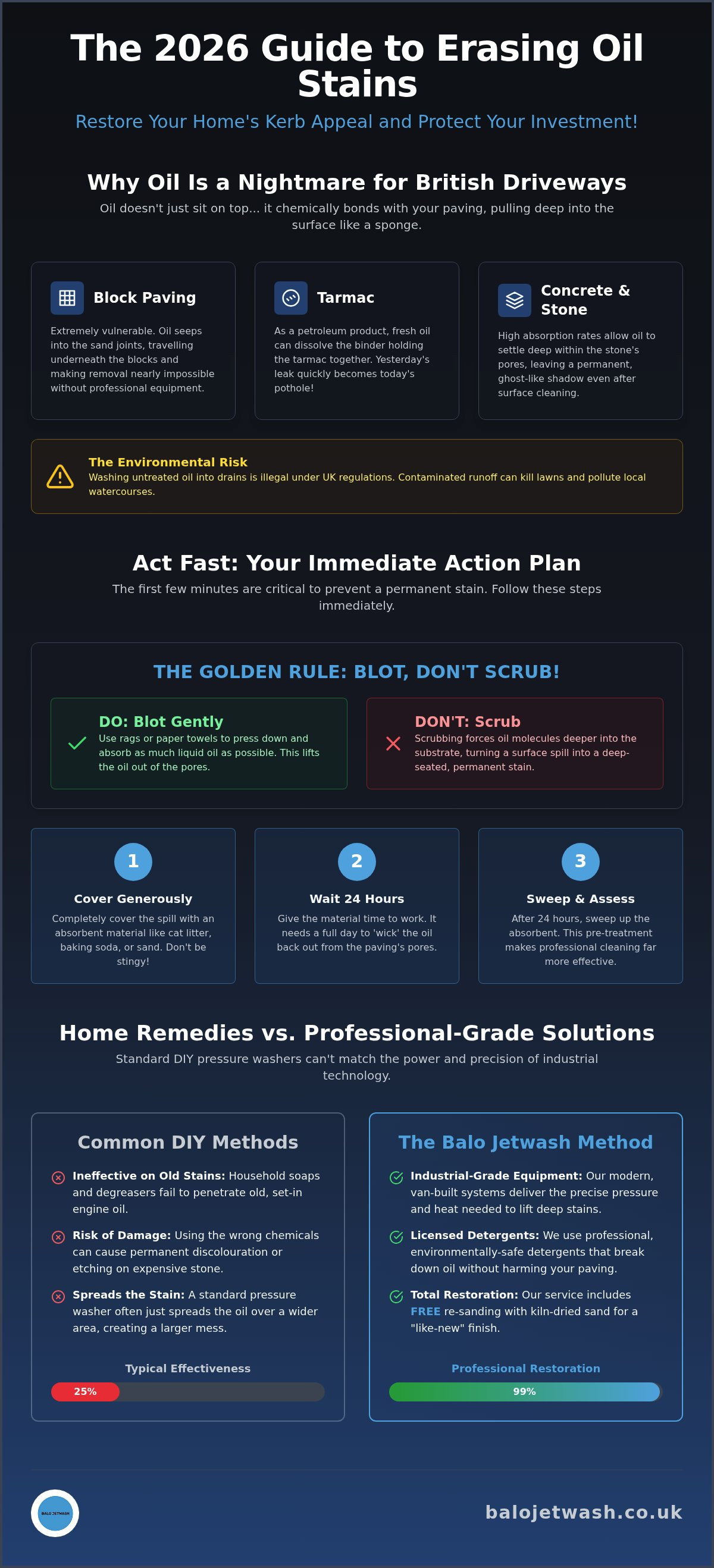
Oil isn't just a messy spill. It's a chemical nightmare that actually bonds with your paving. Because oil is hydrophobic, it actively repels water and clings desperately to the minerals in your driveway. This is exactly why simply hosing it down never works! In fact, reaching for the garden hose often makes the situation worse by spreading the grease across a larger area, turning a small spot into a massive eyesore. For homeowners in the West Midlands, where kerb appeal directly impacts property value, these dark blotches are more than just a nuisance; they're a financial drain.
The real trouble lies beneath the surface. Most British driveways are made of porous materials that act like a giant stone sponge. Through a process called 'wicking', the liquid oil is pulled deep into the substrate. Once it's down there, standard domestic cleaners can't reach it. This is why learning how to remove oil stains from driveway surfaces requires more than just a bucket of soapy water. You need to understand the material you're dealing with to avoid making a permanent mistake.
Common Paving Materials and Their Vulnerability
Every surface reacts differently to a leak. Block paving is particularly tricky because the oil seeps into the sand joints and travels underneath the blocks, making it nearly impossible to lift without professional jet washing techniques and industrial equipment. Tarmac is even more vulnerable. Since tarmac is a petroleum-based product, a fresh oil leak can actually dissolve the binder that holds the stones together. If left yesterday's leak is today's pothole! Even tough materials like concrete and Indian Sandstone have high absorption rates that allow oil to settle deep within the stone's pores, leaving a ghost-like shadow even after a surface scrub.