
Biocide roof treatment in Boldmere and how it limits moss regrowth

Biocide roof treatment to prevent moss growth in Boldmere can help slow regrowth after roof cleaning. How long the effect lasts depends on the roof’s exposure and its surroundings. For homeowners in Boldmere, Sutton Coldfield and Wolverhampton, understanding the difference between cleaning and treatment helps set realistic expectations.
It’s frustrating to see moss return, especially on damp or shaded parts of a roof. Roofing material, nearby trees and moisture all affect how quickly growth can develop again.
This article explains how biocide treatment works, how it differs from pressure washing and what to consider when planning roof maintenance. You’ll learn what affects regrowth and how to approach roof care with confidence.
Key Takeaways
Roof cleaning removes visible moss and dirt, while treatment targets biological growth left behind; soft washing is a separate low-pressure approach. Pressure washing can clean effectively when the pressure and technique suit the roof material, condition and accessibility. Biocide can slow moss returning, but shade, dampness, nearby trees and roof covering all influence regrowth. Protect plants, ponds and nearby property during treatment, and keep children and pets away until the treated area has dried. Regular roof maintenance, including reducing overhanging shade, can help limit the conditions that encourage moss.What Is The Difference Between Roof Cleaning And Roof Treatment?
Roof cleaning removes visible moss, dirt and algae. Treatment targets biological growth that may remain afterwards. Knowing the difference helps you choose an approach suited to the roof covering and the amount of growth.
Cleaning, Treatment and Soft Washing
Roof cleaning removes visible deposits; biocide treatment acts against biological growth; soft washing describes applying a cleaning solution with low-pressure water. These terms refer to different parts of roof care, not interchangeable services. A cleaned tile surface may still have microscopic growth or spores. Treatment can act on biological residue, while soft washing describes the application method, not the treatment’s purpose.
Post-Clean Treatment Requirements
Chemical treatment after cleaning isn’t automatically necessary. The roof’s condition and cleaning method help determine whether it’s appropriate. If moss or algae remains, a suitable biocide may help slow regrowth. Treatment doesn’t replace removing thick, visible growth, and moss won’t disappear immediately. Treated growth may take several weeks or months to weaken and weather away, so the roof can change gradually.
A biocide top-up may be worth considering every 2 to 3 years for heavily shaded or tree-covered roofs. That interval is a maintenance guide, not a promise that every roof needs identical treatment. Shade, moisture and the roof covering all affect how quickly growth returns. A roof with little shade may have different needs from tiles beneath overhanging branches.
Products, Permissions and Warranties
Roof treatments in the UK may contain active ingredients such as benzalkonium chloride, zinc sulphate, copper sulphate or sodium hypochlorite. Roof biocides are typically broad-spectrum, quaternary-ammonium-based formulations within the class covered by the Biocidal Products Regulation (BPR). The right product depends on the roof covering and label directions, so an ingredient alone doesn’t show that a treatment suits every roof.
Planning permission and warranty implications depend on the property, proposed work and warranty wording. The treatment alone doesn’t settle either question. Before work begins, identify the roof material, note any warranty conditions and agree on how the treatment will be applied. When choosing a local service, consider insurance, experience with your roofing material and a clear explanation of the cleaning and treatment method. These details help you assess whether the proposed work suits the roof’s condition.
Cleaning and treatment can work together, but they address different problems. Cleaning removes visible build-up; a suitable treatment afterwards can help slow regrowth. Roof access, tile condition and the amount of moss should guide the method, rather than applying the same process to every roof.
Is Biocide Better Than Pressure Washing A Roof?
Biocide treatment and pressure washing have different roles, so neither is right for every roof. The roof covering, its condition and the amount of moss help determine a suitable approach.
Biocide Application and Pressure Washing
Pressure washing uses water to remove visible moss and dirt, while biocide acts against biological growth. Choosing the method matters because excessive force can damage some roof surfaces. Suitable pressure and technique depend on the roofing material and its condition. Soft washing applies a cleaning solution with low-pressure water; it describes an application method, not a specific chemical or guaranteed result.
Biocide is applied at low pressure rather than through a high-pressure jet. Exterior cleaners typically dilute biocide concentrate at roughly a 20:1 ratio before roof application, but this isn’t a universal mixing instruction. The product label and the surface being treated guide its use. Heavy rain can wash treatment away, while strong winds can affect application and increase spray drift, so avoid those conditions.
Moss Removal Before Treatment
Removing thick, visible moss before applying biocide can help expose the roof surface to the treatment. The removal method depends on the tile material, its condition and roof access. Controlled pressure washing can remove moss where the surface can tolerate it. The aim is effective cleaning, not maximum force: an unsuitable jet can harm tiles or disturb their surface.
Planning also means considering where loosened debris and wash water will go. Moss can collect in gutters, so include them in the cleaning plan. Nearby plants, ponds and other property need protection from treatment and runoff. Roof work involves access at height, so don’t attempt it from an unstable ladder or by walking on tiles.
Safe Application and Weather
Before treatment, protect planting, ponds and surrounding property. Keep children and pets away from the work area during application and until treated surfaces have dried. They can typically return once surfaces are dry, usually within a few hours in good weather. Drying conditions vary, so follow product directions and keep access restricted while surfaces are wet.
Choose a dry, calm spell for application. Heavy rain may affect how much treatment remains on the roof, while strong wind can carry spray beyond the intended area. Plan how to apply the product, protect vulnerable surroundings and manage runoff. These steps help limit unwanted spread and keep treatment focused on the roof.
In short, pressure washing removes visible build-up, while low-pressure biocide application has a different purpose. Roof material, condition and accessibility determine the cleaning method and pressure. Careful preparation and suitable weather matter too. Choose a treatment that suits the roof instead of applying the same process to every surface.
What Is A Roof Biocide Treatment And Does It Stop Moss Coming Back?
Roof biocide treatment applies a chemical intended to act against biological growth, including moss and algae. It can slow regrowth, but won’t keep every roof clear indefinitely. Results depend on surrounding conditions, including shade, moisture and the roof’s direction.
Roof biocides in the UK are typically broad-spectrum, quaternary-ammonium-based formulations in the general class covered by the Biocidal Products Regulation (BPR). Follow product directions and take care to protect plants, ponds and other property during application. These precautions matter because treatment or runoff reaching nearby areas may cause harm.
Start by identifying where spray and runoff could travel. Cover or move vulnerable garden plants and protect ponds and other water features before treatment. Consider nearby drains and surfaces too, so you can manage runoff instead of letting it spread. Keep people and pets away from the work zone while the product is being applied and until it has dried.
Children and pets can typically return after roof biocide treatment has dried, usually within a few hours in good weather. Drying time depends on conditions, so use the treated area itself to judge when access can resume. For example, keep pets away during application and out of wet runoff areas. Protecting planting and property is part of the treatment, not an optional finishing touch.
Biocide doesn’t remove visible moss instantly. Treated growth may take several weeks or months to weaken and weather away naturally. Some spores may remain, and damp, shaded tiles can still favour regrowth. Lichen may also be present, but its appearance doesn’t mean every patch will respond or disappear at once. Gradual change after treatment is different from immediate physical removal.
Scraping is one way to remove visible moss, but it’s separate from applying biocide. Treatment acts on biological growth; it doesn’t lift thick moss from tiles. The right cleaning approach depends on the roof material, tile condition and amount of growth. This distinction explains why treatment can support roof care without replacing cleaning where heavy growth needs to be removed.
There isn’t a single interval that prevents moss returning on every roof. Shade from nearby trees, trapped moisture, roof direction and local weather all influence regrowth. For example, a north-facing roof beneath overhanging branches has different exposure from a sunnier, open roof. Treatment can slow growth; monitoring these conditions helps explain why results vary across roof surfaces.
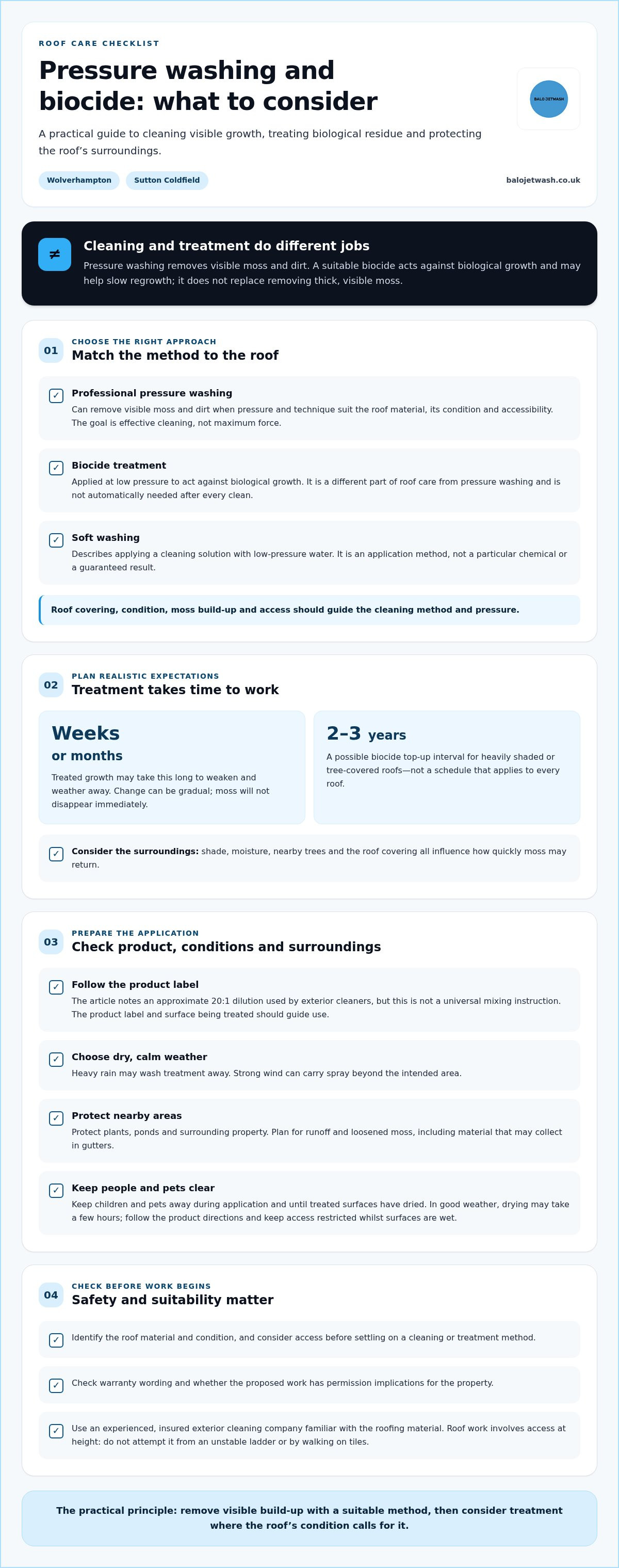
Factors affecting moss regrowth and treatment duration
Biocide can slow moss regrowth, but exposure and the roof’s surroundings affect how long its effect lasts. Shade, moisture, roof direction and covering all influence regrowth.
Conditions Affecting Moss Regrowth
A residual biocide treatment on roof tiles typically lasts 12-24 months, depending on exposure. That period describes the treatment’s residual effect, not a fixed moss-free guarantee. Rain, wind, organic matter and airborne spores reach roofs 365 days, continually changing the conditions on the surface.
Shaded roof slopes and tiles beneath mature trees often stay damp for longer. Heavily shaded roofs or roofs under mature trees may need attention every 18 months. A sunnier roof with less nearby tree cover can face different pressures. Roof direction and local weather also influence how quickly moss returns, so two slopes on one property may not behave alike.
Copper and Zinc Moss Inhibitors
Zinc or copper strips fitted along the roof’s peak can help inhibit moss growth. Rainwater runs over the metal and carries material down the tiles, creating conditions that can discourage moss. Placement matters: a strip near the ridge lets water flow across the roof surface below.
These strips can support maintenance, but they don’t remove existing moss or replace cleaning and treatment. Roof shape, tile condition and water flow affect where strips may help. They also don’t eliminate windblown spores or organic debris collecting on tiles, so consider the roof’s overall condition rather than relying on one measure.
Reducing Organic Regrowth
Reducing shade and damp can make roof surfaces less favourable to moss. Cutting back branches overhanging a roof by a metre or two can help reduce both. It can also limit leaf litter and other organic matter reaching roof tiles, although airborne spores and changing weather remain factors.
Maintenance works best as a combination of measures. Monitor shaded slopes, nearby branches and visible organic build-up, then consider whether cleaning or treatment suits the roof’s condition. Biocide can slow moss regrowth, but treated growth may take several weeks or months to weaken and weather away naturally. The roof’s appearance can therefore change gradually after treatment.
Choose a method based on the roof covering, the extent of growth and surrounding conditions. A damp, tree-covered slope, for example, may need closer attention than an exposed one. Use those differences to plan maintenance rather than expecting every treated roof to follow the same timetable.
Preventing moss with roof maintenance
Roof maintenance works best when you inspect regularly, clean appropriately and address conditions that encourage growth. The practical aim is to spot changes early and choose methods suited to the roof tiles and surface.
Check the roof’s appearance from the ground, especially after wet or windy weather. Look for visible moss, gutters that appear blocked, loose debris and patches that stay damp. Homeowners are advised to remove moss from a roof at least once a year. That doesn’t mean climbing onto the roof or using the same removal method for every covering.
Let the roof material and condition guide your cleaning choice. Pressure washing can remove moss and organic build-up when the pressure and technique suit the tiles. Excessive force can harm some surfaces, so a controlled professional approach matters. Treatment may also help slow biological regrowth after cleaning, but it won’t make existing thick moss disappear immediately.
Timing matters because treated moss can take several weeks or months to weaken and weather away. The roof may look patchy during that period, even as treatment takes effect. Monitor the same slope over time rather than judging progress from a single day. Comparing visible areas can help distinguish gradual change from fresh growth.
Shade and moisture are useful clues when planning maintenance. A roof section beneath overhanging branches, for example, may stay damp longer than an open, sun-facing slope. Cutting branches back by a metre or two can reduce shade and damp, while limiting leaves and other organic matter reaching the tiles. These changes address conditions that encourage moss, not just its appearance.
Zinc or copper strips along the roof’s peak can also help inhibit moss as rainwater moves over the tiles. They’re a supporting measure, not a substitute for checking the roof’s condition or removing established growth. Their usefulness depends on the roof layout and water flow, so consider how each slope drains before including strips in a maintenance plan.
Keep a simple record of inspections, visible changes and cleaning dates. If one shaded slope repeatedly develops moss while another stays clearer, the difference can guide your attention and help explain regrowth. Leave roof access and work at height to experienced, insured professionals. The takeaway is simple: inspect regularly, address contributing shade and damp, and match cleaning and treatment to the roof’s material and condition.
Balo Jetwash: driveway Cleaning
Balo Jetwash provides professional roof cleaning using modern, van-built industrial-grade equipment to remove moss, dirt and algae. The cleaning method is matched to the roof surface, with suitable detergent used where needed to address remaining biological growth.
For driveway and patio cleaning, modern van-built equipment tackles stubborn dirt, algae and moss. Klin-dried sand re-sanding and licensed industrial cleaning detergent are included free with these services. It’s a practical way to refresh tired outdoor surfaces alongside roof care in Sutton Coldfield.
To discuss a roof that needs attention, explore professional roof cleaning and moss removal, or contact Balo Jetwash.
Plan the next step for your roof
Make your decision based on the roof itself, not just its appearance. Consider the covering, its condition and how accessible it is before choosing cleaning or treatment. A clear description of visible moss, damp patches and shaded areas can help define what needs attention.
Balo Jetwash provides roof cleaning alongside driveway and patio cleaning for homeowners caring for exterior surfaces around their property. Professional roof cleaning uses a method suited to the surface, with treatment where appropriate. It’s a practical starting point for discussing your roof’s condition and the approach that fits.
If you’re ready to explore roof cleaning, contact Balo Jetwash about your roof. Take the next step towards a cleaner, well-cared-for exterior.
Frequently Asked Questions
Why Do Gutters Need Checking After Roof Moss Removal?
Check gutters because loosened moss and roof debris can collect inside them. A blockage may stop rainwater draining properly and cause overflow at the roof edge. Look for debris near downpipes and check whether water drains freely after cleaning. Don’t climb onto the roof or lean out of an upper window. A professional can assess gutters that aren’t safely visible from the ground.
Can I Buy Roof Biocide And Apply It Myself?
Buying roof biocide doesn’t make applying it straightforward: roof access, product handling and runoff all need care. Follow the product label, protect nearby plants and ponds, and don’t work at height without suitable equipment. Balo Jetwash serves Sutton Coldfield and Wolverhampton. A professional assessment can help match the cleaning approach to the roof’s condition.
Do I need the moss scraped off as well, or is biocide enough?
Biocide may not remove thick, visible moss, so cleaning may also be needed. The right method depends on the roof covering, tile condition and amount of growth. Professional pressure washing can remove moss from suitable surfaces when the pressure and technique are appropriate. Manual scraping is used in some roof-cleaning approaches, but it isn’t automatically required for every roof. Treatment and physical removal serve different purposes; the existing build-up helps determine what’s needed.
Does Biocide Clean Roof Tiles Immediately?
No. Biocide is a treatment, not an instant wash that removes dirt and moss. Visible deposits may need separate cleaning, and biological growth can change gradually after treatment. If the tiles don’t look different straight away, that alone doesn’t show whether treatment has worked. Don’t add more product simply because the appearance hasn’t changed immediately; follow the product directions and assess the roof over time.
How Is Heavy Moss Removed Before Treatment?
Remove heavy moss using a method suited to the roof material, tile condition and access. Professional pressure washing can clear built-up growth when the pressure and technique suit the surface. The work should account for loosened material collecting in gutters. Roof work at height can be hazardous, so don’t attempt it from a ladder or by walking across the tiles yourself.
Is a biocide treatment the same as soft washing?
No. Biocide describes a treatment intended to act against biological growth; soft washing describes a low-pressure application method. A soft-wash solution may contain biocide, but the terms aren’t interchangeable. For example, a low-pressure solution may be applied after visible growth is removed. Choose a product and application approach suited to the roof covering and condition, rather than relying on the method’s name alone.
Why Do Some Roofs Develop Moss Faster Than Others?
Differences in shade, dampness and exposure help explain why moss develops unevenly. A roof slope beneath overhanging branches may stay damp and collect leaves, while a more open slope can dry sooner. Roof direction, local weather, nearby trees and covering also affect growth. Comparing slopes on the same property can reveal which areas stay moist or gather debris and need closer attention.
What is biocide roof treatment and how does it prevent moss growth?
Roof biocide treatment applies a product intended to act on biological growth, including moss. It can slow regrowth, but it won’t make roof tiles permanently resistant. Consider the roof’s exposure, nearby vegetation and visible condition when planning maintenance. A shaded slope under branches, for example, may need attention sooner than an open slope. These factors help explain why treatment results and maintenance needs differ between roofs.
{"@context":"https://schema.org","@type":"FAQPage","mainEntity":[{"@type":"Question","name":"Why Do Gutters Need Checking After Roof Moss Removal?","acceptedAnswer":{"@type":"Answer","text":"Check gutters because loosened moss and roof debris can collect inside them. A blockage may stop rainwater draining properly and cause overflow at the roof edge. Look for debris near downpipes and check whether water drains freely after cleaning. Don’t climb onto the roof or lean out of an upper window. A professional can assess gutters that aren’t safely visible from the ground."}},{"@type":"Question","name":"Can I Buy Roof Biocide And Apply It Myself?","acceptedAnswer":{"@type":"Answer","text":"Buying roof biocide doesn’t make applying it straightforward: roof access, product handling and runoff all need care. Follow the product label, protect nearby plants and ponds, and don’t work at height without suitable equipment. Balo Jetwash serves Sutton Coldfield and Wolverhampton. A professional assessment can help match the cleaning approach to the roof’s condition."}},{"@type":"Question","name":"Do I need the moss scraped off as well, or is biocide enough?","acceptedAnswer":{"@type":"Answer","text":"Biocide may not remove thick, visible moss, so cleaning may also be needed. The right method depends on the roof covering, tile condition and amount of growth. Professional pressure washing can remove moss from suitable surfaces when the pressure and technique are appropriate. Manual scraping is used in some roof-cleaning approaches, but it isn’t automatically required for every roof. Treatment and physical removal serve different purposes; the existing build-up helps determine what’s needed."}},{"@type":"Question","name":"Does Biocide Clean Roof Tiles Immediately?","acceptedAnswer":{"@type":"Answer","text":"No. Biocide is a treatment, not an instant wash that removes dirt and moss. Visible deposits may need separate cleaning, and biological growth can change gradually after treatment. If the tiles don’t look different straight away, that alone doesn’t show whether treatment has worked. Don’t add more product simply because the appearance hasn’t changed immediately; follow the product directions and assess the roof over time."}},{"@type":"Question","name":"How Is Heavy Moss Removed Before Treatment?","acceptedAnswer":{"@type":"Answer","text":"Remove heavy moss using a method suited to the roof material, tile condition and access. Professional pressure washing can clear built-up growth when the pressure and technique suit the surface. The work should account for loosened material collecting in gutters. Roof work at height can be hazardous, so don’t attempt it from a ladder or by walking across the tiles yourself."}},{"@type":"Question","name":"Is a biocide treatment the same as soft washing?","acceptedAnswer":{"@type":"Answer","text":"No. Biocide describes a treatment intended to act against biological growth; soft washing describes a low-pressure application method. A soft-wash solution may contain biocide, but the terms aren’t interchangeable. For example, a low-pressure solution may be applied after visible growth is removed. Choose a product and application approach suited to the roof covering and condition, rather than relying on the method’s name alone."}},{"@type":"Question","name":"Why Do Some Roofs Develop Moss Faster Than Others?","acceptedAnswer":{"@type":"Answer","text":"Differences in shade, dampness and exposure help explain why moss develops unevenly. A roof slope beneath overhanging branches may stay damp and collect leaves, while a more open slope can dry sooner. Roof direction, local weather, nearby trees and covering also affect growth. Comparing slopes on the same property can reveal which areas stay moist or gather debris and need closer attention."}},{"@type":"Question","name":"What is biocide roof treatment and how does it prevent moss growth?","acceptedAnswer":{"@type":"Answer","text":"Roof biocide treatment applies a product intended to act on biological growth, including moss. It can slow regrowth, but it won’t make roof tiles permanently resistant. Consider the roof’s exposure, nearby vegetation and visible condition when planning maintenance. A shaded slope under branches, for example, may need attention sooner than an open slope. These factors help explain why treatment results and maintenance needs differ between roofs."}}]}
Information
Water available? - You don't need to be present for us to carry out the service. If required, we can supply water ourselves.
Insurance
Balo Jetwash is fully insured, We have £5,000,000 of public liability insurance. Balo Jetwash operatives are professional, reliable and endeavour to carry out the work to the highest standard with minimal fuss and upheaval.