
Soft Wash Roof Cleaning for Older Tiles in Four Oaks

Soft wash roof cleaning for older tiles in Four Oaks needs to suit the roofing material and its condition. Soft washing applies water at low pressure with a suitable treatment to address moss and algae, allowing biological growth to die back and weather away. The right approach matters: excessive pressure can damage tile surfaces or force water beneath them.
It’s natural to want a cleaner roof without putting older concrete or clay tiles at risk. This guide explains how soft washing works, what to consider for different tile types and how roof condition and access affect the cleaning method.
You’ll also learn how professional roof cleaning fits into roof care in Four Oaks and Sutton Coldfield, when treatment may help with remaining growth, and how to request a free, personalised quotation from Balo Jetwash. The aim is to help you understand the options and make an informed decision about your roof.
Key Takeaways
Learn how moss, algae and lichen affect older roof tiles, and why shaded, damp areas can encourage growth. Understand why uncontrolled high pressure can harm ageing tiles, and how the right technique depends on the roof’s material and condition. Find out how a suitable softwash treatment can tackle remaining biological growth and help slow regrowth. See what to consider when cleaning concrete and clay tiles, including their surface condition and existing wear. Discover how to request a free, no-obligation quotation for professional roof cleaning in Sutton Coldfield.Cleaning solutions for moss, algae and lichen
Soft-wash treatments combine low-pressure application with a suitable cleaning product to address biological growth. The roof material, its condition and the type of growth all help determine the right approach.
A roof-cleaning quote should describe the work, treatment, access arrangements and waste handling. The price depends on roof size, condition and access; the written quote should also identify any potential extra work, such as repairs highlighted during an inspection.
Soft-wash products vary, so the choice should suit the roof material and follow the product instructions. Garden safety depends on careful handling, protecting nearby planting and managing runoff. Keep people and pets away from the work area during application, and take nearby water features and wildlife habitats into account.
Moss and Algae on Roof Tiles
Moss and algae are biological growths that establish on roof surfaces, especially on damp, shaded slopes. North-facing areas receive less sunlight and can stay damp longer, encouraging growth. Shaded roofs may begin developing moss after ten or fifteen years, while concrete tiles can roughen and absorb water as they age.
Removing moss can improve a roof’s appearance and reduce build-up around tile gaps and drainage routes. Moss retains moisture against tiles, contributing to deterioration and cold-weather damage. Lichen can cling firmly, so cleaning should suit the tile surface rather than aim for a quick visual change alone.
Biocide Treatment and Regrowth
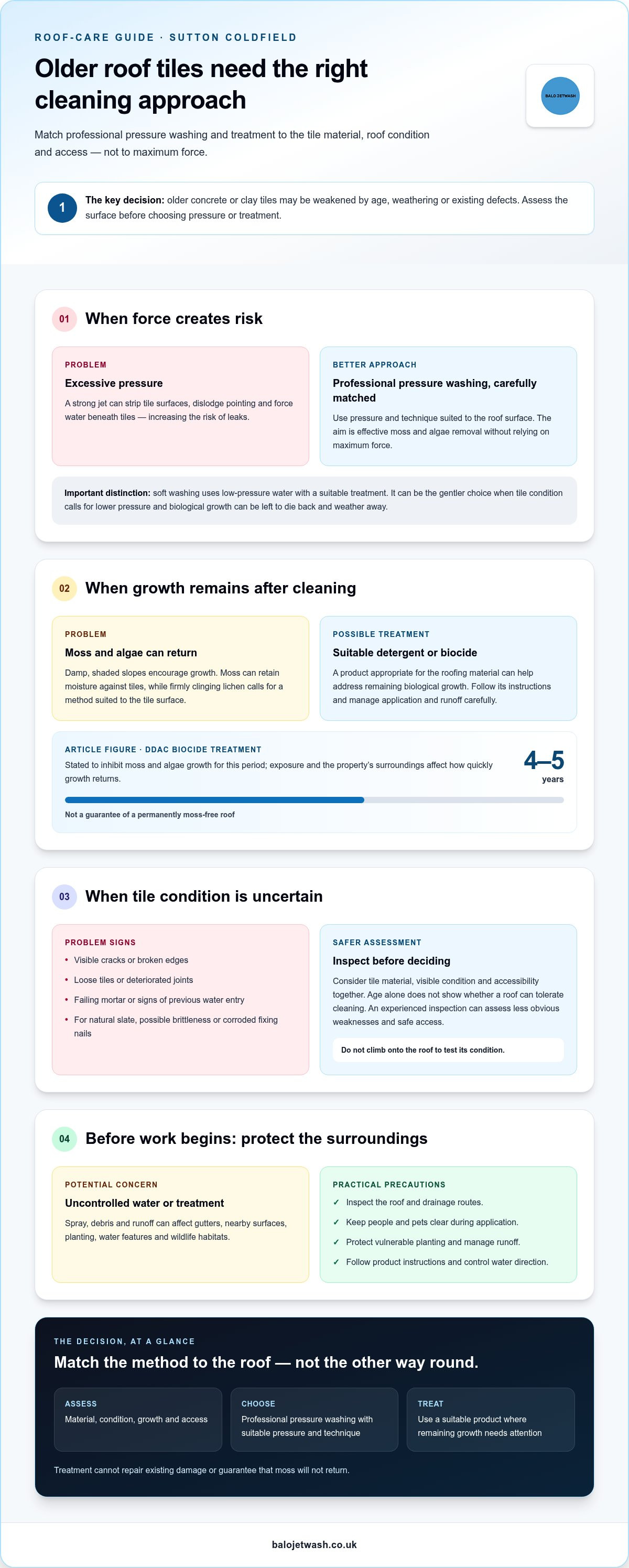
A biocide treatment targets moss and algae after cleaning, helping address remaining spores and slow regrowth. It cannot keep a roof permanently moss-free. A DDAC biocide treatment is stated to inhibit moss and algae growth for four to five years, though exposure and the property’s surroundings influence how quickly growth returns.
Trees can shade roof sections and add organic debris, so heavily covered properties may need treatment more often. A suitable plan considers exposure and existing growth, then applies the product according to its instructions. This helps explain why similar roofs may not stay clear for the same length of time.
Softwash Chemicals and Their Effects
Soft-wash cleaning uses a suitable detergent or biocide to treat biological growth. The product should match the roofing material and cleaning task. Choosing a detergent recommended for the material is a useful guide, because one product should not automatically be used on every roof.
Protecting gardens and wildlife requires careful product handling and controlled application. Identify nearby planting, water features and runoff routes before work begins. Follow the product label, protect vulnerable garden areas and manage runoff so the treatment stays within the intended working area.
Risks of pressure washing roof tiles
Cleaning pressure must suit the tile, its condition and the roof’s layout. Excessive force can turn moss removal into avoidable damage.
Comparing Softwashing and High-Pressure Cleaning
Soft washing applies water at low pressure with a suitable treatment, while high-pressure cleaning uses a stronger water jet. The distinction matters because older concrete or clay tiles may be weakened by age, weathering or existing defects. High pressure can strip tile surfaces, dislodge pointing and drive water beneath tiles, creating a risk of leaks.
Professional pressure washing can remove moss and algae, but the method must suit the roof surface. The aim isn’t to use maximum force. Soft washing offers a gentler approach where tile condition calls for lower pressure and treatment. Biological growth can then die back and weather away, rather than relying on force alone.
Low-pressure steam cleaning is another approach described for gentle rinsing. A suitable method depends on the roof material, the amount of growth and access. Before cleaning, an inspection should identify vulnerable fittings, loose tiles and weakened mortar. Treatment may help address remaining biological growth, but it cannot repair existing damage or guarantee that moss won’t return.
Checking Older Tiles for Fragility
Fragility is assessed by looking for visible cracks, broken edges, loose tiles, failing mortar and signs of previous water entry. Age alone doesn’t reveal whether a roof can tolerate cleaning. Natural slate can become brittle, and its fixing nails may corrode, so both the surface and fixings matter.
Don’t climb onto the roof to test it. A ground-level view can reveal visible damage, but an experienced inspection is needed to assess less obvious weaknesses and safe access. If tiles move, look fractured or have deteriorated joints, reconsider the cleaning pressure before work begins. The decision should weigh condition, material and accessibility together.
Precautions help protect tiles, gutters, people and neighbouring properties. Before washing, inspect the roof and drainage routes, keep people clear of the work area and control water direction to limit spray beyond the roof. Use pressure suited to the tiles, avoid forcing water beneath their edges, and check nearby surfaces for runoff or debris. These measures reduce avoidable damage during cleaning.
For older roofs, the safest method isn’t automatically the most forceful or the gentlest. It’s the approach matched to the roof’s condition, tile type and access, with treatment used where appropriate. That assessment helps distinguish removable surface growth from signs that tiles or their fixings need attention first.
Applying softwash detergent to kill spores
Soft-wash detergent treats biological growth with low-pressure application rather than relying on force alone. For a residential roof, the process starts by identifying the tile material and areas affected by moss, algae or lichen. That assessment guides the choice of treatment. A detergent recommended for the roofing material helps ensure the product suits the surface.
Application needs even coverage across affected surfaces. A shaded roof slope, for example, may have more growth than a sun-exposed section, so treatment should reach the affected areas without overlooking tile edges and joints. A professional assesses access and roof condition before work, since fragile tiles and awkward layouts can change how detergent is applied.
Biocide can kill moss spores and slow regrowth after cleaning, but it cannot prevent moss returning permanently. The treatment works alongside the removal of visible moss and debris. It addresses biological growth that remains on the surface, rather than repairing cracked tiles or replacing weathered mortar. Those are separate maintenance concerns.
Pressure cleaning and detergent have different roles. Carefully controlled pressure can remove dirt and loosen surface growth, while a suitable treatment helps deal with remaining biological matter. The cleaning method must match the roof material. High pressure can force water beneath tiles or damage their surfaces, so detergent application should not become an excuse for excessive force.
Follow the detergent’s product instructions, including its application and handling guidance. A product intended for one roofing material should not automatically be assumed suitable for another. Concrete tiles, clay tiles and slate have different surface characteristics. Choose a treatment based on tile type, condition and growth, rather than using the same product on every roof.
After treatment, moss and algae may take time to die back and weather away. A roof may therefore look different immediately after cleaning than it does later. Don’t judge the result only by whether every discoloured patch disappears at once. Lichen can cling tightly, and biological material may fade gradually as treatment takes effect.
Lasting results depend on more than detergent. Shading, damp conditions, nearby trees and accumulated debris can encourage new growth. For example, leaves collecting in a roof valley can hold moisture and create a favourable spot for moss. Considering the roof’s surroundings and drainage routes helps explain why regrowth varies between surfaces.
A sound treatment plan combines inspection, material-appropriate detergent and controlled cleaning. It should account for roof access and visible tile damage before work begins. This way, detergent supports the cleaning process without being mistaken for a repair, a permanent preventative measure or a substitute for pressure and technique suited to the roof.
Cleaning effects on concrete and clay tiles
Concrete and clay tiles respond differently to cleaning because their surfaces and condition vary. A suitable method considers tile material, existing wear, growth and roof access before work begins.
Concrete tiles are porous, and their surfaces can roughen as they age. That texture can absorb water and encourage moss growth, particularly where a roof stays damp. Gentle, controlled cleaning can remove visible moss and dirt, while suitable treatment addresses remaining biological growth. The aim is to clean the surface without treating every concrete roof as equally robust.
Clay tiles also need an approach suited to their condition. Soft washing is described as suitable for most common UK roofing materials, including clay and concrete tiles. That doesn’t mean every tile can be treated identically. A professional assessment considers cracking, loose sections, weathered joints and the type of growth before selecting pressure and treatment.
Professional pressure cleaning can remove moss and built-up dirt when the pressure and technique suit the roof. Excessive force may damage tile surfaces or force water beneath them. Low-pressure application with an appropriate detergent can help treat remaining growth without relying on a strong jet. The cleaning method should reflect the tiles’ age and visible condition, not simply the amount of moss.
Weather and exposure also affect what cleaning reveals. A north-facing slope receives less sunlight and can stay damp, while nearby trees may add leaves and organic debris. For example, moss gathered around a ridge or valley may need attention alongside the main tile surface. These conditions influence where growth forms and how quickly it can return.
Access matters as much as tile type. The roof’s height, pitch and surrounding space affect how safely and carefully work can be carried out. A clear view of damaged tiles, roof edges and drainage routes helps shape the cleaning plan. Homeowners shouldn’t climb onto older roofs to inspect them, since movement can put fragile tiles under extra strain.
Before requesting a free quotation, note whether the roof has concrete or clay tiles and identify visible damage from ground level. A useful assessment can then consider tile condition, roof size, height, access and the amount of growth. Those details help explain why the proposed method may differ between two roofs that look similar from the street.
After cleaning, the roof may not look uniformly new. Weathering, original colour variation and existing tile wear can remain visible even when moss and dirt have been removed. Treatment can help address biological growth, but it won’t restore a worn tile surface. The realistic result is a cleaner roof, achieved with a method matched to its material and condition.
Roof cleaning service in Sutton Coldfield
Roof cleaning involves more than removing visible moss. In Four Oaks and Sutton Coldfield, tile type, roof condition, safe access and drainage all shape the work, so a clear assessment matters before cleaning begins.
Roof cleaning is generally treated as maintenance and doesn’t require planning permission. Owners of listed buildings or properties in conservation areas should check with their local authority first.
When assessing a roof cleaner, look for evidence of insurance covering the proposed work at height, a clear explanation of the cleaning method and a written description of the work. Reviews are most useful when they discuss roof cleaning, tile types and how the finished work was handled.
Start with the roof itself. Concrete, clay, slate and other roof types have different surface characteristics, so a cleaning plan should account for material and visible wear. For example, loose tiles or weathered mortar may affect how pressure washing is carried out. An inspection should also identify roof areas that need repair before cleaning.
Gutters, valleys, ridges and chimneys deserve attention during the assessment. Leaves and moss can gather in these places, while blocked drainage may leave moisture against roof surfaces. A practical scope should explain how the work addresses moss and debris, how runoff is managed, and whether gutter cleaning is included.
Access affects both safety and the method used. Roof height, pitch, nearby structures and the space around the property can influence equipment and water control. Before work starts, consider the surrounding areas, including paths, planting and neighbouring property. Managing spray and debris helps reduce unwanted mess beyond the roof.
A biocide treatment may be used after cleaning to address remaining biological growth and slow regrowth. It won’t prevent moss from returning permanently. Trees and shaded roof slopes can keep surfaces damp, so the surrounding environment helps explain why growth returns at different rates.
Ask for a quote that describes the roof area and material, the proposed cleaning method, access arrangements and any treatment. It should also set out what happens if the inspection identifies damaged tiles or other repair needs. The price depends on the roof’s size, condition and access, and is provided after a quote request.
Roof cleaning is not automatically suitable for every surface in every condition. Brittle slate, cracked tiles, loose fittings or failing mortar can change the sensible course of action. A thorough assessment should distinguish removable growth from damage that needs attention before cleaning proceeds.
Before arranging work, make a short note of visible moss, roof type, gutters and access concerns. Those details help create a more useful assessment and a clearer quotation. For older roofs in Four Oaks and Sutton Coldfield, the key takeaway is simple: choose a method based on the actual tiles and their condition, not appearance alone.
Balo Jetwash: driveway Cleaning
Balo Jetwash provides professional roof cleaning for homeowners dealing with moss, dirt and algae on older tiles. Its pressure-washing approach uses pressure and technique suited to the roof surface, with a suitable cleaning treatment where needed. Tile material, condition and access guide the method, helping avoid uncontrolled force on ageing concrete or clay.
If you’re weighing up cleaning for an older roof, consider visible growth, tile condition and access before choosing your next step. Balo Jetwash also cleans driveways and patios, helping refresh other exterior surfaces around your home in Four Oaks and Sutton Coldfield.
Explore professional roof cleaning, or contact Balo Jetwash to discuss your roof and request a free, no-obligation quote.
Choose your next step with confidence
Before arranging work, decide what you want to improve first. A clearer roof, a cleaner patio or a refreshed driveway may each call for a different plan. Balo Jetwash provides roof cleaning, patio cleaning and driveway cleaning, so you can focus on the exterior areas that matter most to your home.
For older tiles, explain any visible concerns and what you hope to achieve. The roof’s material, condition and access help shape a suitable cleaning approach. Professional pressure washing, with an appropriate treatment where needed, can tackle dirt and organic growth using a method matched to the surface.
If you’re ready to discuss your roof or another exterior surface, contact Balo Jetwash for a free, no-obligation quote. A clear conversation is a straightforward first step towards a cleaner-looking home.
Frequently Asked Questions
Do you offer free quotations?
Yes, Balo Jetwash provides free, personalised quotations. Share the roof material, visible growth and any access concerns so the quotation can reflect the work involved. A tailored quote helps you understand the proposed scope before deciding whether to proceed.
Is roof cleaning worth the cost?
It can be worthwhile if moss, lichen or debris affects the roof’s appearance or gathers around drainage areas. Consider the roof’s condition and the work needed, rather than appearance alone. A roof with limited growth may need a different scope from one with widespread build-up. A quotation lets you compare the proposed cleaning work with your priorities for maintaining the property.
Should the whole roof be cleaned or just the mossy side?
Either option may suit, depending on how widespread the growth is and the finish you want. A partial clean may be appropriate where growth is isolated, while cleaning more slopes can create a more consistent appearance. Consider whether other sections show early growth or debris around valleys and gutters. An assessment can identify the affected areas and clarify the scope before you decide.
What is soft washing?
Soft washing is a cleaning method that applies water at low pressure with a suitable treatment for biological growth. Rather than depending on a powerful jet to remove everything immediately, the treatment helps growth die back and weather away. The choice of product and application depends on the roof material and condition. It differs from uncontrolled high-pressure washing, which can damage vulnerable surfaces.
What is soft-wash roof cleaning, and how does it work on older roof tiles?
Soft-wash roof cleaning applies a suitable treatment at low pressure to deal with moss and algae. For older tiles, the method should account for tile material, visible wear and access. Biological growth may fade over time rather than disappearing immediately. Treatment won’t repair cracked tiles or weathered mortar, so those issues need separate consideration.
Is soft washing safe for ageing clay and concrete roof tiles?
Soft washing can suit clay and concrete tiles, but the roof’s actual condition matters. An assessment should look for cracks, loose tiles and worn joints before cleaning begins. For example, a sound tiled surface and one with visible damage need different consideration.
Which roof-cleaning methods suit older tiles: soft washing, pressure washing or manual scraping?
The right method depends on tile material, condition and access. Balo Jetwash provides professional roof pressure washing, using an approach suited to the roof and a suitable treatment where required. Excessive pressure can damage tiles, so the aim is controlled cleaning, not maximum force. Manual scraping is used by some roof cleaners, but Balo Jetwash does not offer that method.
How much does soft-wash roof cleaning cost in Sutton Coldfield?
The final price varies with location, material type and job size, so each job needs a personalised quotation. Share details about the roof and access to help establish the scope. The free quote gives you the specific price for your property before you decide how to proceed.
{"@context":"https://schema.org","@type":"FAQPage","mainEntity":[{"@type":"Question","name":"Do you offer free quotations?","acceptedAnswer":{"@type":"Answer","text":"Yes, Balo Jetwash provides free, personalised quotations. Share the roof material, visible growth and any access concerns so the quotation can reflect the work involved. A tailored quote helps you understand the proposed scope before deciding whether to proceed."}},{"@type":"Question","name":"Is roof cleaning worth the cost?","acceptedAnswer":{"@type":"Answer","text":"It can be worthwhile if moss, lichen or debris affects the roof’s appearance or gathers around drainage areas. Consider the roof’s condition and the work needed, rather than appearance alone. A roof with limited growth may need a different scope from one with widespread build-up. A quotation lets you compare the proposed cleaning work with your priorities for maintaining the property."}},{"@type":"Question","name":"Should the whole roof be cleaned or just the mossy side?","acceptedAnswer":{"@type":"Answer","text":"Either option may suit, depending on how widespread the growth is and the finish you want. A partial clean may be appropriate where growth is isolated, while cleaning more slopes can create a more consistent appearance. Consider whether other sections show early growth or debris around valleys and gutters. An assessment can identify the affected areas and clarify the scope before you decide."}},{"@type":"Question","name":"What is soft washing?","acceptedAnswer":{"@type":"Answer","text":"Soft washing is a cleaning method that applies water at low pressure with a suitable treatment for biological growth. Rather than depending on a powerful jet to remove everything immediately, the treatment helps growth die back and weather away. The choice of product and application depends on the roof material and condition. It differs from uncontrolled high-pressure washing, which can damage vulnerable surfaces."}},{"@type":"Question","name":"What is soft-wash roof cleaning, and how does it work on older roof tiles?","acceptedAnswer":{"@type":"Answer","text":"Soft-wash roof cleaning applies a suitable treatment at low pressure to deal with moss and algae. For older tiles, the method should account for tile material, visible wear and access. Biological growth may fade over time rather than disappearing immediately. Treatment won’t repair cracked tiles or weathered mortar, so those issues need separate consideration."}},{"@type":"Question","name":"Is soft washing safe for ageing clay and concrete roof tiles?","acceptedAnswer":{"@type":"Answer","text":"Soft washing can suit clay and concrete tiles, but the roof’s actual condition matters. An assessment should look for cracks, loose tiles and worn joints before cleaning begins. For example, a sound tiled surface and one with visible damage need different consideration."}},{"@type":"Question","name":"Which roof-cleaning methods suit older tiles: soft washing, pressure washing or manual scraping?","acceptedAnswer":{"@type":"Answer","text":"The right method depends on tile material, condition and access. Balo Jetwash provides professional roof pressure washing, using an approach suited to the roof and a suitable treatment where required. Excessive pressure can damage tiles, so the aim is controlled cleaning, not maximum force. Manual scraping is used by some roof cleaners, but Balo Jetwash does not offer that method."}},{"@type":"Question","name":"How much does soft-wash roof cleaning cost in Sutton Coldfield?","acceptedAnswer":{"@type":"Answer","text":"The final price varies with location, material type and job size, so each job needs a personalised quotation. Share details about the roof and access to help establish the scope. The free quote gives you the specific price for your property before you decide how to proceed."}}]}
Information
Water available? - You don't need to be present for us to carry out the service. If required, we can supply water ourselves.
Insurance
Balo Jetwash is fully insured, We have £5,000,000 of public liability insurance. Balo Jetwash operatives are professional, reliable and endeavour to carry out the work to the highest standard with minimal fuss and upheaval.