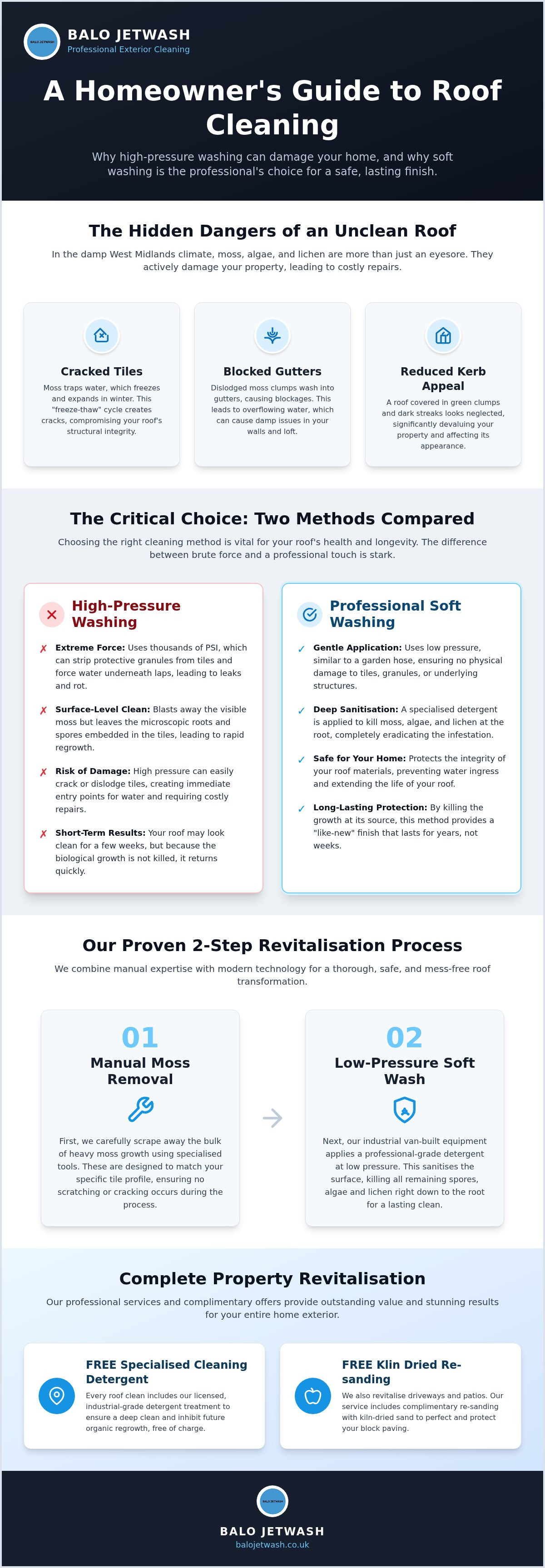
That high-pressure jet wash might be the master of your driveway, but pointing it at your roof is the fastest way to invite a structural disaster. You have likely noticed those unsightly green clumps ruining your kerb appeal or found your gutters overflowing during a heavy West Midlands downpour. It is incredibly frustrating to see your home look neglected when you take so much pride in every tile. You want a solution that works without causing more harm than good. This guide reveals that the best way to remove roof moss isn't through brute force; it is through a specialised, gentle approach that protects your roof's integrity whilst delivering a stunning "like-new" finish.
We understand the anxiety caused by conflicting advice on whether pressure washing is safe for your property. It is a common worry for homeowners in Wolverhampton and beyond. In this guide, we will settle the debate by comparing the risks of high-pressure blasting against the restorative power of professional soft washing. You will discover how to achieve long-term protection against regrowth and gain total peace of mind from a local expert who genuinely cares about your results. Let's get your home looking its absolute best again.
Key Takeaways
Understand how the damp West Midlands climate encourages moss growth that can lead to blocked gutters and damp lofts if left untreated.Learn why high-pressure washing can be a disaster for your roof tiles, causing granular loss and forcing water into your home's insulation.Discover why soft washing is the best way to remove roof moss safely, using low-pressure techniques and specialised detergents for a deep, lasting clean.Explore our professional two-step process that combines manual scraping with industrial-grade equipment to revitalise your property without the mess.See how local expertise and Vanbuilt technology can transform your home's kerb appeal and provide long-term protection against organic regrowth.The Roof Cleaning Dilemma: Understanding the Best Approach for Your Home
Living in the West Midlands means embracing the rain, but your roof tiles aren't quite so keen. From Wolverhampton to Solihull, our damp climate creates a paradise for organic growth. Have you noticed those thick green clumps clinging to your tiles? That's more than just a cosmetic nuisance. Moss, lichen, and algae act like heavy, wet sponges. They trap moisture against your roof's surface, leading to "freeze-thaw" damage where expanding ice cracks your tiles during winter. It's a silent threat to your home's structural integrity.
Ignoring this growth is a gamble. Overflowing gutters are often the first sign of trouble, as clumps of moss wash down and cause blockages that lead to damp issues in your loft and walls. Beyond the structural risks, a moss-covered roof looks neglected. It actively devalues your property amongst your neighbours and ruins that all-important kerb appeal. When searching for the best way to remove roof moss, you will quickly find two competing schools of thought: the brute force of pressure washing and the scientific precision of soft washing. As noted in Wikipedia's guide to roof cleaning, using high-pressure water can actually damage your roof's integrity, making the choice of method absolutely critical for your home's longevity.
Common Roof Contaminants in Wolverhampton and Beyond
The "big three" invaders are moss, lichen, and algae. Moss is the most visible, often dominating North-facing slopes where the sun rarely reaches. Lichen is that stubborn, crusty white or yellow growth that seems impossible to shift. Algae, meanwhile, leaves those unsightly dark streaks. All three thrive in our local humidity. They don't just sit on the surface; they root into the pores of your tiles. If you want a "like-new" restoration, you need a method that kills these organisms at the root rather than just giving them a "haircut" with a garden hose.