
Professional Roof Cleaning and Moss Removal in Wolverhampton

Roof cleaning in Wolverhampton calls for an approach suited to the roof’s material, condition and accessibility. Carefully controlled pressure washing can remove dirt and growth, while a suitable treatment may address biological growth left after washing.
It’s understandable to be cautious about pressure washing roof tiles. You want moss removed without putting your roof at risk, and you want to know what to expect from treatment over time. This guide explains how to assess pressure washing, understand moss treatments and choose a registered local contractor.
You’ll also learn what professional roof cleaning can involve and which details matter when planning the work. The aim is practical guidance to help you make a confident decision for your home.
Key Takeaways
Pressure washing can suit some roofs, but the material, condition and accessibility should guide the method and pressure used. Heavy moss can hold moisture against tiles and fall into gutters, so consider the surrounding roof area as well as the visible growth. Biocide treatment can help tackle residual moss and algae after cleaning; learn how its effects develop over time. Pre-treatment may address moss, lichen and algae before washing, with the approach tailored to the roof. Choose an experienced, insured contractor who can explain the cleaning method, treatment and roof-specific precautions.Roof cleaning and moss removal in Wolverhampton and nearby areas
For homeowners in Wolverhampton, roof cleaning should suit the tiles’ material, condition and access. Moss removal can involve carefully controlled pressure washing and, where appropriate, a treatment for remaining growth.
Thick moss can hold moisture against roof tiles and fall into gutters, valleys and areas around the property. Look for moss along tile edges and in roof valleys, where growth can collect and wash down during rain. Removing the build-up clears the roof surface and reduces loose debris reaching the gutters. A roof-cleaning plan should account for these details, not just the visible moss.
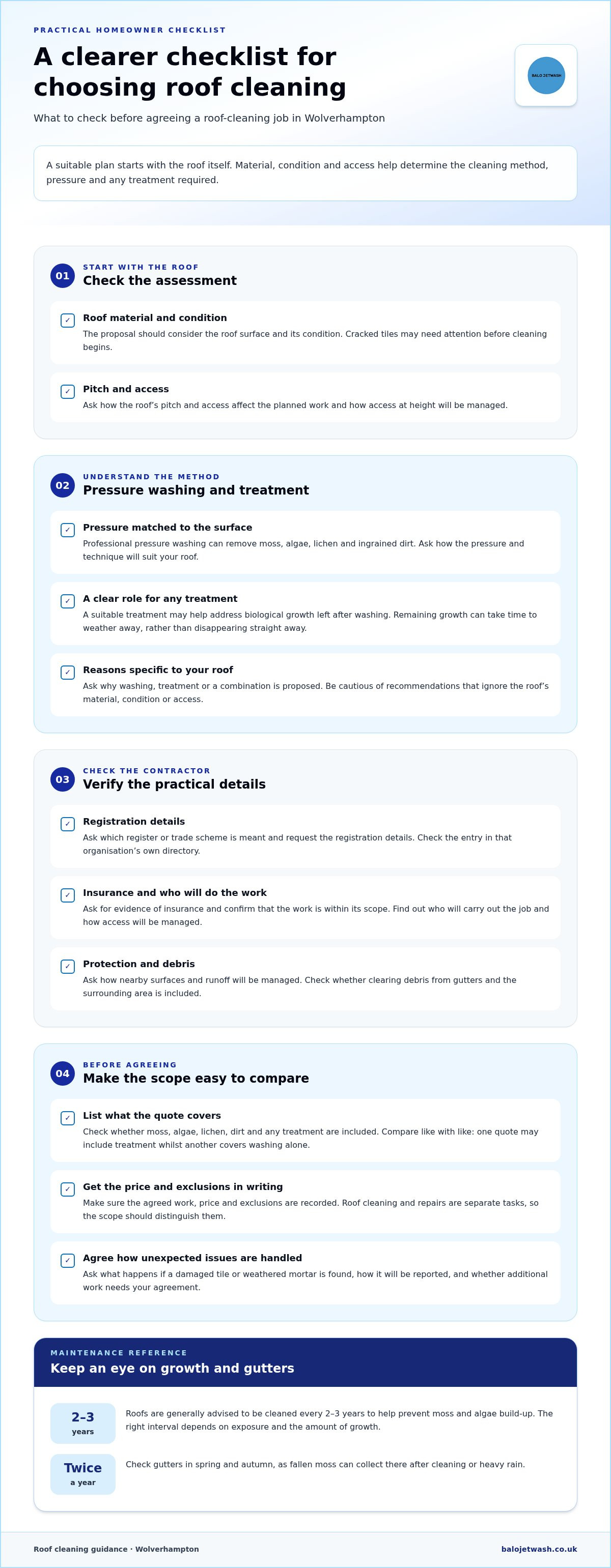
Roofs are generally advised to be cleaned every 2-3 years to help prevent moss and algae build-up. The interval still depends on the roof’s exposure and the amount of growth. Check gutters twice a year, ideally in spring and autumn, because fallen moss can collect there after cleaning or heavy rain.
Manual moss removal
Manual removal uses suitable tools to lift or loosen visible moss from the roof surface. It can help when a close, controlled approach suits the tiles, but the operator must avoid disturbing tile edges, pointing and fragile areas. Choose a method based on the roof’s condition, not just the amount of moss. Manual removal is not the only way to clean a roof.
Biocide treatment
Biocide treatment targets biological growth left on or beneath the visible surface. It may be applied after cleaning to address residual moss and algae spores. Treatment does not make every roof look completely clear straight away: remaining growth can take time to weather away. Ask what role the treatment plays and how the roof should be assessed afterwards. For roof cleaning in Wolverhampton, it helps to understand what the treatment is intended to do.
A careful cleaning sequence starts by assessing the roof, then selecting the appropriate pressure and technique for its surface. Professional washing can remove moss, algae, lichen and ingrained dirt, while a suitable detergent can address remaining biological growth. The roof cleaning and moss removal service page explains this type of work.
Do I need permission to clean or alter my roof in Wolverhampton? Cleaning and altering a roof are different kinds of work. Whether permission applies depends on the property and proposed changes, so establish the relevant requirements before changing tiles or the roof’s appearance.
What factors affect the price of roof cleaning in Wolverhampton? The price depends on the roof’s size, pitch, material, access and moss build-up, and is provided after a quote request. These details shape the equipment, technique and treatment needed for the job.
Choosing a local registered contractor
For roof work in Wolverhampton, check what a contractor means by “registered” before comparing quotes. Ask for the name of the register or trade scheme and the contractor’s registration details. Then use that organisation’s own directory to see whether the entry matches the business. Registration can help you identify a business, but it doesn’t by itself explain the cleaning method or prove that it suits your roof.
Check the practical details too. Ask for evidence of insurance and confirm that the work falls within its scope. Roof cleaning involves access at height, so find out who will carry out the work and how they plan to manage access. A clear explanation should describe the equipment and approach, rather than simply promise a spotless finish.
Roof assessment: Look for a proposal that considers the roof material, condition, pitch and access. For example, cracked tiles may need attention before cleaning begins. Cleaning method: Ask how pressure and technique will be matched to the surface. A contractor should explain whether washing or a suitable treatment is proposed, and why. Work scope: Check what the quote covers, including moss, algae, lichen, dirt and any treatment. Confirm whether clearing debris from gutters and the surrounding area is included. Protection: Ask how the team will protect nearby surfaces and manage runoff. The answer should relate to your property, not rely on a generic promise. Written details: Get the agreed work, price and any exclusions in writing. Compare like with like, since one quote may include treatment whilst another covers washing alone.A useful comparison is the reasoning behind each recommendation. If one contractor proposes pressure washing and another suggests a treatment-led approach, ask how the roof’s material and condition informed each choice. Look for specific reasons, such as avoiding unsuitable pressure on a fragile or weathered surface. Be cautious of claims that every roof needs the same process, regardless of its tiles or access.
Before accepting a quote, read the terms and establish what happens if the inspection reveals a damaged tile or weathered mortar. Roof cleaning and repair are separate tasks, so the written scope should distinguish them clearly. Ask how any issue found during the work will be reported and whether additional work requires your agreement. This gives you a clearer basis for choosing a roof cleaner in Wolverhampton, with the method, protection and agreed work understood before the job starts.
How biocide treatment works over time
Biocide treatment is one part of a roof-cleaning plan, not a substitute for assessing the roof. Its role and timing should be clear before work starts. Ask which areas are being treated, how the product will be applied and what it is intended to address. This gives you a practical record of the work, rather than relying on a general description.
How often should a roof be cleaned in Wolverhampton? There isn’t one schedule for every property. Use visible regrowth, roof exposure and tile condition to judge when attention is needed, rather than relying on the calendar alone.
After application, avoid judging the roof solely by its immediate appearance. Make a note of the areas treated, such as the ridge, shaded slopes or sections near roof features. Compare those same areas during later visual checks from the ground. This makes it easier to describe changes accurately if you discuss the roof’s condition again.
Ask for treatment to be distinguished from other work in the agreed scope. Biological treatment does not replace fixing a cracked tile or renewing weathered mortar. If an inspection identifies damage, the written plan should make clear whether that repair is included or separate. Keeping cleaning and repair tasks distinct prevents confusion about what the treatment is meant to achieve.
Application also needs to suit the roof’s layout. A steep pitch, sheltered section or complex arrangement of valleys can affect how the surface is approached. Before work begins, establish how the team will reach the relevant areas and protect nearby surfaces. The explanation should relate to your roof, not simply describe a standard process for every property.
Keep treatment details with any cleaning records. Note the date, areas covered and work agreed, then use those notes during future inspections. If visible growth returns unevenly, the record helps identify where it appeared and whether those sections were previously treated. It also gives you a clearer starting point for discussing the roof’s current condition.
Follow any care instructions provided for the treatment, particularly guidance about the property immediately after application. Don’t assume another application is needed just because the roof’s appearance changes gradually. First distinguish remaining marks from fresh growth, and consider whether debris has collected in a valley or gutter. These observations can guide your next maintenance decision without repeating the treatment automatically.
A useful treatment plan explains its purpose, application areas and follow-up. Ask for those details before work starts, then keep them with your roof-maintenance notes. That simple record helps you understand what was done and make an informed decision when the roof next needs attention.
Pre-treatment for moss, lichen and algae
Pre-treatment can be the first step in a roof-cleaning process. Biocide is applied to tackle moss, lichen and algae before the roof is cleaned. This approach addresses biological growth before pressure washing removes loosened material, dirt and surface build-up. The roof’s material, condition and access help determine the suitable method and sequence.
Start by identifying where growth has collected. Moss often forms thick patches, while algae or lichen may appear as marks across exposed tiles. Valleys and tile edges can hold more debris than open sections. Noting these areas gives a clearer picture of the work required and helps ensure the cleaning approach addresses more than the most visible patch.
A professional assessment should consider:
Roof surface: Tile material and condition guide how treatment and washing should be applied. Growth type: Moss, lichen and algae are all biological growth, but their coverage and location differ. Roof details: Valleys, tile edges and areas beneath heavy growth may need particular attention. Cleaning sequence: Establish whether treatment comes before washing, after it, or at both stages.Pre-treatment and post-clean treatment have different roles. Before cleaning, biocide targets moss, lichen and algae on the roof. After cleaning, treatment can address residual moss and algae spores beneath the visible surface. The appropriate sequence depends on the roof and cleaning plan. A clear explanation should connect each treatment step with the growth it aims to tackle.
For example, a roof with visible moss across several tile edges may need a treatment-led first stage, followed by carefully controlled pressure washing. A roof with less visible build-up may need a different balance. The aim is to match treatment and washing to the material and condition, not apply the same process everywhere. Excessive pressure is no substitute for choosing the right approach.
Biocide does not necessarily make every mark disappear as soon as it is applied. Residual biological growth can take time to weather away, so assess the result over time rather than relying only on the roof’s immediate appearance. Keep track of the areas treated, including valleys and shaded sections, and distinguish remaining growth from loose debris after washing.
Ask for the treatment stage to be explained before work starts. Find out what the pre-treatment is intended to address, how it relates to the cleaning method and whether treatment follows washing. This gives you a practical way to understand the process and judge whether the plan accounts for moss, lichen and algae across the roof, rather than focusing only on a quick visual change.
Suitability of pressure washing for roof tiles
Pressure washing can remove moss, algae, lichen and ingrained dirt from roof tiles. It must be carried out carefully because unsuitable pressure or technique can damage roofing material. The decision depends on the tile type, its condition and how safely the roof can be accessed. There is no single setting or method that suits every roof.
Start with the tile surface. A professional should assess its material, wear, cracks and movement before selecting equipment and technique. Sound tiles and weathered tiles, for example, may need different handling. Loose, broken or visibly fragile areas need attention before washing, rather than being treated as though every section can withstand the same approach.
Access matters too. A steep roof, narrow side access or difficult working position affects how cleaning can be carried out. The operator needs a plan to reach moss-covered areas without relying on uncontrolled force. Water direction also matters: washing against tile overlaps can drive water where it should not go. A careful assessment accounts for the roof’s layout, valleys and edges.
Before work begins, ask the cleaner to explain how the method suits your specific tiles. A useful explanation covers:
Material and condition: What the inspection shows about tile strength, wear and visible damage. Pressure and technique: How the approach will be adjusted for the roof surface, rather than applying excessive force. Cleaning sequence: Whether washing alone is appropriate or a suitable treatment is also needed for remaining biological growth. Access and protection: How the team will reach the roof and manage runoff, loose moss and debris around the property.Pressure washing is not automatically unsuitable for roof tiles, nor is it right for every roof. A professional should weigh the visible build-up against the tile condition and explain the chosen method. If fragile sections make washing inappropriate, the cleaning plan needs to account for that limitation. The clearest answer is a reason specific to your roof, not a blanket claim that every tile can be washed safely.
Manual removal is sometimes discussed as an alternative, but it also involves working directly around tile edges and roof features. Don’t assume it suits every surface. The key comparison is whether the chosen method removes growth while respecting the material and condition. Professional pressure washing is a thorough cleaning option when its pressure and technique are matched to the roof.
Roof work involves height and difficult access, so avoid attempting it yourself. Choose an experienced, insured exterior-cleaning contractor who can explain the risks and method before starting. To explore professional roof cleaning options, review the approach for your roof’s material, condition and access.
Balo Jetwash: driveway Cleaning
Balo Jetwash provides professional roof cleaning and moss removal for property owners who want a cleaner roof without guessing which method suits it. The team uses professional pressure washing, adjusting the pressure and technique to the roof’s material, condition and accessibility. Where needed, an appropriate cleaning treatment helps address biological growth remaining after washing.
This tailored approach matters when tiles vary in age or moss has gathered around roof edges and valleys. A suitable method can remove dirt, algae and moss while accounting for the surface being cleaned. Balo Jetwash also provides driveway cleaning, patio cleaning and commercial exterior cleaning for other outdoor surfaces.
If you’re considering roof cleaning in Wolverhampton, contact Balo Jetwash to discuss your property.
Plan your next step for a cleaner roof
If you’re considering roof cleaning in Wolverhampton, start by noting what you want addressed. Record where moss is most visible, whether any tiles look damaged and which areas are difficult to access. These details can help you explain your priorities clearly and understand how a proposed approach relates to your roof.
A useful conversation is practical, not complicated. Describe what you’ve noticed and what matters most, whether that’s removing visible growth or improving the roof’s overall appearance. You can then consider the suggested work with a clearer sense of what happens next.
Ready to take the next step? Visit Balo Jetwash to enquire about roof cleaning. A fresh start for your roof begins with a clear, considered plan.
Frequently Asked Questions
Is pressure washing safe for my roof?
It can be, provided the pressure and technique suit the roof’s material and condition. Sound tiles differ from weathered tiles with cracks or loose sections. Before washing, an experienced cleaner should assess visible damage, access and the direction of water flow. If you notice loose tiles or damaged mortar, mention them before work begins so the cleaning plan accounts for those areas.
Do you have to walk on the roof?
No, not in every case. The access method depends on the roof’s shape, height, condition and the equipment used. Walking on tiles can put pressure on vulnerable areas, so it shouldn’t be treated as an automatic step. Ask how the work will reach difficult sections and avoid unnecessary contact with the roof surface. Never climb up to inspect or clean it yourself.
What roof cleaning services are available in Wolverhampton?
For roof cleaning in Wolverhampton, Balo Jetwash provides roof cleaning and moss removal. The work addresses moss, algae, lichen and dirt using professional pressure washing, with an appropriate treatment where required. The method is selected for the roof’s surface and condition. This is relevant if growth is visible across tiles or debris is collecting around roof features, rather than simply needing a routine visual check.
Which roof cleaning methods are suitable for different roof types?
No single method suits every roof. The tile material, age, condition and access all affect the choice. Sound tiles may suit carefully controlled pressure washing, while fragile or weathered areas may need a more treatment-led approach. For example, cracked tiles should be identified before cleaning, not treated like intact sections. A roof assessment should explain how the proposed technique relates to the actual surface.
Is soft washing or pressure washing better for roof cleaning?
Neither method is automatically best for every roof. Pressure washing physically removes moss, dirt and surface build-up, while suitable treatment can address biological growth that remains. The practical choice depends on tile condition and the type of growth. A combined approach may be appropriate, but the pressure and treatment should each have a clear purpose. Judge the proposal by its reasoning for your roof, not by the method’s label.
What are the risks of DIY roof cleaning?
DIY roof cleaning can expose you to falls, unstable footing and accidental tile damage. Pressure-washing equipment can also be difficult to control from an awkward position, potentially disturbing tiles or directing water beneath them. A single slippery patch or loose tile can change the risks. Keep off the roof and leave the assessment and cleaning to an experienced exterior cleaner with suitable insurance.
Do roof cleaners in Wolverhampton need insurance or qualifications?
Insurance and qualifications are separate considerations. Don’t assume that one credential alone demonstrates a suitable roof-cleaning approach; the cleaner should also explain the method and how it suits your roof. For any proposed work, understand what the insurance covers and whether the person doing it has relevant training for the equipment and access involved.
How can I find and compare reputable roof cleaning companies in Wolverhampton?
Compare the written scope, proposed cleaning method and how each approach accounts for your roof’s condition. Check that the quote describes the work included, any treatment and how damaged tiles or mortar are handled if found. Balo Jetwash provides roof cleaning and moss removal in Wolverhampton, with local service for homeowners in Wolverhampton and Sutton Coldfield.
{"@context":"https://schema.org","@type":"FAQPage","mainEntity":[{"@type":"Question","name":"Is pressure washing safe for my roof?","acceptedAnswer":{"@type":"Answer","text":"It can be, provided the pressure and technique suit the roof’s material and condition. Sound tiles differ from weathered tiles with cracks or loose sections. Before washing, an experienced cleaner should assess visible damage, access and the direction of water flow. If you notice loose tiles or damaged mortar, mention them before work begins so the cleaning plan accounts for those areas."}},{"@type":"Question","name":"Do you have to walk on the roof?","acceptedAnswer":{"@type":"Answer","text":"No, not in every case. The access method depends on the roof’s shape, height, condition and the equipment used. Walking on tiles can put pressure on vulnerable areas, so it shouldn’t be treated as an automatic step. Ask how the work will reach difficult sections and avoid unnecessary contact with the roof surface. Never climb up to inspect or clean it yourself."}},{"@type":"Question","name":"What roof cleaning services are available in Wolverhampton?","acceptedAnswer":{"@type":"Answer","text":"For roof cleaning in Wolverhampton, Balo Jetwash provides roof cleaning and moss removal. The work addresses moss, algae, lichen and dirt using professional pressure washing, with an appropriate treatment where required. The method is selected for the roof’s surface and condition. This is relevant if growth is visible across tiles or debris is collecting around roof features, rather than simply needing a routine visual check."}},{"@type":"Question","name":"Which roof cleaning methods are suitable for different roof types?","acceptedAnswer":{"@type":"Answer","text":"No single method suits every roof. The tile material, age, condition and access all affect the choice. Sound tiles may suit carefully controlled pressure washing, while fragile or weathered areas may need a more treatment-led approach. For example, cracked tiles should be identified before cleaning, not treated like intact sections. A roof assessment should explain how the proposed technique relates to the actual surface."}},{"@type":"Question","name":"Is soft washing or pressure washing better for roof cleaning?","acceptedAnswer":{"@type":"Answer","text":"Neither method is automatically best for every roof. Pressure washing physically removes moss, dirt and surface build-up, while suitable treatment can address biological growth that remains. The practical choice depends on tile condition and the type of growth. A combined approach may be appropriate, but the pressure and treatment should each have a clear purpose. Judge the proposal by its reasoning for your roof, not by the method’s label."}},{"@type":"Question","name":"What are the risks of DIY roof cleaning?","acceptedAnswer":{"@type":"Answer","text":"DIY roof cleaning can expose you to falls, unstable footing and accidental tile damage. Pressure-washing equipment can also be difficult to control from an awkward position, potentially disturbing tiles or directing water beneath them. A single slippery patch or loose tile can change the risks. Keep off the roof and leave the assessment and cleaning to an experienced exterior cleaner with suitable insurance."}},{"@type":"Question","name":"Do roof cleaners in Wolverhampton need insurance or qualifications?","acceptedAnswer":{"@type":"Answer","text":"Insurance and qualifications are separate considerations. Don’t assume that one credential alone demonstrates a suitable roof-cleaning approach; the cleaner should also explain the method and how it suits your roof. For any proposed work, understand what the insurance covers and whether the person doing it has relevant training for the equipment and access involved."}},{"@type":"Question","name":"How can I find and compare reputable roof cleaning companies in Wolverhampton?","acceptedAnswer":{"@type":"Answer","text":"Compare the written scope, proposed cleaning method and how each approach accounts for your roof’s condition. Check that the quote describes the work included, any treatment and how damaged tiles or mortar are handled if found. Balo Jetwash provides roof cleaning and moss removal in Wolverhampton, with local service for homeowners in Wolverhampton and Sutton Coldfield."}}]}Information
Water available? - You don't need to be present for us to carry out the service. If required, we can supply water ourselves.
Insurance
Balo Jetwash is fully insured, We have £5,000,000 of public liability insurance. Balo Jetwash operatives are professional, reliable and endeavour to carry out the work to the highest standard with minimal fuss and upheaval.