
How to Stop Patio Slabs Becoming Slippery in Sutton Coldfield

Wondering how to stop patio slabs becoming slippery Sutton Coldfield? Start by noticing where and when the paving feels slick. A slimy film on shaded, damp slabs may be algae, while moss, fallen leaves or water that drains slowly can also contribute. The cause matters because cleaning the surface is only part of preventing the problem from returning.
It’s understandable to worry about someone slipping, or to wonder whether a pressure washer could damage the slabs or joints. A quick blast is not always the right answer. The cleaning method should suit the paving material and its condition, and the area should be allowed to dry before you judge the result.
This guide explains how to spot likely causes, choose a sensible cleaning approach and check the patio between cleans. Balo Jetwash provides patio cleaning in Sutton Coldfield, using modern, van built industrial equipment to remove stubborn dirt, algae and moss. FREE Klin dried re-sanding and FREE Licensed Industrial Cleaning Detergent are included, helping refresh your outdoor space.
Key Takeaways
Learn how moisture, shade and slow drying can encourage slippery growth, and why appearance alone may not identify the cause. See when brushing away leaves and debris may be enough, and when stubborn build-up could need a more thorough clean. Follow a practical routine to inspect paving, clear debris, address growth, let slabs dry and reassess the surface. Find simple ways to monitor slippery patches and spot the conditions that may encourage them to return. Discover how Balo Jetwash’s patio cleaning in Sutton Coldfield can help with how to stop patio slabs becoming slippery Sutton Coldfield.Why patio slabs become slippery in Sutton Coldfield
Finding a slick patch underfoot after wet weather can be unsettling. Slippery paving is most noticeable when damp, and a thin film, green growth, dark marks or moss may indicate that the surface needs attention. Also notice how quickly the area dries. A patch that remains damp after the rest of the patio has dried may be more likely to develop recurring build-up.
In Sutton Coldfield, treat a noticeably slick path or patio as a practical safety concern, particularly if it leads to an entrance, garden or seating area. Don’t assume the paving is safe because it looks clean from a distance. Keep people away from a particularly slippery section until it has been cleaned and dried.
How to recognise a slippery patio before someone falls
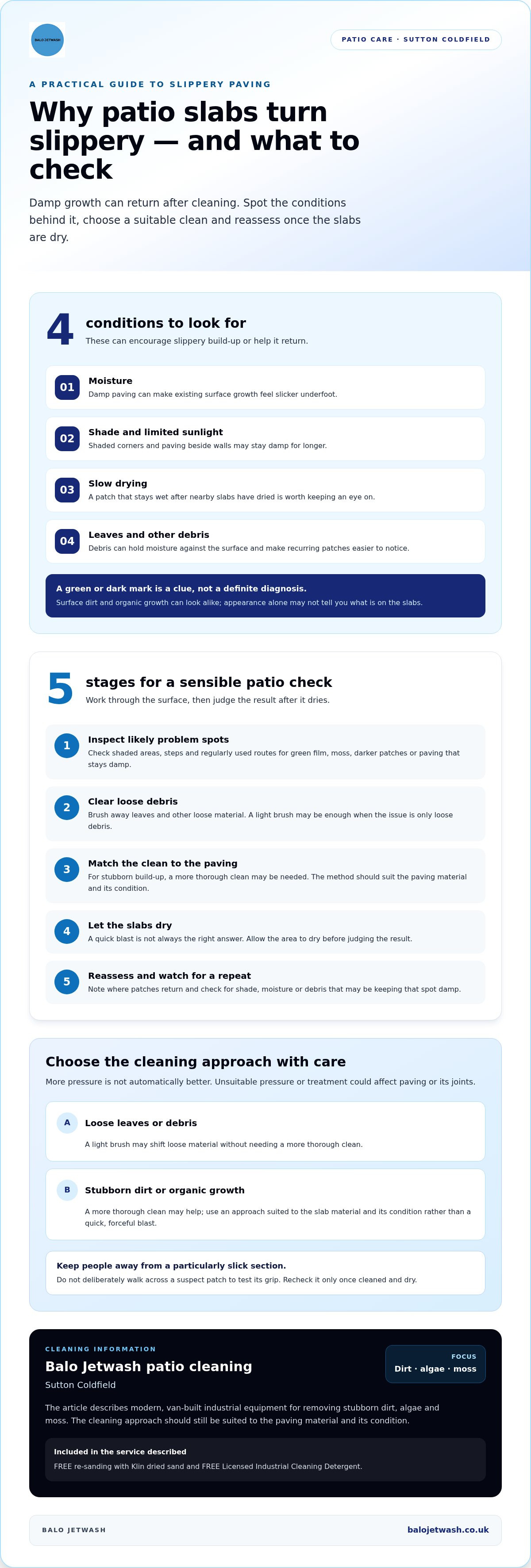
Begin with shaded areas, steps and routes used regularly. Check for green film, moss, darker patches and places that stay damp longer than the surrounding paving. These are useful clues, but they do not confirm exactly what is on the slabs. Surface dirt and organic growth can look alike, so avoid choosing a treatment based on colour alone.
A thin coating may be harder to see when the paving is dry. Inspect it in good light, and pay attention to areas that feel different after wet weather. Don’t deliberately walk across a suspect patch to test its grip. Keep children and visitors away from particularly slick sections while you plan a safe way to clean them.
Why a wet slab can feel different underfoot
Moisture can make existing growth feel slicker, but the paving material, its condition and deposits on the surface also affect grip. A damp slab with a film of algae may feel different from a clean, textured slab. Wear and other deposits can also influence how the surface behaves, so a green appearance is a clue rather than a definite diagnosis.
Damp surface growth can reduce grip, making paving feel slicker underfoot when wet. That helps explain why a patio that seems manageable in dry conditions may become a concern after rain. If you’re looking at how to stop patio slabs becoming slippery Sutton Coldfield, note where the problem occurs and whether it follows shade or damp conditions. That is a more useful starting point than assuming every dark mark has the same cause.
Keep track of recurring slick areas, such as a shaded step or a path that dries slowly. If the problem covers a large area or keeps returning, professional patio cleaning can help tackle stubborn dirt and organic growth. Choose a cleaning approach that suits the paving rather than treating every surface in the same way.
What causes slippery patio slabs, and why does growth return?
A patio can look clean after washing and still develop slippery patches again. Cleaning removes existing dirt or surface growth, but it does not change the conditions around the slabs. Moisture, limited sunlight and slow drying can give organic growth another opportunity to establish itself. Often, the issue returns in a particular corner or strip rather than across the whole patio.
Where dampness and shade encourage surface build-up
Check shaded corners, paving beside walls and areas where water lingers instead of drying. Nearby plants can reduce sunlight and airflow, while fallen leaves and other debris can hold moisture against the surface. These conditions may encourage algae or moss, but a green or dark patch alone cannot confirm what is present. General dirt can look similar, so treat appearance as a clue, not a diagnosis.
After cleaning, note where marks or growth return first. Does the same spot stay damp longer than the surrounding slabs? Is it beneath foliage, beside a wall or where debris tends to collect? These comparisons help identify recurring conditions as well as visible build-up. Clearing leaves and keeping an eye on slow drying areas can make changes easier to spot.
Why clean paving can become slippery again
Patio slabs remain exposed to weather and moisture. A thorough clean can remove existing surface build-up, but it cannot stop damp conditions from returning or guarantee that fresh growth will not appear. If the same area repeatedly stays wet or shaded, it may need more attention than an open section that dries quickly.
Preventing slippery build-up means checking for new growth and damp patches regularly, because outdoor conditions can change after cleaning. There is no need for a rigid schedule. Look over the paving during damp spells and after leaves or other debris have collected, paying particular attention to places where the problem has returned before. If a patch appears again, consider what may be keeping it damp as well as how it should be cleaned.
For homeowners considering how to stop patio slabs becoming slippery Sutton Coldfield, separating the likely cause from the visible mark is a useful first step. Cleaning tackles what is already on the surface; checking shade, moisture and debris helps explain why it may return. The HSE guidance on preventing slips and trips also offers general information on recognising and managing slip risks.
If stubborn build-up keeps returning, Balo Jetwash’s patio pressure washing can help remove dirt and organic growth. Knowing what encourages the build-up can guide the simple checks you make between cleans.
Which ways of cleaning slippery patio slabs make sense?
The right cleaning method depends on what is on the slabs, their material and their condition. A light brush can shift loose debris, but ingrained growth may need more than a quick sweep. Stronger cleaning is not automatically better: unsuitable pressure or treatment could affect the surface or joints. Start with a method appropriate to the paving, then check whether it has dealt with the build-up.
What homeowners can safely do first
Clear loose leaves and debris with a suitable brush, taking care around the joints. If you use a patio cleaner, read its label, check that it is suitable for your paving and test it discreetly where appropriate. Do not mix cleaning products or apply a treatment intended for a different surface. If the instructions are unclear, do not experiment on the patio.
Brushing is useful for routine upkeep and light deposits, but may not remove established surface growth. Rinsing can shift loose dirt without tackling a persistent coating. Avoid using force simply to speed up the job: a method that is too harsh for the slabs or joints can leave damage behind. Let the paving dry before assessing the result.
When professional patio cleaning is a better fit
Stubborn growth, recurring slipperiness or a large affected area can make specialist equipment a sensible option. Professional pressure washing requires a suitable pressure and technique for the paving material and its condition. Applying excessive force or using the wrong method may harm the slabs or disturb the joints, so the approach matters as much as the equipment.
Balo Jetwash provides professional patio pressure washing using modern, van built industrial equipment to remove stubborn dirt and organic growth. For homeowners considering how to stop patio slabs becoming slippery Sutton Coldfield, professional cleaning can tackle build-up that a brush may not shift, with the cleaning approach suited to the paving.
Light brushing
Purpose: Clear loose leaves and surface debris.
Limit: May not remove established growth.
Professional help: Consider it if slickness or stubborn deposits remain.
Suitable labelled cleaner
Purpose: Treat build-up where the product is appropriate for the paving.
Limit: Results depend on the surface and product directions.
Professional help: Useful if you are unsure what method suits the slabs.
Professional pressure washing
Purpose: Tackle stubborn dirt and organic growth across affected paving.
Limit: Pressure and technique must suit slab material and condition.
Professional help: Consider it for widespread or persistent build-up.
No single method suits every patio. Choose a careful first step, follow product instructions and avoid escalating to aggressive cleaning if the surface may be vulnerable. If the growth is extensive or keeps returning, professional cleaning offers a practical next step without relying on guesswork.
A practical routine to help prevent patio slabs becoming slippery
Regular observation can help you spot trouble early. There is no need to set a rigid cleaning schedule: pay closer attention during damp periods, after leaves have collected and wherever water tends to linger. A few checks help you respond to the patio’s condition instead of reaching straight for stronger cleaning.
Simple checks to build into patio care
Start with the routes used most often, then check corners and low spots where water remains. Clear loose leaves and other debris before it sits against the paving and holds moisture there. After cleaning, let the slabs dry fully before checking their appearance and grip. Avoid walking on areas that still feel slick.
Inspect: Look over frequently used paths, steps and places where water lingers. Note whether a patch is shaded or stays damp longer than nearby paving. Clear debris: Remove loose leaves and garden debris so they do not cover the surface or hold moisture against it. Keep visible drainage channels clear of loose material where it is safe to do so. Address growth: If you spot surface build-up, choose a cleaning method suited to the slabs and follow any cleaner’s instructions. Do not increase the pressure without considering the paving’s material and condition. Allow drying: Give the area time to dry before judging the result. A wet surface can feel different underfoot, so checking immediately may not show whether cleaning has helped. Recheck grip: Look again once the paving is dry, then keep an eye on the same spot during damp weather. If it turns slick again, consider what may be keeping it shaded or wet.
What to do when the same patch keeps turning slick
A recurring patch is a reason to look beyond the surface. Check whether nearby plants, a wall or accumulated debris may be limiting airflow or keeping the area damp. Notice whether water regularly pools there, too. Keeping the paving and surrounding drainage clear can help water move away and allow the surface to dry more readily.
Repeatedly increasing pressure is not a reliable fix. Slabs vary in material and condition, and an unsuitable technique may affect the surface or joints. If you cannot identify the cause or are unsure which method suits the paving, professional cleaning can provide a more considered approach. Balo Jetwash provides patio cleaning in Sutton Coldfield using modern, van built industrial equipment to remove stubborn dirt and organic growth.
No routine can guarantee patio slabs will never become slippery again. Outdoor paving remains exposed to moisture and changing conditions, so regular checks help you notice fresh build-up. If recurring growth needs a thorough clean, arrange professional patio cleaning with Balo Jetwash.
Balo Jetwash: Patio cleaning in Sutton Coldfield
Balo Jetwash is a professional exterior cleaning specialist based in Wolverhampton, providing patio cleaning in Sutton Coldfield. If slippery paving is making you think twice about using your patio, a professional clean can help remove accumulated dirt and organic growth. The cleaning approach takes the paving’s material and condition into account.
What a professional patio clean aims to address
Different patios can need different cleaning approaches. The type of slab, its condition and the state of its joints all matter when deciding how to treat the surface. Cleaning can remove dirt, algae and moss, but cannot promise permanent grip or a particular visual result. Damp conditions may still encourage fresh build-up, so keep checking the paving after the clean.
Taking the next step for a slippery patio
You do not need to identify the growth yourself. Describe what you have noticed and where the paving becomes slick, such as a path, step or particular part of the patio. That gives a useful starting point for discussing the cleaning. You can also explore Balo Jetwash’s patio pressure washing.
For help with your patio in Sutton Coldfield, request a free, no obligation quote. Tell us which areas concern you, then take a straightforward next step towards a cleaner outdoor space.
Plan a patio you can feel confident using
Think about how you want to use your outdoor space. You may want a clear route to the garden or a comfortable place to sit without worrying about slick paving. Let how you use the patio guide what you prioritise, rather than focusing only on its appearance.
If you’re considering how to stop patio slabs becoming slippery Sutton Coldfield, take a steady, practical approach. Notice which areas matter most and how people move through the space, then build simple checks into your usual patio care. Paying attention to recurring damp or shaded patches can help you respond before build-up becomes more extensive.
With a clearer idea of what needs attention, you can plan the next step with confidence. A more welcoming patio starts with noticing which areas need care and choosing a cleaning approach suited to the paving.
Frequently Asked Questions
Can patio slabs be slippery even when there is no visible algae?
Yes. Paving can feel slick when damp even if there is no obvious green film. Fine deposits, shade and slow drying may all affect grip. Compare the suspect area with nearby slabs in different light, and notice whether it feels different when wet and dry. Clear loose debris, but do not judge safety by appearance alone. Keep people off any patch that feels particularly slippery until it is safe to use.
Does patio cleaning stop slabs becoming slippery permanently?
No. Cleaning can remove existing dirt and organic build-up, but it cannot prevent every future recurrence. Outdoor paving remains exposed to moisture, shade and debris. For example, a clean area beneath a tree may collect leaves again, so check it after they fall. If the same patch becomes slick, note whether it stays damp or is repeatedly covered by debris before deciding what attention it needs.
Is pressure washing safe for every type of patio slab?
No single pressure setting suits every patio. Slab material, wear and the condition of the joints all affect the appropriate approach. Excessive or unsuitable pressure can damage paving or disturb joints. If you do not know what the slabs are made from, avoid experimenting on a prominent area. An experienced exterior cleaning specialist can assess the surface and choose a suitable technique for its condition.
Can I use household detergent on slippery patio slabs?
Do not assume a household cleaner is suitable for outdoor paving. Check the label for surface suitability and follow its directions, including instructions about application and rinsing. Never mix cleaning products. If you do not know the slab material, try a cautious test in an inconspicuous place where appropriate, or seek professional guidance before treating a large area. Choose a cleaner suited to both the surface and the build-up.
Why does my patio become slippery again after rain?
Rain leaves paving damp, which can make existing surface growth or fine deposits feel slicker. A patch beneath a canopy or beside a wall may also take longer to dry than open paving. If you’re looking at how to stop patio slabs becoming slippery Sutton Coldfield, observe where water remains and whether debris gathers there. This can help distinguish a recurring damp spot from a problem across the whole patio.
Should I apply an anti-slip coating after cleaning patio slabs?
Not automatically. A coating may not suit every paving material or condition, and its instructions will specify the surfaces it is intended for. Some products may also affect appearance or require particular preparation. First consider whether surface build-up is contributing to the slipperiness, then clean the paving appropriately. If you are considering a coating, check its suitability for your slabs and follow the manufacturer’s directions.
{"@context":"https://schema.org","@type":"FAQPage","mainEntity":[{"@type":"Question","name":"Can patio slabs be slippery even when there is no visible algae?","acceptedAnswer":{"@type":"Answer","text":"Yes. Paving can feel slick when damp even if there is no obvious green film. Fine deposits, shade and slow drying may all affect grip. Compare the suspect area with nearby slabs in different light, and notice whether it feels different when wet and dry. Clear loose debris, but do not judge safety by appearance alone. Keep people off any patch that feels particularly slippery until it is safe to use."}},{"@type":"Question","name":"Does patio cleaning stop slabs becoming slippery permanently?","acceptedAnswer":{"@type":"Answer","text":"No. Cleaning can remove existing dirt and organic build-up, but it cannot prevent every future recurrence. Outdoor paving remains exposed to moisture, shade and debris. For example, a clean area beneath a tree may collect leaves again, so check it after they fall. If the same patch becomes slick, note whether it stays damp or is repeatedly covered by debris before deciding what attention it needs."}},{"@type":"Question","name":"Is pressure washing safe for every type of patio slab?","acceptedAnswer":{"@type":"Answer","text":"No single pressure setting suits every patio. Slab material, wear and the condition of the joints all affect the appropriate approach. Excessive or unsuitable pressure can damage paving or disturb joints. If you do not know what the slabs are made from, avoid experimenting on a prominent area. An experienced exterior cleaning specialist can assess the surface and choose a suitable technique for its condition."}},{"@type":"Question","name":"Can I use household detergent on slippery patio slabs?","acceptedAnswer":{"@type":"Answer","text":"Do not assume a household cleaner is suitable for outdoor paving. Check the label for surface suitability and follow its directions, including instructions about application and rinsing. Never mix cleaning products. If you do not know the slab material, try a cautious test in an inconspicuous place where appropriate, or seek professional guidance before treating a large area. Choose a cleaner suited to both the surface and the build-up."}},{"@type":"Question","name":"Why does my patio become slippery again after rain?","acceptedAnswer":{"@type":"Answer","text":"Rain leaves paving damp, which can make existing surface growth or fine deposits feel slicker. A patch beneath a canopy or beside a wall may also take longer to dry than open paving. If you’re looking at how to stop patio slabs becoming slippery Sutton Coldfield, observe where water remains and whether debris gathers there. This can help distinguish a recurring damp spot from a problem across the whole patio."}},{"@type":"Question","name":"Should I apply an anti-slip coating after cleaning patio slabs?","acceptedAnswer":{"@type":"Answer","text":"Not automatically. A coating may not suit every paving material or condition, and its instructions will specify the surfaces it is intended for. Some products may also affect appearance or require particular preparation. First consider whether surface build-up is contributing to the slipperiness, then clean the paving appropriately. If you are considering a coating, check its suitability for your slabs and follow the manufacturer’s directions."}}]}
Information
Water available? - You don't need to be present for us to carry out the service. If required, we can supply water ourselves.
Insurance
Balo Jetwash is fully insured, We have £5,000,000 of public liability insurance. Balo Jetwash operatives are professional, reliable and endeavour to carry out the work to the highest standard with minimal fuss and upheaval.