
Commercial Concrete Loading Bay Cleaning: A Practical Guide

What if a cleaner loading bay started with better planning, not simply more pressure? Dirt and organic growth can leave concrete looking neglected, but cleaning concrete loading bay Maney sites calls for a method suited to the surface and the way the premises operate. Delivery schedules, vehicle movements and access routes all affect how the work should be planned.
A thorough clean should refresh the concrete without overlooking its condition or the demands of a working site. Before washing, consider the visible build-up, any worn or damaged patches, access to the bay and the areas that need to remain usable. Balo Jetwash provides commercial pressure washing using modern, van-built industrial equipment to clean large exterior areas.
This guide explains what commercial loading bay cleaning involves, what site details are useful to plan around and how to prepare the area. It also covers how to assess the concrete and choose a practical cleaning plan for businesses in Wolverhampton and Sutton Coldfield.
Key Takeaways
Check for surface dirt, tyre marks and organic growth, particularly around shaded edges and areas that remain damp. For cleaning concrete loading bay Maney premises, adapt the pressure-washing technique to the concrete’s condition and the visible build-up. Before work begins, identify access routes, delivery patterns and movable items that could affect the cleaning area. Differentiate between light dirt, heavier build-up and organic growth when deciding which parts of the bay need attention. Balo Jetwash provides commercial pressure washing to refresh large concrete areas at business premises.Why concrete loading bay cleaning matters for a working site
Dirt, tyre marks and patches of algae or moss can gradually change the appearance of a busy loading bay. The build-up may be most noticeable around sheltered edges, shaded corners and areas where moisture lingers. A neglected-looking bay can detract from the impression made by the rest of the premises, even when the site is otherwise well maintained. Pressure washing can refresh the concrete and improve the overall presentation of the working area.
Appearance is only one consideration. A loading bay must support deliveries and other day-to-day tasks, so cleaning plans should account for vehicle movements, pedestrian routes and the sections that need attention. Identify these operational requirements before deciding how much of the bay to clean at once. The concrete’s age and condition matter too, as worn or damaged areas may need a different approach from sound, open sections.
For businesses considering cleaning concrete loading bay Maney, the aim is a practical refresh suited to the site, not a promise that every mark will disappear. Balo Jetwash provides commercial exterior cleaning, including commercial pressure washing for large areas. A useful plan starts by identifying what has accumulated and how the loading bay is used.
What builds up on a concrete loading bay?
General dirt settles across exposed concrete, while regular vehicle movements can leave visible tyre marks. Algae and moss may develop in shaded or damp spots, especially where water tends to linger. Look at the whole area, including edges, corners and drainage runs, to see where the build-up is concentrated. Concrete varies in age and condition, so cleaning can improve its appearance without guaranteeing a uniform or like-new finish.
Why does a clean loading area matter to a business?
Staff, visitors and delivery teams all use or pass through the loading area. A cleaner, more orderly-looking bay can support the presentation of a well-maintained workplace and show that heavily used spaces receive attention. Pressure washing cleans hard surfaces with directed water; Pressure washing provides a general overview of the method and its applications. A better appearance does not, by itself, address operational requirements such as access or traffic flow.
Keep the appearance you want separate from the site’s day-to-day needs. Note which areas must remain accessible, when deliveries are scheduled and how staff will be informed before the cleaning is arranged. These details help create a plan around real working conditions, rather than treating the whole bay as an empty surface.
Regular visual checks help teams spot new build-up and decide when cleaning is worthwhile. Note where dirt or organic growth returns, and use those observations to focus future cleaning on the areas that need it.
How professional pressure washing cleans a concrete loading bay
A well-planned clean involves more than directing water at the concrete. The operator first considers the surface, visible build-up and how the bay is used, then adapts the cleaning approach to those conditions. This is particularly important on an active site, where access and delivery movements can affect the order and timing of the work.
What happens before washing begins?
An initial assessment helps identify the concrete’s condition, the areas needing attention and any practical access constraints. Open sections may be straightforward to reach, while narrow edges or spaces beside fixed features may need additional consideration. Site teams can explain delivery patterns, vehicle routes and any areas that need to stay accessible. This information helps shape a work plan for the premises instead of relying on a fixed routine.
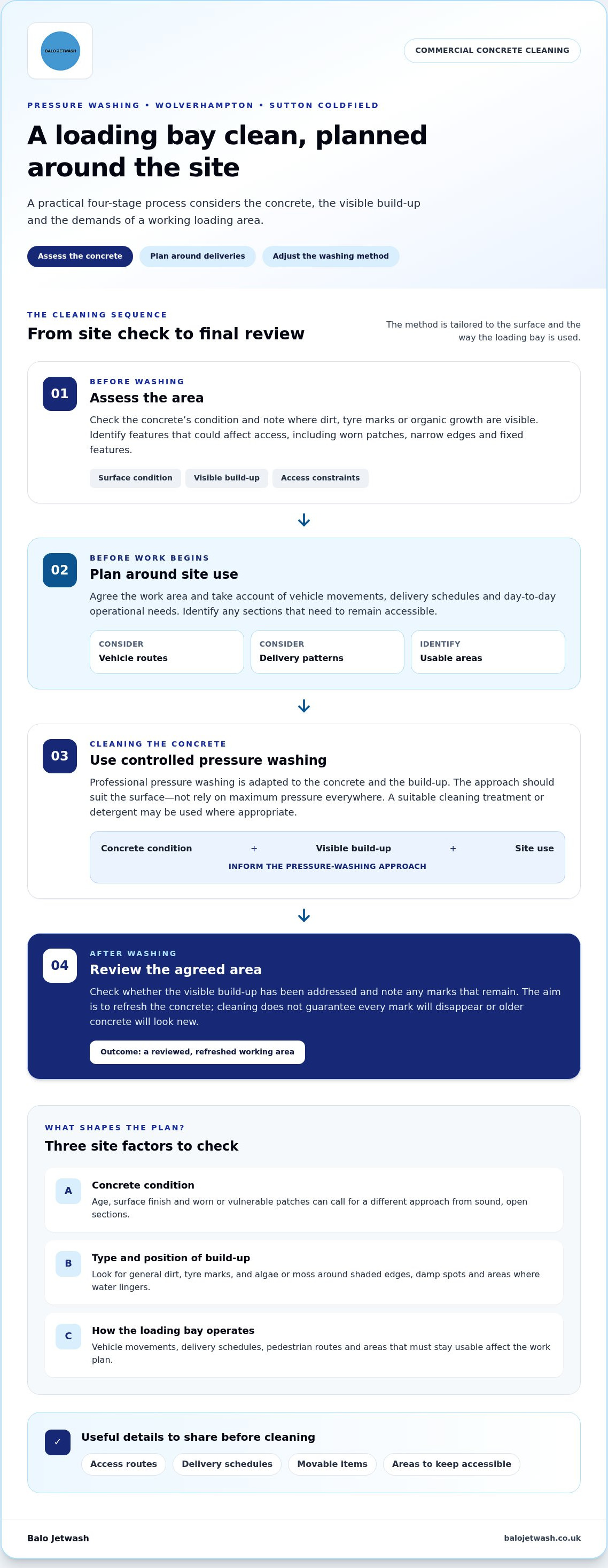
A considered sequence keeps the work focused:
Assess the area. Check the concrete’s condition and note visible dirt, tyre marks or organic growth, along with any features that affect access. Plan around site use. Define the work area and account for vehicle movements, delivery schedules and operational needs. Clean the concrete. Use professional pressure washing, adjusting the pressure and technique to the surface and the build-up. A suitable cleaning treatment or detergent may be used where appropriate. Review the result. Check the agreed work area to see whether the visible build-up has been addressed and note any marks that remain.
How should the cleaning approach suit the concrete?
Concrete differs in age, condition and surface finish. A section that looks robust may have worn or vulnerable patches, and build-up can range from light surface dirt to established organic growth. These differences affect how pressure washing should be carried out. A skilled operator adjusts the technique to clean the surface without relying on unnecessarily forceful treatment. Professional washing is controlled and suited to the area, not maximum pressure applied everywhere.
The right pressure-washing approach depends on the concrete’s condition, visible build-up and how the loading bay is used. A method that suits an open, sound section may need to be adjusted around worn edges or restricted areas. For businesses arranging cleaning concrete loading bay Maney, tailoring the method to the surface and site requirements helps make the work both practical and thorough.
During washing, the operator works methodically across the area to remove surface build-up. The aim is a more consistent appearance, not a guarantee that every mark will disappear or that older concrete will look new. A final review helps set realistic expectations and identify visible areas that may need further attention.
Balo Jetwash provides commercial pressure washing using modern, van-built industrial equipment. A planned approach helps match the cleaning to the concrete and the loading bay’s day-to-day use.
Choosing a loading bay cleaning plan for the concrete and the site
Build the cleaning plan around the bay’s actual condition, not a preset pressure or one-size-fits-all routine. Light dirt across an open area calls for different priorities from heavier build-up or growth concentrated in damp corners. The concrete’s condition, the extent of the visible soiling and the way the loading area operates should all inform the plan. Use the comparison below to identify what needs attention before the work is arranged.
| Visible condition | Priority to assess | Planning focus |
|---|---|---|
| Light surface dirt | Check how widely the dirt is spread and whether the concrete appears consistent in condition. | Consider the coverage needed for a tidier overall appearance and whether the open area is easy to access. |
| Heavier build-up | Identify where residue is concentrated and whether the concrete’s condition varies across the work area. | Prioritise affected sections while accounting for vehicle routes and delivery activity. |
| Visible algae or moss | Note where organic growth appears, including edges, shaded spots and areas that stay damp. | Consider the location of the growth, the condition of the surface and how the affected areas can be reached. |
Which site details affect the cleaning plan?
Help the cleaning team understand the site by describing the bay’s approximate size, access points and visible condition. Identify priority areas, such as a frequently used route or a corner where organic growth tends to appear. It is also useful to explain typical delivery patterns and busy periods. These practical details give the team a clearer picture of the space and its working demands.
Cleaning every section equally may not be necessary. A broad, open apron may be easy to access, while a narrow strip beside fixed equipment may need separate planning. Concrete condition can also vary within one bay. Point out differences in the surface so the approach reflects the areas that need attention instead of assuming the whole space will respond in the same way.
How can cleaning work fit around daily operations?
Consider the usual flow of vehicles and deliveries before agreeing the work area. Tell the cleaning team when the bay is busiest, which routes need access and whether it would be practical to clean in sections. This helps shape an arrangement around the business’s operating needs. Disruption cannot always be ruled out, but clear information supports better coordination.
For cleaning concrete loading bay Maney sites, a useful plan balances the appearance you want with the concrete’s condition, access and everyday use. The method can be tailored to the visible build-up and the sections needing attention. Balo Jetwash’s commercial pressure washing provides a practical option for refreshing large concrete loading areas, with the plan shaped around the site.
How to prepare a commercial loading bay for pressure washing
Some coordination before cleaning begins can make a loading bay project easier to manage. The site team understands how the area works day to day, from delivery movements to pedestrian access. Sharing that information helps define the work area and tell staff what to expect, without making assumptions about how the premises operate.
What should the site team organise beforehand?
Identify the concrete areas to be cleaned and note access constraints, such as narrow entrances or sections beside fixed equipment. Then consider what will be moving through or stored near the bay. Vehicles, pallets and other movable items can affect access and cleaning coverage, so decide what can be cleared and which routes need to remain usable. Share relevant site requirements with the cleaning team before work starts.
This simple preparation sequence can help:
Mark out the work area. Identify the sections included and note any edges or corners that need particular attention. Review vehicle and pedestrian routes. Consider how staff and delivery teams will move around nearby areas during the work. Move or identify movable items. Clear items from the agreed area where practical, and flag anything that needs to stay in place. Communicate site arrangements. Tell relevant staff which area is being cleaned and share the premises’ access and coordination procedures.
Base the plan on how the site functions. If a route is needed for deliveries or staff access, make that clear in advance. The site’s procedures should guide how access is coordinated, and the cleaning plan can reflect those requirements and the agreed work area. Clear communication helps staff understand what to expect and makes it easier to adjust the plan to the premises.
What should be reviewed after cleaning?
When the work is complete, review the agreed areas against the original priorities. Check that the intended sections have been addressed and note any visible build-up that remains. Concrete condition and the type of build-up affect the finish, so assess the work carried out rather than assuming every mark will disappear. Record any areas that may need further attention.
Use what you observe to guide future upkeep. If organic growth regularly appears in a damp corner, include that spot in future condition checks. How often the bay needs cleaning depends on its use and what those checks show, so avoid setting an interval without considering the site.
Good preparation means defining the area, planning access, communicating with site users and reviewing the agreed work afterwards. For cleaning concrete loading bay Maney businesses, these steps connect a cleaner appearance with the realities of daily operations.
Planning a commercial bay refresh? Arrange commercial pressure washing with Balo Jetwash and include the site’s access needs in your plans.
Commercial concrete loading bay cleaning from Balo Jetwash
A loading bay works hard, and its concrete can show the effects of regular use. Balo Jetwash is a Wolverhampton-based exterior cleaning specialist serving commercial clients in Wolverhampton and Sutton Coldfield. Its commercial exterior cleaning includes large-scale pressure washing, with an approach suited to the concrete, visible build-up and the way the site operates.
Every bay has its own requirements. One site may need cleaning across a broad, open apron, while another may have a particular corner or access route that needs careful planning. The cleaning approach can be adapted to the surface’s condition and the areas needing attention, while taking account of vehicle movements and delivery patterns. This keeps the plan grounded in the premises’ actual conditions rather than applying the same routine to every site.
Balo Jetwash uses modern, van-built industrial equipment for commercial pressure washing. The commercial pressure washing services page explains the service. A helpful starting point is to describe the bay’s current condition and what you want the cleaning to address.
What can a commercial cleaning discussion cover?
Describe the surface, where dirt or organic growth is visible and which areas concern you most. Explain how the bay is accessed, what nearby operations need to continue and whether any routes are particularly important. These details help shape the project around your priorities and the site’s practical requirements, rather than assuming every loading area needs the same plan.
You can also describe the result you want, such as a tidier-looking entrance to the bay or more consistent presentation across a frequently used section. The concrete’s condition and visible build-up affect what a clean can address, so the final appearance will depend on the surface and its existing state. A clear discussion helps establish shared expectations about the work area and its needs.
How to take the next step with Balo Jetwash
To plan a loading bay refresh, describe the concrete surface, the build-up you can see and any operational needs that should shape the project. This gives the discussion a practical starting point, whether you want to focus on one section or a wider commercial area. For cleaning concrete loading bay Maney premises, a considered approach can help bring a cleaner, more professional appearance to a busy part of the site.
Request a free, no-obligation quote for commercial loading bay cleaning from Balo Jetwash.
Take the next step towards a cleaner loading bay
A refreshed bay starts with a clear picture of what matters to your business. Identify the area that needs attention, note the visible build-up and consider how access and deliveries affect the work. These details create a practical starting point and keep the cleaning plan connected to the site’s everyday needs.
For businesses considering cleaning concrete loading bay Maney, choose the result you want for staff, visitors and delivery teams while keeping expectations grounded in the concrete’s condition. A suitable pressure-washing approach can refresh the area without losing sight of its working purpose.
Balo Jetwash provides commercial pressure washing for business premises in Wolverhampton and Sutton Coldfield. Get a free, no-obligation quote for your loading bay and take the next step towards a cleaner, more professional-looking site.
Frequently Asked Questions
Can pressure washing damage a concrete loading bay?
An unsuitable technique can affect concrete, particularly if the surface is worn or already damaged. Professional cleaning should take the concrete’s condition into account rather than applying excessive force across the whole area. Point out cracks, crumbling patches or worn sections before work begins. This information helps the cleaning team adapt its approach rather than treating vulnerable spots like sound, open concrete.
How do you clean a concrete loading bay without disrupting deliveries?
Plan the work around the usual delivery pattern. If vehicles use one side of the bay more heavily, discuss whether the cleaning can be arranged around that route or divided into sections. Tell staff and delivery teams which area is being cleaned, and follow the site’s access procedures. The practical plan depends on the operation, so some disruption may still occur.
Can algae and moss be removed from a concrete loading bay?
Professional pressure washing can help remove visible algae and moss from concrete. The result depends on how established the growth is and the condition of the surface beneath it, so complete removal or a like-new appearance should not be assumed. Shaded or damp areas may need particular attention during assessment. For cleaning concrete loading bay Maney sites, identifying where growth is concentrated helps define which areas to prioritise.
Does a loading bay need to be cleared before pressure washing?
Make the agreed work area as accessible as practical. Move vehicles and movable items out of the sections being cleaned where possible, and identify anything that needs to remain in place. Consider nearby pedestrian routes so the site team can coordinate access using its usual procedures. If the work is limited to a defined section, the entire bay may not need to be cleared.
How often should a concrete loading bay be cleaned?
There is no single cleaning interval that suits every loading bay. A site with frequent vehicle movements may accumulate visible dirt differently from a less-used area, while exposure and damp patches can influence organic growth. Check the concrete periodically and note changes in appearance or build-up. Use these observations, along with how the bay is used, to decide when another clean would be useful.
Is professional pressure washing suitable for every concrete loading bay?
Not automatically. The concrete’s condition, surface finish, visible build-up and access all influence whether and how pressure washing is appropriate. A sound, open section may need a different approach from worn or damaged areas. Share known surface concerns and site restrictions when discussing the work. A tailored assessment helps determine a suitable method without assuming every bay can be treated identically.
{"@context":"https://schema.org","@type":"FAQPage","mainEntity":[{"@type":"Question","name":"What builds up on a concrete loading bay?","acceptedAnswer":{"@type":"Answer","text":"General dirt settles across exposed concrete, while regular vehicle movements can leave visible tyre marks. Algae and moss may develop in shaded or damp spots, especially where water tends to linger. Look at the whole area, including edges, corners and drainage runs, to see where the build-up is concentrated. Concrete varies in age and condition, so cleaning can improve its appearance without guaranteeing a uniform or like-new finish."}},{"@type":"Question","name":"Why does a clean loading area matter to a business?","acceptedAnswer":{"@type":"Answer","text":"Staff, visitors and delivery teams all use or pass through the loading area. A cleaner, more orderly-looking bay can support the presentation of a well-maintained workplace and show that heavily used spaces receive attention. Pressure washing cleans hard surfaces with directed water; Pressure washing provides a general overview of the method and its applications. A better appearance does not, by itself, address operational requirements such as access or traffic flow. Keep the appearance you want separate from the site’s day-to-day needs. Note which areas must remain accessible, when deliveries are scheduled and how staff will be informed before the cleaning is arranged. These details help create a plan around real working conditions, rather than treating the whole bay as an empty surface. Regular visual checks help teams spot new build-up and decide when cleaning is worthwhile. Note where dirt or organic growth returns, and use those observations to focus future cleaning on the areas that need it. A well-planned clean involves more than directing water at the concrete. The operator first considers the surface, visible build-up and how the bay is used, then adapts the cleaning approach to those conditions. This is particularly important on an active site, where access and delivery movements can affect the order and timing of the work."}},{"@type":"Question","name":"What happens before washing begins?","acceptedAnswer":{"@type":"Answer","text":"An initial assessment helps identify the concrete’s condition, the areas needing attention and any practical access constraints. Open sections may be straightforward to reach, while narrow edges or spaces beside fixed features may need additional consideration. Site teams can explain delivery patterns, vehicle routes and any areas that need to stay accessible. This information helps shape a work plan for the premises instead of relying on a fixed routine. A considered sequence keeps the work focused:"}},{"@type":"Question","name":"How should the cleaning approach suit the concrete?","acceptedAnswer":{"@type":"Answer","text":"Concrete differs in age, condition and surface finish. A section that looks robust may have worn or vulnerable patches, and build-up can range from light surface dirt to established organic growth. These differences affect how pressure washing should be carried out. A skilled operator adjusts the technique to clean the surface without relying on unnecessarily forceful treatment. Professional washing is controlled and suited to the area, not maximum pressure applied everywhere. The right pressure-washing approach depends on the concrete’s condition, visible build-up and how the loading bay is used. A method that suits an open, sound section may need to be adjusted around worn edges or restricted areas. For businesses arranging cleaning concrete loading bay Maney, tailoring the method to the surface and site requirements helps make the work both practical and thorough. During washing, the operator works methodically across the area to remove surface build-up. The aim is a more consistent appearance, not a guarantee that every mark will disappear or that older concrete will look new. A final review helps set realistic expectations and identify visible areas that may need further attention. Balo Jetwash provides commercial pressure washing using modern, van-built industrial equipment. A planned approach helps match the cleaning to the concrete and the loading bay’s day-to-day use. Build the cleaning plan around the bay’s actual condition, not a preset pressure or one-size-fits-all routine. Light dirt across an open area calls for different priorities from heavier build-up or growth concentrated in damp corners. The concrete’s condition, the extent of the visible soiling and the way the loading area operates should all inform the plan. Use the comparison below to identify what needs attention before the work is arranged."}},{"@type":"Question","name":"Which site details affect the cleaning plan?","acceptedAnswer":{"@type":"Answer","text":"Help the cleaning team understand the site by describing the bay’s approximate size, access points and visible condition. Identify priority areas, such as a frequently used route or a corner where organic growth tends to appear. It is also useful to explain typical delivery patterns and busy periods. These practical details give the team a clearer picture of the space and its working demands. Cleaning every section equally may not be necessary. A broad, open apron may be easy to access, while a narrow strip beside fixed equipment may need separate planning. Concrete condition can also vary within one bay. Point out differences in the surface so the approach reflects the areas that need attention instead of assuming the whole space will respond in the same way."}},{"@type":"Question","name":"How can cleaning work fit around daily operations?","acceptedAnswer":{"@type":"Answer","text":"Consider the usual flow of vehicles and deliveries before agreeing the work area. Tell the cleaning team when the bay is busiest, which routes need access and whether it would be practical to clean in sections. This helps shape an arrangement around the business’s operating needs. Disruption cannot always be ruled out, but clear information supports better coordination. For cleaning concrete loading bay Maney sites, a useful plan balances the appearance you want with the concrete’s condition, access and everyday use. The method can be tailored to the visible build-up and the sections needing attention. Balo Jetwash’s commercial pressure washing provides a practical option for refreshing large concrete loading areas, with the plan shaped around the site. Some coordination before cleaning begins can make a loading bay project easier to manage. The site team understands how the area works day to day, from delivery movements to pedestrian access. Sharing that information helps define the work area and tell staff what to expect, without making assumptions about how the premises operate."}},{"@type":"Question","name":"What should the site team organise beforehand?","acceptedAnswer":{"@type":"Answer","text":"Identify the concrete areas to be cleaned and note access constraints, such as narrow entrances or sections beside fixed equipment. Then consider what will be moving through or stored near the bay. Vehicles, pallets and other movable items can affect access and cleaning coverage, so decide what can be cleared and which routes need to remain usable. Share relevant site requirements with the cleaning team before work starts. This simple preparation sequence can help: Base the plan on how the site functions. If a route is needed for deliveries or staff access, make that clear in advance. The site’s procedures should guide how access is coordinated, and the cleaning plan can reflect those requirements and the agreed work area. Clear communication helps staff understand what to expect and makes it easier to adjust the plan to the premises."}},{"@type":"Question","name":"What should be reviewed after cleaning?","acceptedAnswer":{"@type":"Answer","text":"When the work is complete, review the agreed areas against the original priorities. Check that the intended sections have been addressed and note any visible build-up that remains. Concrete condition and the type of build-up affect the finish, so assess the work carried out rather than assuming every mark will disappear. Record any areas that may need further attention. Use what you observe to guide future upkeep. If organic growth regularly appears in a damp corner, include that spot in future condition checks. How often the bay needs cleaning depends on its use and what those checks show, so avoid setting an interval without considering the site. Good preparation means defining the area, planning access, communicating with site users and reviewing the agreed work afterwards. For cleaning concrete loading bay Maney businesses, these steps connect a cleaner appearance with the realities of daily operations. Planning a commercial bay refresh? Arrange commercial pressure washing with Balo Jetwash and include the site’s access needs in your plans. A loading bay works hard, and its concrete can show the effects of regular use. Balo Jetwash is a Wolverhampton-based exterior cleaning specialist serving commercial clients in Wolverhampton and Sutton Coldfield. Its commercial exterior cleaning includes large-scale pressure washing, with an approach suited to the concrete, visible build-up and the way the site operates. Every bay has its own requirements. One site may need cleaning across a broad, open apron, while another may have a particular corner or access route that needs careful planning. The cleaning approach can be adapted to the surface’s condition and the areas needing attention, while taking account of vehicle movements and delivery patterns. This keeps the plan grounded in the premises’ actual conditions rather than applying the same routine to every site. Balo Jetwash uses modern, van-built industrial equipment for commercial pressure washing. The commercial pressure washing services page explains the service. A helpful starting point is to describe the bay’s current condition and what you want the cleaning to address."}},{"@type":"Question","name":"What can a commercial cleaning discussion cover?","acceptedAnswer":{"@type":"Answer","text":"Describe the surface, where dirt or organic growth is visible and which areas concern you most. Explain how the bay is accessed, what nearby operations need to continue and whether any routes are particularly important. These details help shape the project around your priorities and the site’s practical requirements, rather than assuming every loading area needs the same plan. You can also describe the result you want, such as a tidier-looking entrance to the bay or more consistent presentation across a frequently used section. The concrete’s condition and visible build-up affect what a clean can address, so the final appearance will depend on the surface and its existing state. A clear discussion helps establish shared expectations about the work area and its needs."}},{"@type":"Question","name":"Can pressure washing damage a concrete loading bay?","acceptedAnswer":{"@type":"Answer","text":"An unsuitable technique can affect concrete, particularly if the surface is worn or already damaged. Professional cleaning should take the concrete’s condition into account rather than applying excessive force across the whole area. Point out cracks, crumbling patches or worn sections before work begins. This information helps the cleaning team adapt its approach rather than treating vulnerable spots like sound, open concrete."}},{"@type":"Question","name":"How do you clean a concrete loading bay without disrupting deliveries?","acceptedAnswer":{"@type":"Answer","text":"Plan the work around the usual delivery pattern. If vehicles use one side of the bay more heavily, discuss whether the cleaning can be arranged around that route or divided into sections. Tell staff and delivery teams which area is being cleaned, and follow the site’s access procedures. The practical plan depends on the operation, so some disruption may still occur."}},{"@type":"Question","name":"Can algae and moss be removed from a concrete loading bay?","acceptedAnswer":{"@type":"Answer","text":"Professional pressure washing can help remove visible algae and moss from concrete. The result depends on how established the growth is and the condition of the surface beneath it, so complete removal or a like-new appearance should not be assumed. Shaded or damp areas may need particular attention during assessment. For cleaning concrete loading bay Maney sites, identifying where growth is concentrated helps define which areas to prioritise."}},{"@type":"Question","name":"Does a loading bay need to be cleared before pressure washing?","acceptedAnswer":{"@type":"Answer","text":"Make the agreed work area as accessible as practical. Move vehicles and movable items out of the sections being cleaned where possible, and identify anything that needs to remain in place. Consider nearby pedestrian routes so the site team can coordinate access using its usual procedures. If the work is limited to a defined section, the entire bay may not need to be cleared."}},{"@type":"Question","name":"How often should a concrete loading bay be cleaned?","acceptedAnswer":{"@type":"Answer","text":"There is no single cleaning interval that suits every loading bay. A site with frequent vehicle movements may accumulate visible dirt differently from a less-used area, while exposure and damp patches can influence organic growth. Check the concrete periodically and note changes in appearance or build-up. Use these observations, along with how the bay is used, to decide when another clean would be useful."}},{"@type":"Question","name":"Is professional pressure washing suitable for every concrete loading bay?","acceptedAnswer":{"@type":"Answer","text":"Not automatically. The concrete’s condition, surface finish, visible build-up and access all influence whether and how pressure washing is appropriate. A sound, open section may need a different approach from worn or damaged areas. Share known surface concerns and site restrictions when discussing the work. A tailored assessment helps determine a suitable method without assuming every bay can be treated identically."}}]}
Information
Water available? - You don't need to be present for us to carry out the service. If required, we can supply water ourselves.
Insurance
Balo Jetwash is fully insured, We have £5,000,000 of public liability insurance. Balo Jetwash operatives are professional, reliable and endeavour to carry out the work to the highest standard with minimal fuss and upheaval.