
Biodegradable Exterior Cleaning for Wolverhampton Homes

A greener clean takes more than a label. Biodegradable exterior cleaning uses formulas designed to break down after use, but the product must also suit the surface. This matters on patios, paving and decking, where the wrong cleaner or application can affect the finish.
It’s understandable to want a fresh-looking outdoor space without unnecessary environmental impact. “Biodegradable” doesn’t automatically mean a product suits every surface or is harmless to nearby plants. The formula, instructions and application all matter.
This guide explains what makes an exterior cleaner more environmentally responsible, what to consider before using it around your home, and how cleaning methods can vary for patios, paving and decking. You’ll also learn how professional pressure washing fits into the process, and why matching the approach to the surface helps deliver a thorough, well-cared-for finish.
Key Takeaways
Choose a cleaner labelled as suitable for the specific surface, and follow its directions for application and rinsing. Consider the driveway material, condition and joints before deciding whether DIY cleaning or professional pressure washing is the better fit. Plant-friendly formulas still need careful use: keep application targeted and take account of nearby plants and runoff. Patios, paving and decking need methods suited to their materials; gentler pressure and appropriate treatments can help protect delicate finishes. Roof tiles, driveways and patios have different cleaning needs, so the product and technique should match the surface and the type of growth.Are There Eco-Friendly Cleaners Suitable for Outdoor Use?
Yes, biodegradable cleaners are available for outdoor surfaces, including driveways. Whether a particular product is suitable depends on its formula, the surface and how you apply it.
Choosing Products for Driveways, Roofs and Patios
Read the label before choosing a cleaner. It should name suitable surfaces, such as concrete, block paving, natural stone or brick. A product intended for paving may not suit roof tiles or decking. Biodegradable describes how a formula is designed to break down after use; it doesn’t mean every surface or nearby plant is unaffected. Match the cleaner to the material and type of growth.
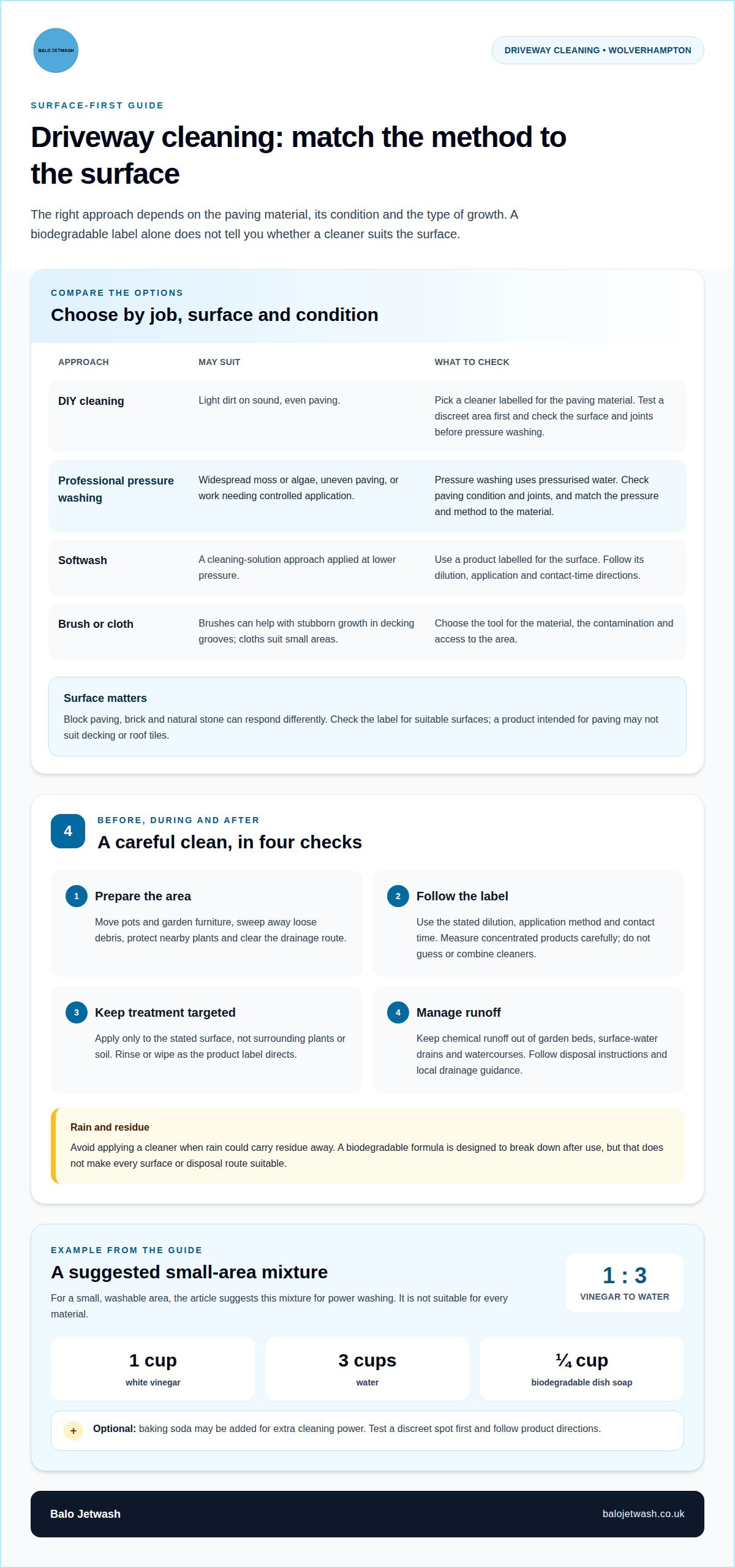
DIY cleaning can work for light dirt on sound, even paving. Sweep away loose debris, then test the labelled product on a small, less visible area. Check the paving’s condition and joints before pressure washing. Professional cleaning can be useful for widespread moss or algae, uneven paving, or areas that need controlled application. Choose based on the surface and the work involved.
Before cleaning, move pots and garden furniture, protect nearby plants and clear the drainage route. Apply the product only as directed, then rinse or wipe the surface if its label instructs. For a driveway in Wolverhampton, the material, condition, size and access all help determine the work involved.
Dilution and Application
Follow the product label for dilution, application method and contact time. Measure concentrated products carefully: don’t guess or combine cleaners. Apply evenly to the stated surface, keeping treatment targeted rather than spraying surrounding garden areas. After the stated contact time, rinse or wipe as directed. These steps help the cleaner work as intended and limit unnecessary use.
Biodegradable formulas can work on outdoor growth when they suit the surface and are applied correctly. Conventional products may also remove dirt and algae. The label, cleaning method and condition of the paving all affect the result.
Rules for Chemicals and Wastewater
In the UK, use exterior-cleaning chemicals according to their labels and manage wastewater responsibly. Keep chemical runoff out of garden beds, surface-water drains and watercourses. Follow the product’s disposal instructions and local drainage guidance, especially if rinse water could leave the property or enter a drain.
For DIY work, use a cleaner labelled for your driveway surface, and avoid applying it when rain could carry residue away. For example, protect a nearby garden bed while treating block paving, then direct rinse water away from planting. These steps support responsible cleaning without assuming a biodegradable label makes every disposal route suitable.
Plant-friendly and biodegradable formulas
Plant-friendly cleaning starts with checking ingredients, the label and nearby planting. Biodegradable formulas are designed to break down after use, but application and runoff still matter.
Plant-Friendly Formulas
Choose a product that identifies its biodegradable ingredients and suitable surfaces. “Plant-friendly” doesn’t mean you should apply cleaner directly to plants or soil. Before treating a driveway, move pots and sweep away loose organic debris. Keep application focused on the paving and manage residue according to the label.
For a small, washable area, one suggested power-washing mixture uses one cup of white vinegar with three cups of water, plus a quarter cup of biodegradable dish soap. Baking soda may be used as an optional addition for extra cleaning power. This mixture isn’t suitable for every material. Follow product directions and test a discreet spot first.
Eco-Friendly Pressure Washing
Pressure washing uses pressurised water to remove dirt and surface growth. A suitable cleaning solution can first loosen contamination, allowing a lower-pressure approach where appropriate. Match pressure and method to the surface: block paving, brick and natural stone respond differently. Check the joints and surface condition before starting.
Before washing, clear the area and protect surrounding plants from spray and residue. Apply a suitable cleaner as directed, allow the stated contact time, then rinse as instructed. Keep runoff away from planting and drains. Targeted application can limit excess product, while effective treatment may reduce the need for repeat washing.
Choose equipment based on the job. A pressure washer uses pressurised water; a softwash approach applies cleaning solution at lower pressure. Brushes can help with stubborn growth in decking grooves, while cloths suit small areas. The surface, contamination and access determine the right combination.
For driveways, patios and decking, choose a product labelled for the material rather than relying on “biodegradable” alone. Check the directions for dilution, application and rinsing. Keep the label handy throughout the job, especially when treating more than one surface.
Eco-friendly window cleaning is separate from pressure washing. One suggested glass-cleaning mixture uses three cups of water and one teaspoon of liquid dish detergent. Apply sparingly with a cloth, then wipe the glass clean to avoid residue. Keep cleaner away from nearby plants and follow its label, as ingredients and instructions vary.
In practice, biodegradable exterior cleaning combines surface-suitable formulas with equipment such as pressure washers, softwash applicators, brushes or cloths. Choose a method to suit the material, follow the label’s dilution and application instructions, and manage runoff around the garden.
Biodegradable, non-toxic cleaning solutions
A biodegradable label describes a formula designed to break down after use. “Non-toxic” is a separate claim, so neither phrase proves that a product suits every surface or situation. Read the full label for ingredients, intended uses and handling directions. For example, a cleaner labelled for concrete may not suit sandstone or timber decking.
Product concentration affects how much cleaner a task requires. Follow dilution instructions carefully and use the stated measure rather than estimating by eye. A concentrate may reduce packaging compared with a ready-to-use product, but incorrect mixing can waste product or impair cleaning. Keep the instructions beside you while preparing the solution and use only what the area needs.
For a concrete path with a small patch of green growth, choose a product whose label names concrete and the relevant type of contamination. Apply it only to the affected section and follow its contact-time directions. Targeted treatment avoids spreading cleaner across unaffected paving. If you’re concerned about a change in appearance, test an inconspicuous area first.
Protecting plants also depends on how you apply the product. Move pots away from the work area and keep spray out of garden beds. Prevent rinse water from running towards drains or neighbouring planting. For example, work in a small section and check where the water flows before moving on. Even a biodegradable formula needs careful handling outdoors.
Environmental impact also involves packaging, transport and repeat work. Concentrated products generally need less packaging and transport volume than ready-to-use alternatives. An ineffective treatment may require more product and water later. Choose a formula for the surface and contamination, then apply it as directed instead of relying on a broad environmental claim.
Professional cleaning takes coverage, cleaning performance, result longevity and ease of application into account when selecting products. Accurate dilution and targeted use help avoid unnecessary chemical use. On a driveway, the paving material and its condition influence the cleaner and method. Effective treatment may reduce repeat cleaning, limiting product use and disruption.
Homeowners in Wolverhampton can assess a cleaner by checking its ingredients, surface directions and application guidance together. A product’s environmental wording is most useful when it comes with clear instructions for dilution, use and rinsing. Choose a suitable formula for the actual surface, use it only as directed, and manage residue and rinse water thoughtfully around the property.
Cleaning patios, paving and decking
Patios, paving and decking need different cleaning methods. The material, surface condition and type of growth all matter. A suitable cleaner can loosen dirt and biological growth, while pressure washing removes loosened deposits with pressurised water. Match the treatment and pressure to the surface, rather than combining strong chemicals with excessive force.
Block paving has joints that need particular care. Professional cleaning can use a surface cleaner, followed by a biocide to control moss and algae. The cleaner lifts grime across the paved area; the treatment targets remaining biological growth. Avoid directing force into the joints, where it could dislodge jointing material. Once the paving is clean and dry, inspect the joints before deciding whether they need attention.
Natural stone needs a more specific approach. Sandstone, for example, can be cleaned with a specialist product and low pressure to address organic growth and weather staining. A gentle technique helps protect the stone’s surface and detailing. Don’t assume a cleaner labelled for concrete suits sandstone. Read the directions and test a small, discreet area before treating the full patio.
Brick patios and concrete paths can also be cleaned with suitable products. Professional cleaning chemicals may loosen contamination and reduce the pressure-washing effort required. Allow the stated contact time, then rinse as directed. Cleaning can improve the appearance of a walkway covered in green or red algae and help address slippery growth. Keep rinse water from carrying residue into planting or drains.
Decking needs a lighter touch than many hard paving surfaces. High pressure can mark timber or affect its finish, so choose a method suited to the decking material. A brush can reach stubborn growth in grooves that a surface cleaner may miss. Work along the boards, not across them, and use a product labelled for decking. Rinse only as directed.
For any surface, start by sweeping away leaves and loose debris. Identify whether the growth is algae, moss or general grime, then select a matching cleaner. Keep containers and chemicals away from children and pets during use, and don’t mix different products. Apply only the amount and dilution stated on the label. This keeps treatment targeted and reduces unnecessary residue.
After cleaning, check the surface in daylight for missed patches and remaining growth. Rinse or wipe as instructed, and let the area dry before replacing furniture or pots. Check the joints on block paving, the grooves on decking and the finish on stone. These surface-specific checks help you decide whether further gentle cleaning is needed.
Which biodegradable cleaning products are suitable for roofs, driveways and patios?
Choose a biodegradable cleaner by matching its label to the surface and growth. A formula for concrete may not suit roof tiles, sandstone or block paving. Check the application method, dilution, contact time and rinsing directions before treating an outdoor area. A biodegradable claim describes breakdown after use; it doesn’t establish suitability for every material.
For driveways, start with the paving type. Block paving has joints, while concrete presents a different surface. Choose a product that names the material and targets the growth present, such as moss or algae. Check whether the label allows pressure washing after treatment. On block paving, professional cleaning may combine a surface cleaner with a suitable biocidal treatment rather than relying on a stronger chemical alone.
Patios may be made of concrete, brick or natural stone, and each needs a compatible product. Sandstone, for example, calls for a specialist cleaner and a low-pressure approach to organic growth or weather staining. Test a discreet area first and look for changes in colour or finish. Don’t assume a product intended for concrete suits natural stone just because both are hard surfaces.
Roof tiles need a product labelled for roof use and the type of growth present. Specialist biocidal treatments are used to control moss, algae and lichen. Professional roof cleaning can also remove built-up growth using pressure and technique suited to the tile material, condition and access. Any treatment should suit the roof surface and be applied as directed.
Compare product instructions, not just front-label claims. Look for clear ingredient information, coverage guidance and dilution directions. Concentrates can reduce packaging and transport volumes compared with ready-to-use products, but accurate measuring matters. Too little may leave growth behind; too much creates unnecessary residue. Follow the stated dose and don’t mix cleaners, as combining products can change how they behave.
For a responsible result, consider where rinse water will go. Protect nearby plants and keep runoff away from garden beds and drains. Apply cleaner only to the named surface, observe its stated contact time, then rinse or wipe as directed. In Wolverhampton, these steps help homeowners choose a suitable cleaner for a driveway, patio or roof without treating “biodegradable” as a one-size-fits-all guarantee.
If your driveway needs a thorough clean, explore professional driveway pressure washing as the next step.
Balo Jetwash: driveway Cleaning
Balo Jetwash cleans driveways for homeowners in Wolverhampton, tackling built-up dirt, moss and algae. Modern, industrial vanbuilt equipment is used to clean exterior surfaces, with pressure and method suited to the area being treated. For a more environmentally conscious clean, choose a biodegradable product labelled for your driveway material and follow its use and rinsing directions. The label alone doesn’t establish suitability for every surface, so matching the cleaner to the paving matters.
Professional cleaning can be a practical next step when growth covers a broad area or the driveway needs more than routine sweeping. Balo Jetwash also offers patio cleaning, alongside its driveway service. To discuss driveway cleaning, contact Balo Jetwash about pressure washing.
Make your next exterior clean a considered one
Before arranging cleaning, decide which outdoor surface needs attention and what you want to improve. This gives you a clear starting point for choosing a suitable approach. Biodegradable exterior cleaning can form part of that decision, alongside the surface material and its condition.
For homeowners in Wolverhampton, Balo Jetwash provides driveway, patio and roof cleaning. Whether you’re planning to refresh one area or several, describe the surfaces and the visible growth that concerns you. This gives you a clear starting point for discussing the work, without treating every exterior surface the same.
Ready to take the next step? Contact Balo Jetwash today to discuss your exterior cleaning needs and start planning a fresher-looking home.
Frequently Asked Questions
What Makes an Exterior Cleaning Chemical Eco-Friendly?
An environmentally conscious clean combines clear use instructions with a formula designed to break down after use. Biodegradable exterior cleaning also depends on how much product the task needs, whether it suits the surface and how rinse water is managed. For example, apply correctly diluted cleaner only to affected paving instead of treating the entire driveway. This keeps the process focused and limits excess product.
Environmental wording: Is the claim explained, or is it only a broad label?
A useful environmental claim explains what it means and how to use the product. Look for details about whether “biodegradable” describes the formula after use, alongside directions for dilution, application and disposal. A broad phrase such as “green” offers less practical guidance on its own. For a Wolverhampton driveway, the label should also identify the paving materials the cleaner suits.
Ingredients: Are they identified or explained clearly?
Clear ingredient information helps you understand what you’re applying and use it responsibly. Read the label and accompanying instructions for ingredient names, dilution guidance, surface restrictions and handling advice. If the cleaner is concentrated, its directions should explain how to prepare it. Don’t assume a product suits every surface or situation simply because its ingredients sound familiar.
Ready for a Spotless, Sustainable Exterior?
Start with one defined task, such as removing green growth from a patio or refreshing a driveway entrance. Biodegradable exterior cleaning can be part of the plan, alongside identifying the surface and affected area. This gives you a clearer basis for choosing a method and avoids treating areas that don’t need attention. Homeowners in Wolverhampton can begin by deciding which outdoor space would make the biggest difference to everyday use.
Surface suitability: Does the maker name your driveway material?
The product label should name your driveway material or identify a compatible surface category. Concrete, block paving and natural stone can respond differently to cleaners and pressure. If your driveway combines materials, treat each area according to its own instructions rather than assuming one product suits all. For example, don’t use a cleaner labelled for concrete on sandstone edging or delicate paving without checking its directions.
What does biodegradable exterior cleaning mean?
Biodegradable exterior cleaning uses products formulated to break down after use. The term doesn’t tell you how quickly a surface will become clean or whether a formula suits every material. A driveway cleaner still needs to be labelled for the paving type and applied according to its directions. Managing application and rinse water is also part of responsible use.
What ingredients should you look for in an environmentally friendly exterior cleaner?
No single ingredient list makes a cleaner right for every outdoor surface. Look for clearly identified ingredients, measured dilution instructions and named material uses, such as concrete or block paving. The directions should also explain application and any required rinsing. A clearly described concentrate can help you measure only what the job needs, rather than applying an arbitrary amount across the whole area.
Are biodegradable exterior cleaning products safe for plants, pets and wildlife?
Biodegradable doesn’t automatically mean harmless to plants, pets or wildlife. Follow the product label, keep animals away during application and rinsing, and prevent spray or runoff from reaching planting, ponds or feeding areas. For example, move a pet’s water bowl before treating a patio and return it only after rinsing as directed. Take particular care around garden borders and wildlife habitats.
{"@context":"https://schema.org","@type":"FAQPage","mainEntity":[{"@type":"Question","name":"What Makes an Exterior Cleaning Chemical Eco-Friendly?","acceptedAnswer":{"@type":"Answer","text":"An environmentally conscious clean combines clear use instructions with a formula designed to break down after use. Biodegradable exterior cleaning also depends on how much product the task needs, whether it suits the surface and how rinse water is managed. For example, apply correctly diluted cleaner only to affected paving instead of treating the entire driveway. This keeps the process focused and limits excess product."}},{"@type":"Question","name":"Environmental wording: Is the claim explained, or is it only a broad label?","acceptedAnswer":{"@type":"Answer","text":"A useful environmental claim explains what it means and how to use the product. Look for details about whether “biodegradable” describes the formula after use, alongside directions for dilution, application and disposal. A broad phrase such as “green” offers less practical guidance on its own. For a Wolverhampton driveway, the label should also identify the paving materials the cleaner suits."}},{"@type":"Question","name":"Ingredients: Are they identified or explained clearly?","acceptedAnswer":{"@type":"Answer","text":"Clear ingredient information helps you understand what you’re applying and use it responsibly. Read the label and accompanying instructions for ingredient names, dilution guidance, surface restrictions and handling advice. If the cleaner is concentrated, its directions should explain how to prepare it. Don’t assume a product suits every surface or situation simply because its ingredients sound familiar."}},{"@type":"Question","name":"Ready for a Spotless, Sustainable Exterior?","acceptedAnswer":{"@type":"Answer","text":"Start with one defined task, such as removing green growth from a patio or refreshing a driveway entrance. Biodegradable exterior cleaning can be part of the plan, alongside identifying the surface and affected area. This gives you a clearer basis for choosing a method and avoids treating areas that don’t need attention. Homeowners in Wolverhampton can begin by deciding which outdoor space would make the biggest difference to everyday use."}},{"@type":"Question","name":"Surface suitability: Does the maker name your driveway material?","acceptedAnswer":{"@type":"Answer","text":"The product label should name your driveway material or identify a compatible surface category. Concrete, block paving and natural stone can respond differently to cleaners and pressure. If your driveway combines materials, treat each area according to its own instructions rather than assuming one product suits all. For example, don’t use a cleaner labelled for concrete on sandstone edging or delicate paving without checking its directions."}},{"@type":"Question","name":"What does biodegradable exterior cleaning mean?","acceptedAnswer":{"@type":"Answer","text":"Biodegradable exterior cleaning uses products formulated to break down after use. The term doesn’t tell you how quickly a surface will become clean or whether a formula suits every material. A driveway cleaner still needs to be labelled for the paving type and applied according to its directions. Managing application and rinse water is also part of responsible use."}},{"@type":"Question","name":"What ingredients should you look for in an environmentally friendly exterior cleaner?","acceptedAnswer":{"@type":"Answer","text":"No single ingredient list makes a cleaner right for every outdoor surface. Look for clearly identified ingredients, measured dilution instructions and named material uses, such as concrete or block paving. The directions should also explain application and any required rinsing. A clearly described concentrate can help you measure only what the job needs, rather than applying an arbitrary amount across the whole area."}},{"@type":"Question","name":"Are biodegradable exterior cleaning products safe for plants, pets and wildlife?","acceptedAnswer":{"@type":"Answer","text":"Biodegradable doesn’t automatically mean harmless to plants, pets or wildlife. Follow the product label, keep animals away during application and rinsing, and prevent spray or runoff from reaching planting, ponds or feeding areas. For example, move a pet’s water bowl before treating a patio and return it only after rinsing as directed. Take particular care around garden borders and wildlife habitats."}}]}Information
Water available? - You don't need to be present for us to carry out the service. If required, we can supply water ourselves.
Insurance
Balo Jetwash is fully insured, We have £5,000,000 of public liability insurance. Balo Jetwash operatives are professional, reliable and endeavour to carry out the work to the highest standard with minimal fuss and upheaval.